Safely bringing in and distributing energy to your home makes the main service panel the heart of your home. What’s the capacity of your service panel? Learn why it matters and when you should think about swapping, upgrading, or looking for signs that your old main panel may be a danger to your home.
An electrical service panel (also known as a breaker box) is where power comes into your home. Upgrading it allows more electric power to flow to your house.
Reasons to upgrade your service panel
Maybe you’re adding an electric vehicle charger, pool or another large appliance. When you need more power, upgrading from 100 to 200 amps is common.
When you install a solar energy system, you need the ability to produce power at your home and backfeed that electricity. Your breaker box limits the amount of electricity that can flow through, but upgrading can solve that.
If your panel is older, you may want to consider an upgrade. Modern appliances have increased the average home’s electrical needs, leaving older panels insufficient. Electrical upgrades ensure you can run everything safely.
Electrical repairs are occasionally needed when you have a faulty outlet or loose wiring connections. Common signs of an electrical problem include: an outlet that stops working, buzzing noises or visible sparks from appliances or outlets, and burn marks on appliances or outlets. These hazards can lead to electrocution or fire if not addressed.
With a solid history of electrical contracting experience, Baker Home Energy’s California state-licensed electricians can safely diagnose issues and provide effective solutions.
How do upgrades work?
Houses connect to the grid with telephone poles and overhead wires or underground service. When you work with Baker Home Energy for your electrical servicing, our first step is to get approval from the local utility company. They’ll specify which options are available to you based on local and national electric code.
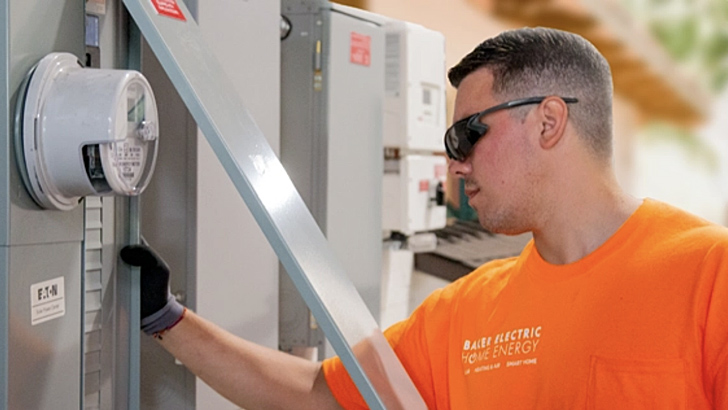
Typically we won’t need to work inside your home to complete the upgrade, which involves disconnecting all wires and breakers from the service panel, removing the metal box, putting in a new box with new breakers, and then reconnecting all the wires.
It’s important to understand how much power is delivered from the grid to your home. We look at this through your main breaker. For example, if you have a 100-amp main breaker, you can draw 100-amps of power for all your appliances. The service panel might be rated for higher, so this isn’t the most accurate rating to follow. Panel ratings are 100, 125, 150, 200, 225, and 400-amps for residential application.
Choosing a size
The size of your electrical panel will depend on your energy needs and availability. For a quick illustration: an AC unit, electric car, and pool need more than 100-amps of electricity coming into the house. If you plan to add a large appliance and you don’t know how much it will impact your energy demand, we’re here to support you.
Give us a call and we’ll help you decide if you need a service panel upgrade too.
escondido panel upgrade, electrical panel upgrade services, panel upgrades, electrical service upgrades, electric panel upgrade for solar, electrical panels escondido
Benefits of Upgrading Your Service Panel
Upgrading your service panel provides numerous benefits that enhance the safety and efficiency of your electrical system. A modern service panel can handle increased electrical loads, reducing the risk of overloads and potential hazards. This upgrade not only ensures compliance with current electrical codes but also improves the overall functionality of your home's electrical system.
Additionally, a new service panel can lead to lower energy costs by optimizing the distribution of electricity throughout your home. With the ability to support advanced technologies, such as smart home devices and electric vehicle chargers, an upgraded panel positions your home for future energy demands. Homeowners can also benefit from increased property value, as prospective buyers often prefer homes with modern electrical systems.
Common Myths About Service Panel Upgrades
There are several misconceptions surrounding service panel upgrades that can deter homeowners from making necessary improvements. One common myth is that service panel upgrades are only needed for older homes. In reality, even newer homes can require upgrades due to increased energy demands from modern appliances and technologies.
Another prevalent myth is that upgrading a service panel is a complicated and invasive process. While it may seem daunting, professional electricians can often complete the upgrade with minimal disruption to your home. Understanding these myths can empower homeowners to make informed decisions about their electrical systems and prioritize necessary upgrades.
Signs You Need a Service Panel Upgrade
Recognizing the signs that your service panel needs an upgrade is crucial for maintaining a safe electrical system. Common indicators include frequent circuit breaker trips, flickering lights, or the presence of burn marks around outlets. These symptoms suggest that your current panel may not be able to handle your household's electrical demands, leading to potential safety hazards.
Additionally, if you are planning to add major appliances or an electric vehicle charger, it’s essential to assess your panel's capacity. A professional electrician can evaluate your system and recommend whether an upgrade is necessary to ensure your home can safely accommodate increased energy usage.
The Process of Upgrading Your Service Panel
The process of upgrading your service panel typically involves several key steps to ensure safety and compliance with local regulations. Initially, a licensed electrician will assess your current panel and electrical needs, determining the appropriate size and specifications for the new panel. This assessment includes evaluating your home’s electrical load requirements and any future expansions.
Once the new panel is selected, the electrician will schedule the upgrade, which usually involves disconnecting power, removing the old panel, and installing the new one. Throughout this process, safety is paramount, and professionals will follow all necessary protocols to ensure a seamless transition. After installation, the electrician will conduct tests to verify that the new panel operates correctly and efficiently.
escondido panel upgrade, electrical panel upgrade services, panel upgrades, electrical service upgrades, electric panel upgrade for solar, electrical panels escondido
Benefits of Upgrading Your Service Panel
Upgrading your service panel provides numerous benefits that enhance the safety and efficiency of your electrical system. A modern service panel can handle increased electrical loads, reducing the risk of overloads and potential hazards. This upgrade not only ensures compliance with current electrical codes but also improves the overall functionality of your home's electrical system.
Additionally, a new service panel can lead to lower energy costs by optimizing the distribution of electricity throughout your home. With the ability to support advanced technologies, such as smart home devices and electric vehicle chargers, an upgraded panel positions your home for future energy demands. Homeowners can also benefit from increased property value, as prospective buyers often prefer homes with modern electrical systems.
Common Myths About Service Panel Upgrades
There are several misconceptions surrounding service panel upgrades that can deter homeowners from making necessary improvements. One common myth is that service panel upgrades are only needed for older homes. In reality, even newer homes can require upgrades due to increased energy demands from modern appliances and technologies.
Another prevalent myth is that upgrading a service panel is a complicated and invasive process. While it may seem daunting, professional electricians can often complete the upgrade with minimal disruption to your home. Understanding these myths can empower homeowners to make informed decisions about their electrical systems and prioritize necessary upgrades.
Signs You Need a Service Panel Upgrade
Recognizing the signs that your service panel needs an upgrade is crucial for maintaining a safe electrical system. Common indicators include frequent circuit breaker trips, flickering lights, or the presence of burn marks around outlets. These symptoms suggest that your current panel may not be able to handle your household's electrical demands, leading to potential safety hazards.
Additionally, if you are planning to add major appliances or an electric vehicle charger, it’s essential to assess your panel's capacity. A professional electrician can evaluate your system and recommend whether an upgrade is necessary to ensure your home can safely accommodate increased energy usage.
The Process of Upgrading Your Service Panel
The process of upgrading your service panel typically involves several key steps to ensure safety and compliance with local regulations. Initially, a licensed electrician will assess your current panel and electrical needs, determining the appropriate size and specifications for the new panel. This assessment includes evaluating your home’s electrical load requirements and any future expansions.
Once the new panel is selected, the electrician will schedule the upgrade, which usually involves disconnecting power, removing the old panel, and installing the new one. Throughout this process, safety is paramount, and professionals will follow all necessary protocols to ensure a seamless transition. After installation, the electrician will conduct tests to verify that the new panel operates correctly and efficiently.