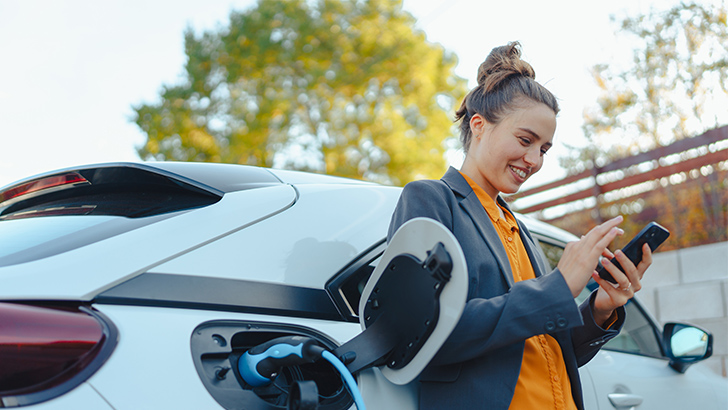
If you’re looking for a fast, efficient, and convenient home charging solution, look no further than Baker Home Energy. We offer multiple brands of charging equipment that can:
Recoup your daily driving range in just a few hours
Fully charge your battery overnight to avoid time-of-use rates, and has you ready to go by morning
Usually avoid major upgrades to your home electrical service
Now for some perspective: a charger that delivers 20-30 miles of range per hour charged is ideal (6.6-10 kW power delivery) for US drivers who cover about 37 miles per day on average. Average daily miles are recharged within 2 hours and even a close-to-empty 100 kWh battery can be charged fully overnight. It’s clear, having solar + home charging = maximum energy savings.
Electric vehicles are here to stay
Electric vehicles (EVs) have officially made their mark as a mainstream revolution. Conventional cars have long been propelled by internal combustion engines burning finite fossil fuels, a concept pioneered a century ago. But today the car industry is accelerating toward all-electric vehicles and the savings and convenience that come with them.
If you’ve joined the EV revolution, Baker Home Energy is here to equip you with the exact charger you need to fit your vehicle or an outlet that’s ready to accept any EV charger (purchased separately).
EV charger FAQs
Baker Home Energy can connect you with the correct charger for your electric vehicle. If you have an existing home EV charger, we can install a dedicated 240v outlet for maximum power and faster charging.
Our professionals will perform a load calculation to confirm that you’ll be up to NEC code with your dedicated Electric Vehicle circuit and help you decide which options best meet your needs. We’ll also handle permitting to ensure compliance and safety.
Try this on for size: never worrying about gas prices again, charging your tank while you sleep and skipping out on oil changes. Sounds nice, right? Home EV charger incentives also include a 30% federal tax credit (up to $1,000 for residential installations). Learn more about this credit from the U.S Department of Energy.
Electric vehicles emit no harmful gases to our atmosphere, and now have the same range as a full tank of gas. All major automotive companies are investing in electric cars, and many have committed to entirely electric fleets soon. The constantly fluctuating oil market is reason enough to quit the gasoline game and join the “fill up” at home crew.
Have a solar energy system? Even better. The benefits are doubly exciting when you charge your electric vehicle with solar energy: you reduce your carbon footprint almost entirely by powering it with clean energy (vs. fossil-fueled grid power) and you save on that energy.
electric car charger for home urbandale, ev charger installation in baker louisiana, ev charger installation escondido, electric car charger for home near me, electric car charger for home hattiesburg, home ev chargers with solar energy solar powered water heaters, ev charger installation san diego, baker home energy vs chargepoint ev charging, ev charger installation escondido ca
Types of EV Chargers
Understanding the different types of EV chargers is crucial for homeowners looking to install a charging station. The main categories include Level 1, Level 2, and DC fast chargers, each offering varying charging speeds and compatibility with different electric vehicle models.
Level 1 chargers use a standard household outlet and are suitable for overnight charging, while Level 2 chargers require a dedicated circuit and can significantly reduce charging time. DC fast chargers, often found in public charging stations, provide rapid charging but are typically not used for home installations due to their high cost and electrical requirements.
Benefits of Home EV Charging
Installing a home EV charging station comes with numerous benefits that enhance convenience and cost-effectiveness for electric vehicle owners. Home charging allows for the flexibility of charging your vehicle overnight, ensuring it's ready for use each morning without the need to visit public charging stations.
Additionally, homeowners can take advantage of time-of-use electricity rates, charging during off-peak hours to save on energy costs. With solar energy integration, the financial benefits can be even greater, allowing owners to power their vehicles with renewable energy and reduce their carbon footprint.
Choosing the Right EV Charger for Your Home
Selecting the appropriate EV charger involves considering various factors such as your vehicle's charging capacity, your home's electrical system, and your daily driving habits. It's essential to match the charger to the specific requirements of your electric vehicle to ensure optimal performance.
Consulting with a professional installer can help determine the best charging solution, taking into account your existing electrical infrastructure and any potential upgrades needed to support your chosen charger. This ensures a safe and efficient charging experience tailored to your needs.
Installation Process for EV Chargers
The installation process for EV chargers typically involves several key steps, starting with a site assessment to determine the best location for the charger. This assessment considers factors such as proximity to the electrical panel, accessibility, and safety regulations.
Once the location is determined, a licensed electrician will install the necessary wiring and the charging unit itself. It's crucial to ensure that the installation complies with local codes and regulations to guarantee safety and reliability in your home charging setup.
electric car charger for home urbandale, ev charger installation in baker louisiana, ev charger installation escondido, electric car charger for home near me, electric car charger for home hattiesburg, home ev chargers with solar energy solar powered water heaters, ev charger installation san diego, baker home energy vs chargepoint ev charging, ev charger installation escondido ca
Types of EV Chargers
Understanding the different types of EV chargers is crucial for homeowners looking to install a charging station. The main categories include Level 1, Level 2, and DC fast chargers, each offering varying charging speeds and compatibility with different electric vehicle models.
Level 1 chargers use a standard household outlet and are suitable for overnight charging, while Level 2 chargers require a dedicated circuit and can significantly reduce charging time. DC fast chargers, often found in public charging stations, provide rapid charging but are typically not used for home installations due to their high cost and electrical requirements.
Benefits of Home EV Charging
Installing a home EV charging station comes with numerous benefits that enhance convenience and cost-effectiveness for electric vehicle owners. Home charging allows for the flexibility of charging your vehicle overnight, ensuring it's ready for use each morning without the need to visit public charging stations.
Additionally, homeowners can take advantage of time-of-use electricity rates, charging during off-peak hours to save on energy costs. With solar energy integration, the financial benefits can be even greater, allowing owners to power their vehicles with renewable energy and reduce their carbon footprint.
Choosing the Right EV Charger for Your Home
Selecting the appropriate EV charger involves considering various factors such as your vehicle's charging capacity, your home's electrical system, and your daily driving habits. It's essential to match the charger to the specific requirements of your electric vehicle to ensure optimal performance.
Consulting with a professional installer can help determine the best charging solution, taking into account your existing electrical infrastructure and any potential upgrades needed to support your chosen charger. This ensures a safe and efficient charging experience tailored to your needs.
Installation Process for EV Chargers
The installation process for EV chargers typically involves several key steps, starting with a site assessment to determine the best location for the charger. This assessment considers factors such as proximity to the electrical panel, accessibility, and safety regulations.
Once the location is determined, a licensed electrician will install the necessary wiring and the charging unit itself. It's crucial to ensure that the installation complies with local codes and regulations to guarantee safety and reliability in your home charging setup.