Air Conditioning

Stay Informed: 2026 Refrigerant Changes for Homeowners – EPA

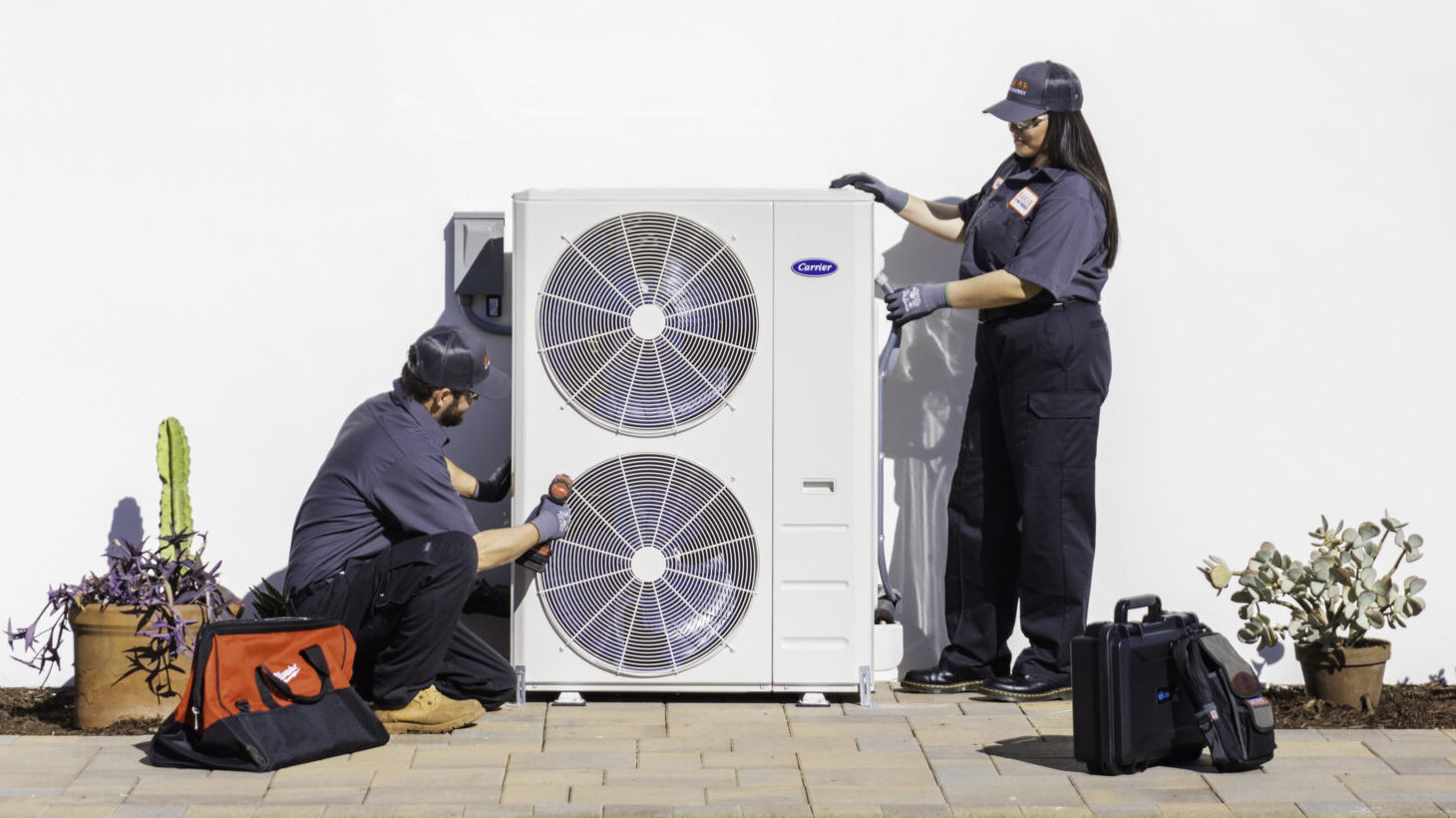
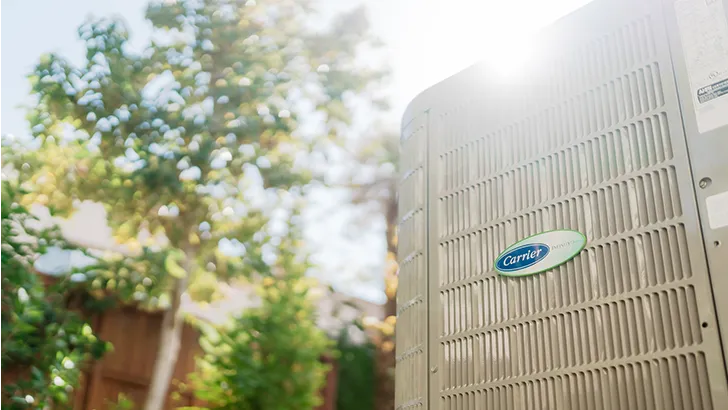
Carrier AC Condenser

(6 Minute Read)

If you’re planning to replace your air conditioner or heat pump this year, you’ll hear a lot about “A2L” refrigerants like R‑454B and R‑32. These are part of a nationwide transition away from high‑GWP (global warming potential) HFCs such as R‑410A. New systems in 2026 are designed and certified for these lower‑GWP refrigerants, and codes/standards have been updated to support safe installation and service. [epa.gov], [kele.com]

What’s Changing?

  • Why the change? The AIM Act directs the EPA to phase down high‑GWP HFCs, cutting U.S. production and consumption of HFCs on a schedule through 2036. That program includes equipment‑level restrictions (“Technology Transitions”) that limit the refrigerants used in new comfort‑cooling equipment. [epa.gov]
  • What does that mean for AC/heat pumps? For new residential and light commercial systems, the EPA’s program drives the market to refrigerants with GWP ≤ ~700, which effectively moves manufacturers off R‑410A and toward A2L options such as R‑454B (≈466 GWP) and R‑32 (≈675 GWP) in redesigned, certified systems. [kele.com]
  • Key 2025–2027 dates:
    • Manufacturing of most new R‑410A comfort‑cooling equipment ended Jan 1, 2025; 2025 served as a “sell‑through” year for installing pre‑2025 stock in many categories. [nahb.org]
    • As of Jan 1, 2026, new installations are expected to use low‑GWP refrigerants in most residential/light commercial applications, with certain extended timelines for VRF systems and limited federal enforcement discretion while EPA finalizes reconsideration details. (VRF installation relief runs to Jan 1, 2027; EPA has indicated low‑priority enforcement for some 2026 installation provisions pending the final rule update, but the underlying deadlines still exist unless formally changed.) [federalregister.gov], [hvac-blog.acca.org], [nahb.org]
  • Manufacturing of most new R‑410A comfort‑cooling equipment ended Jan 1, 2025; 2025 served as a “sell‑through” year for installing pre‑2025 stock in many categories. [nahb.org]
  • As of Jan 1, 2026, new installations are expected to use low‑GWP refrigerants in most residential/light commercial applications, with certain extended timelines for VRF systems and limited federal enforcement discretion while EPA finalizes reconsideration details. (VRF installation relief runs to Jan 1, 2027; EPA has indicated low‑priority enforcement for some 2026 installation provisions pending the final rule update, but the underlying deadlines still exist unless formally changed.) [federalregister.gov], [hvac-blog.acca.org], [nahb.org]

Bottom line: If you’re buying new in 2026, you should expect an A2L‑based system that’s built and listed for that refrigerant—with updated safety controls and labeling. [kele.com]

“A2L” safety, explained (mildly flammable ≠ highly flammable)

You’ll see the term A2L on spec sheets and cartons. It’s a safety classification (ASHRAE Standard 34) meaning:

  • “A” = low toxicity
  • “2L” = mild flammability (low burning velocity)

A2Ls are not like propane (A3) or ammonia (B2L). They’re hard to ignite and require specific conditions to burn. Installations are governed by updated product standards/codes (e.g., UL 60335‑2‑40, model codes) and include controls like leak mitigation, ventilation, and clear labeling, which is why contractor training and permit/code compliance matter. [kele.com], [rses.org]

RSES reminds techs and homeowners that A2Ls have been used for years in smaller HVAC products and internationally, and that with proper procedures they operate safely in residential settings. [rses.org]

What this means for your replacement decision

  • Existing R‑410A systems can still run and be serviced. The phase‑down focuses on new equipment. If your current system is healthy, you don’t have to rush to replace it; however, parts and refrigerant pricing can change over time as the market shifts. [nahb.org]
  • New 2026‑era systems are engineered for A2L refrigerants. Don’t mix components/refrigerants; replacement systems should be matched, listed, and installed for their specific refrigerant and controls. [kele.com]
  • Performance and efficiency: Manufacturers redesigned coils, charge amounts, and controls around R‑454B or R‑32. In practice, you’ll see comparable or improved efficiency versus older platforms, subject to proper sizing, ductwork, and commissioning. (Ask your contractor for AHRI‑matched ratings.) [kele.com]

Homeowner checklist: questions to ask during quotes

  • Refrigerant & Platform
    • Which refrigerant does this system use (R‑454B or R‑32), and is every component listed for it?
    • Is the outdoor unit, air handler/coil, and line set sized and approved as a matched set? [kele.com]
  • Safety & Code Compliance
    • Are your technicians trained/certified for A2L handling and local code requirements?
    • Does my project require any specific leak mitigation controls, ventilation clearances, or electrical changes per UL‑60335‑2‑40 updates? [kele.com]
  • Warranty & Parts
    • What are the parts and labor warranty terms on A2L systems?
    • How readily available are service parts and refrigerant cylinders in our area this year? (Supply has been tightening during the transition; availability matters.) [aciq.com]
  • Installation Documentation
    • Will you provide commissioning data (charge/airflow/thermostat programming) and the AHRI reference?
    • Will you pull permits and close them out with final inspection? (Code approvals are tied to A2L readiness.) [kele.com]
  • System Design & Comfort
    • Will you evaluate duct leakage and static pressure, not just “tonnage”?
    • Can we compare single‑stage vs. variable‑speed options for comfort and bill savings? (Equipment changes are a great time to fix airflow.) [kele.com]
  • Future Service
    • Do you stock A2L‑rated recovery/leak‑detection tools and provide annual maintenance?
    • What’s your plan for warranty response times during peak season? [kele.com]
  • Which refrigerant does this system use (R‑454B or R‑32), and is every component listed for it?
  • Is the outdoor unit, air handler/coil, and line set sized and approved as a matched set? [kele.com]
  • Are your technicians trained/certified for A2L handling and local code requirements?
  • Does my project require any specific leak mitigation controls, ventilation clearances, or electrical changes per UL‑60335‑2‑40 updates? [kele.com]
  • What are the parts and labor warranty terms on A2L systems?
  • How readily available are service parts and refrigerant cylinders in our area this year? (Supply has been tightening during the transition; availability matters.) [aciq.com]
  • Will you provide commissioning data (charge/airflow/thermostat programming) and the AHRI reference?
  • Will you pull permits and close them out with final inspection? (Code approvals are tied to A2L readiness.) [kele.com]
  • Will you evaluate duct leakage and static pressure, not just “tonnage”?
  • Can we compare single‑stage vs. variable‑speed options for comfort and bill savings? (Equipment changes are a great time to fix airflow.) [kele.com]
  • Do you stock A2L‑rated recovery/leak‑detection tools and provide annual maintenance?
  • What’s your plan for warranty response times during peak season? [kele.com]

Quick FAQs

Will A2L refrigerants raise safety risks in my home?
A2Ls are mildly flammable with low burning velocity and are installed under updated codes/standards. With trained installers and code inspections, they’re considered safe for residential use—RSES notes extensive testing and a long global track record. [rses.org]

Can I still get an R‑410A system in 2026?
Manufacturing ended in 2024 for most residential platforms, and “sell‑through” largely ended in 2025, with some limited enforcement discretion as EPA finalizes rule reconsideration wording. Practically, most new 2026 installs will be A2L systems, while existing R‑410A systems can continue to be serviced. (VRF installations have their own timeline to Jan 1, 2027.) [nahb.org], [hvac-blog.acca.org], [federalregister.gov]

Which is “better”—R‑454B or R‑32?
Both meet the ≤700 GWP threshold and are being widely adopted. R‑454B offers very low GWP (~466) and R‑32 has broad global use (~675 GWP); performance depends on the specific equipment design and proper installation. Your contractor should propose a matched system that meets your comfort and efficiency goals. [kele.com]

For Baker Home Energy customers

Many of our customers already trust us with HVAC, roofs, solar, batteries, water heaters, and water quality—so we’ll coordinate your A2L‑ready HVAC upgrade with your home’s electrical, ducting, and roof penetrations (for linesets) to protect warranties and ensure clean, code‑compliant work.

Thinking about replacing this year? Call Baker at 877.578.8080. We’ll walk you through refrigerant options, confirm code requirements, and provide a right‑sized, future‑ready system.

Further Reading

Heat Pump vs Furnace: Which System Is Best for San Diego?
Carrier Heat Pump Installation
knowledge center

Heat Pump vs Furnace: Which System Is Best for San Diego?

Is a heat pump or furnace the ideal heating solution for San Diego? Learn about their performance in mild climates to make an informed choice for…

Why Rising Energy Bills Spike in Late Winter: Key Insights
flyover photo of a san diego suburban neighborhood while its raining
knowledge center

Why Rising Energy Bills Spike in Late Winter: Key Insights

As late winter approaches, understand why energy bills soar. Learn key insights on rising winter heating costs and improve HVAC efficiency this…

Why Replacing Your HVAC and Water Heater Together Makes Sense
Heating, Air, and Water Heater
knowledge center

Why Replacing Your HVAC and Water Heater Together Makes Sense

Optimize your home's comfort by syncing your HVAC and water heater. Learn expert tips to enhance efficiency and save on energy costs with ease.

How the SEER Rating of Your AC Can Save You Money
The SEER rating of your AC determines its efficiency.
knowledge center

How the SEER Rating of Your AC Can Save You Money

Learn more about the SEER rating for AC units and how an HVAC expert can help determine the right-sized AC for your home.