Protect Your Roof and Solar from La Niña and Atmospheric Rivers
This winter, two major climate forces—La Niña and atmospheric rivers—are shaping weather patterns across the West. While these terms sound scientific, they have real implications for homeowners. From roof integrity to solar performance, understanding these trends can help you prepare and protect your investment.
What is La Niña?
La Niña is part of the El Niño–Southern Oscillation cycle, marked by cooler Pacific Ocean waters that shift the jet stream. For Southern California, this often means drier conditions overall, but don’t be fooled—La Niña winters can still deliver short, intense rain events that stress older roofs.
Atmospheric Rivers Explained
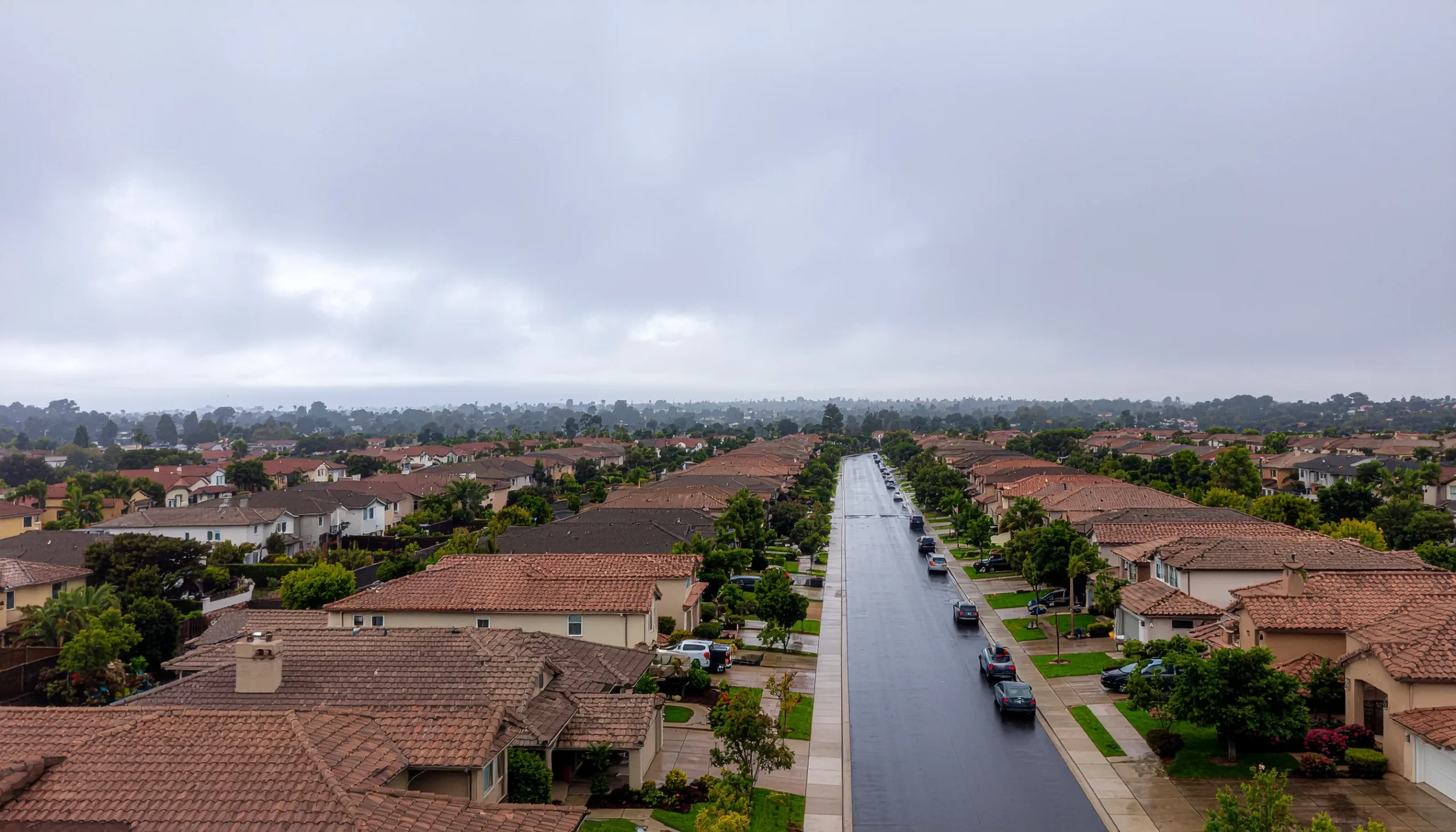
Atmospheric rivers are narrow bands of concentrated moisture that can unleash days of heavy rain when they make landfall. Even during a La Niña year, these systems can override dry trends, bringing sudden storms and flood risks. One strong atmospheric river can cause significant roof damage if your home isn’t prepared.
Why It Matters for Your Roof
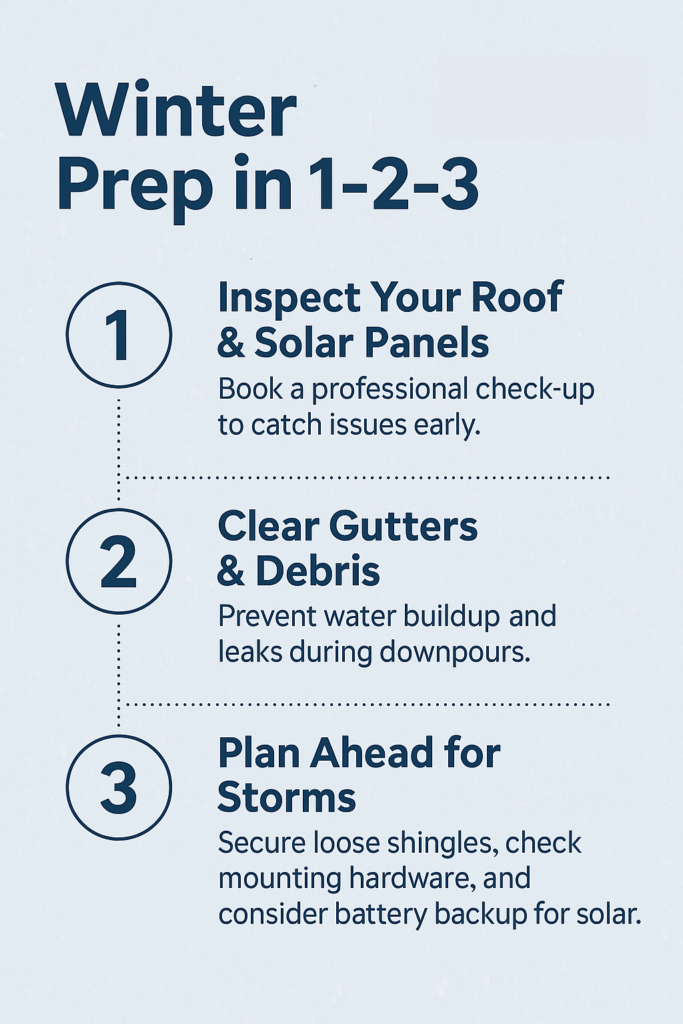
Preparing your home before winter storms isn’t just about peace of mind—it’s about protecting your biggest investments. A roof weakened by age or past weather can fail under sudden downpours, leading to costly water damage and mold. For solar-powered homes, roof integrity is critical because leaks can compromise mounting hardware and wiring, putting your energy system at risk. Clearing gutters and debris helps prevent pooling water that can seep into vulnerable areas, while planning ahead ensures your home stays secure during high winds and heavy rain. Taking these steps now means avoiding emergency repairs later and keeping your roof and solar system performing at their best all season long.
Baker Tip: Schedule a roof inspection before the next storm to prevent costly leaks.
What This Means for Solar-Powered Homes
Weather Risks: Heavy rain and wind can reduce solar output and stress mounting hardware if your roof isn’t secure.
Efficiency Boost: Cooler temperatures improve panel performance, but shorter daylight hours and stormy periods reduce overall production.
Roof Integrity: A watertight roof is essential for solar longevity. Baker Home Energy offers integrated roofing and solar services, so you don’t need multiple contractors.
Immediate Effect During Rain
Reduced Output: Solar panels rely on sunlight, so heavy clouds and rain reduce light intensity. During rainy conditions, panels typically produce 10–20% of their normal capacity, depending on cloud density and rain intensity.
Diffused Light: Even when skies are overcast, panels still generate electricity from scattered light, though at lower efficiency.
Don’t wait for the next storm—protect your home now:
Schedule a Roof Inspection to identify weak spots before heavy rain hits. Combining Roofing & Solar Maintenance ensures both systems are secure and efficient. Ask about underlayment and waterproofing options for long-term protection.
Whole‑Home Water Filtration vs. Under‑Sink: Which Problem Are You Solving?
Experience the benefits of whole home water filtration versus under-sink systems. Learn which option suits your needs for pure, clean water in San…
Preparing Your Roof for La Niña
To safeguard your home during La Niña winters, it's crucial to prepare your roof effectively. This preparation involves inspecting for loose shingles, ensuring proper sealing around vents and chimneys, and reinforcing any weak spots that could lead to leaks during heavy rains.
For added protection, consider applying a waterproofing sealant to vulnerable areas and trimming back overhanging branches that could fall during storms. Regular maintenance not only extends the lifespan of your roof but also helps prevent costly repairs down the line.
Impact of Atmospheric Rivers on Home Infrastructure
Atmospheric rivers can bring intense rainfall that significantly impacts home infrastructure. Homeowners should be aware that these weather events can lead to sudden flooding and increased stress on roofs, gutters, and drainage systems.
To mitigate damage, it's advisable to ensure that gutters are clear and functioning properly, and that downspouts direct water away from the foundation. Investing in a sump pump can also provide additional protection against potential flooding in basements or crawl spaces.
Signs of Roof Damage After Severe Weather
After experiencing severe weather, it's vital to look for signs of roof damage that may not be immediately visible. Common indicators include water stains on ceilings, missing or damaged shingles, and granules accumulating in gutters.
If you notice any of these signs, it's essential to schedule a professional inspection to assess the extent of the damage. Early detection can prevent more severe issues, such as mold growth or structural damage, from developing over time.
Long-Term Benefits of Regular Roof Inspections
Regular roof inspections provide long-term benefits that far outweigh the initial investment. By identifying issues early, homeowners can save on costly repairs and extend the lifespan of their roofing systems.
Additionally, maintaining a well-kept roof enhances energy efficiency, as a solid roof helps regulate temperature and reduce heating and cooling costs. Establishing a routine inspection schedule can also ensure that your roof remains in optimal condition through changing weather patterns.
Preparing Your Roof for La Niña
To safeguard your home during La Niña winters, it's crucial to prepare your roof effectively. This preparation involves inspecting for loose shingles, ensuring proper sealing around vents and chimneys, and reinforcing any weak spots that could lead to leaks during heavy rains.
For added protection, consider applying a waterproofing sealant to vulnerable areas and trimming back overhanging branches that could fall during storms. Regular maintenance not only extends the lifespan of your roof but also helps prevent costly repairs down the line.
Impact of Atmospheric Rivers on Home Infrastructure
Atmospheric rivers can bring intense rainfall that significantly impacts home infrastructure. Homeowners should be aware that these weather events can lead to sudden flooding and increased stress on roofs, gutters, and drainage systems.
To mitigate damage, it's advisable to ensure that gutters are clear and functioning properly, and that downspouts direct water away from the foundation. Investing in a sump pump can also provide additional protection against potential flooding in basements or crawl spaces.
Signs of Roof Damage After Severe Weather
After experiencing severe weather, it's vital to look for signs of roof damage that may not be immediately visible. Common indicators include water stains on ceilings, missing or damaged shingles, and granules accumulating in gutters.
If you notice any of these signs, it's essential to schedule a professional inspection to assess the extent of the damage. Early detection can prevent more severe issues, such as mold growth or structural damage, from developing over time.
Long-Term Benefits of Regular Roof Inspections
Regular roof inspections provide long-term benefits that far outweigh the initial investment. By identifying issues early, homeowners can save on costly repairs and extend the lifespan of their roofing systems.
Additionally, maintaining a well-kept roof enhances energy efficiency, as a solid roof helps regulate temperature and reduce heating and cooling costs. Establishing a routine inspection schedule can also ensure that your roof remains in optimal condition through changing weather patterns.