Why Is Your Home Temperature Not Reflecting Your Thermostat? Immediate Furnace Failures and Costly Consequences Explained
Experiencing a home temperature that doesn’t match your thermostat setting can be frustrating and costly. This article will explore the common reasons behind this issue, the immediate steps you can take to troubleshoot, and the financial implications of furnace failures. Understanding these factors is crucial for maintaining a comfortable home environment and avoiding unnecessary expenses. We will delve into the mechanics of furnace operation, the role of thermostats, and the importance of timely maintenance. Additionally, we will discuss how preventative measures can save you money in the long run and the safety risks associated with furnace failures.
Beyond basic troubleshooting, advanced studies highlight the importance of sophisticated monitoring systems for real-time diagnosis and effective management of HVAC failures.
Residential HVAC Failure Detection & Real-time Diagnosis
The key role of installing a monitoring system and using the acquired data for real-time diagnosis and the detection of failures and management of centralised hybrid heating and cooling systems that power large residential buildings is highlighted.
Residential Buildings Heating and Cooling Systems: The key role of monitoring systems and real-time analysis in the detection of failures and management …, G Cavazzini, 2023
What Are the Common Reasons Your Furnace Is Not Heating Properly?
Several factors can contribute to a furnace not heating your home effectively. Identifying these issues early can prevent further complications and costs.
- Clogged Air Filters: Dirty air filters restrict airflow, causing the furnace to work harder and potentially overheat, leading to system failures.
- Thermostat Settings: Incorrect thermostat settings can lead to confusion in temperature regulation, resulting in inadequate heating.
- Ignitor Issues: A malfunctioning ignitor can prevent the furnace from igniting, leaving your home cold.
How Do Thermostat Malfunctions Affect Home Temperature Control?
Thermostat malfunctions can significantly impact your home’s heating efficiency. Common issues include dead batteries, which can cause the thermostat to fail to communicate with the furnace, and incorrect settings that may lead to improper temperature readings. These malfunctions can result in your home being colder than desired, as the furnace may not activate when needed.
Which Furnace Components Cause Heating Failures?
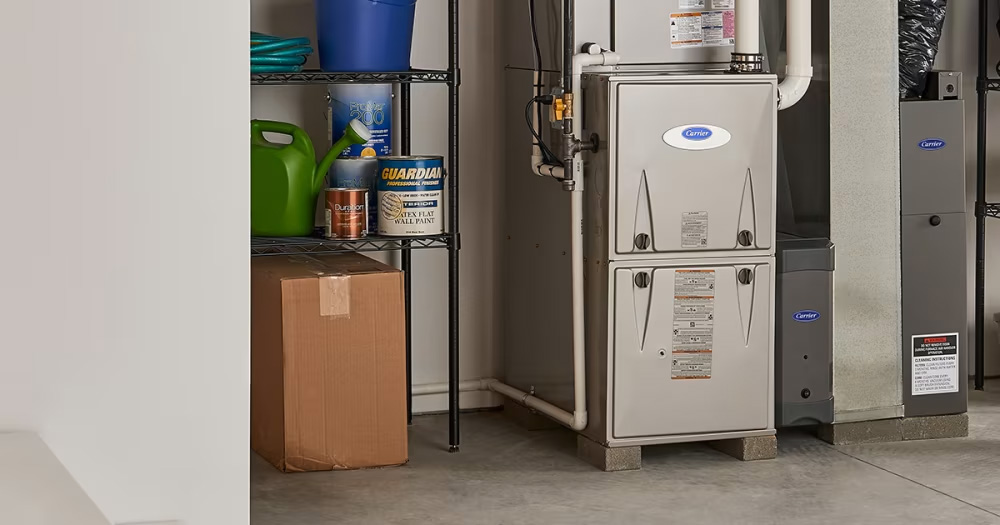
Several key components within a furnace can lead to heating failures. The flame sensor, for instance, detects whether the burner is lit; if it fails, the furnace may shut down to prevent gas leaks. The blower motor is another critical component; if it malfunctions, heated air cannot circulate throughout your home, leading to cold spots and discomfort.
Implementing advanced monitoring systems can provide real-time insights into the health of these critical furnace components, enabling proactive maintenance and preventing complete system breakdowns.
Residential HVAC Monitoring for Real-time Failure Diagnosis
on centralised hybrid heating and cooling systems that power large residential buildings, the authors highlight the importance of installing a monitoring system and using the acquired data for real-time diagnosis and the effective management of failures.
Residential Buildings Heating and Cooling Systems: The key role of monitoring systems and real-time analysis in the detection of failures and management …, G Cavazzini, 2023
How Can You Troubleshoot Furnace and Thermostat Issues Immediately?
When faced with heating issues, immediate troubleshooting can help identify the problem and potentially save on repair costs.
- Check Power Supply: Ensure that the furnace is receiving power by checking circuit breakers and switches.
- Inspect Thermostat Settings: Verify that the thermostat is set to the desired temperature and is in the heating mode.
- Examine Air Filters: Check and replace clogged air filters to improve airflow and efficiency.
What Are the Step-by-Step DIY Checks for Furnace Not Heating?
To troubleshoot a furnace that is not heating, follow these steps:
- Check the Circuit Breaker: Ensure the circuit breaker for the furnace is not tripped.
- Inspect the Pilot Light: If your furnace has a pilot light, check to see if it is lit. If not, follow the manufacturer’s instructions to relight it.
- Replace Air Filters: Remove and replace any dirty air filters to enhance airflow.
When Should You Stop DIY and Call a Professional HVAC Technician?
While DIY troubleshooting can resolve minor issues, certain signs indicate that professional help is necessary:
- Persistent Issues: If the furnace continues to malfunction after basic checks, it may require expert diagnostics.
- Safety Concerns: If you notice unusual smells, such as gas or burning, it is crucial to call a professional immediately to ensure safety.
To further enhance diagnostic capabilities and prevent severe issues, real-time sensor monitoring and automatic fault detection systems are proving invaluable in HVAC management.
Real-time HVAC Sensor Monitoring & Automatic Fault Detection
Real-time monitoring of heating, ventilation, and air conditioning (HVAC) systems is crucial to maintaining optimal performance such as providing thermal comfort and acceptable indoor air quality, guaranteeing energy saving, and assuring system reliability. In a realistic situation, HVAC systems can degrade in performance or even fail due to a variety of operational problems, such as stuck open or closed air dampers and water valves, supply or exhaust air fan faults, hot or chilled water pump faults, and inefficiencies in the way HVAC systems or pieces of equipemnt are controlled. This paper presents automatic fault detection techniques, as well as a key sensor sets selection approach that can help to maintain the performance of HVAC systems, and optimise fault detection results.
Real-time HVAC sensor monitoring and automatic fault detection system, Y Guo, 2016
What Are the Financial Impacts of Immediate and High-Demand Furnace Failures?
Furnace failures can lead to significant financial consequences, particularly if repairs are delayed. Understanding these impacts can motivate timely action.
- Increased Energy Bills: A malfunctioning furnace often works harder to maintain temperature, leading to higher energy costs.
- Repair Costs: Delaying repairs can exacerbate issues, resulting in more extensive and expensive repairs down the line.
How Does Delayed Furnace Repair Increase Your Energy Bills and Costs?
Delaying furnace repairs can lead to increased energy bills as the system struggles to maintain the desired temperature. Over time, this inefficiency can add up, resulting in a noticeable spike in monthly utility costs. Additionally, neglecting minor repairs can lead to more severe issues that require costly interventions.
What Are the Typical Furnace Repair Costs in 2024?
Typical furnace repair costs can vary based on the issue. Common repairs may range from $150 to $500, depending on the complexity of the problem. More extensive repairs, such as replacing a blower motor or heat exchanger, can cost upwards of $1,000. Understanding these costs can help homeowners budget for necessary repairs and avoid financial strain.
How Can Preventative Maintenance Help Avoid Furnace Failures and Save Money?
Regular preventative maintenance is essential for ensuring the longevity and efficiency of your furnace. By investing in routine checks, you can avoid costly repairs and maintain a comfortable home environment.
This proactive approach, known as predictive maintenance, is a crucial strategy for maintaining complex HVAC systems.
Predictive Maintenance for HVAC Systems: A Preventive Approach
Predictive maintenance is a preventive maintenance approach that is performed based on an analysis of the current condition of the equipment, allowing for timely intervention before a failure occurs. This approach is particularly beneficial for complex systems like HVAC, where unexpected breakdowns can lead to significant operational disruptions and increased costs.
Review of predictive maintenance algorithms applied to HVAC systems, N Es-Sakali, 2022
Further research demonstrates how integrating machine learning algorithms into HVAC management can transform preventative maintenance into a predictive approach, ensuring greater efficiency and substantial cost savings.
Predictive Maintenance for HVAC: ML for Efficiency & Savings
This comprehensive research endeavors to explore the integration of machine learning algorithms as a transformative solution for predictive maintenance in Heating, Ventilation, and Air Conditioning (HVAC) systems. The escalating demand for efficiency and sustainability in building practices has necessitated innovative approaches, and this study focuses on the proactive utilization of machine learning in HVAC system management. The investigation delves into the latest advancements in machine learning, offering a nuanced examination of its applications within HVAC systems. By predicting maintenance needs, these algorithms play a pivotal role in ensuring system reliability, optimizing energy efficiency, and contributing to substantial cost savings.
Machine learning algorithms for predictive maintenance in HVAC systems, 2023
- Regular Inspections: Scheduling annual inspections can help identify potential issues before they escalate.
- Efficiency Improvements: Well-maintained furnaces operate more efficiently, reducing energy consumption and costs.
What Are the Essential Furnace Maintenance Tasks to Ensure Efficiency?
To keep your furnace running efficiently, consider the following maintenance tasks:
- Filter Replacement: Change air filters every 1-3 months to ensure proper airflow.
- Annual Tune-Ups: Schedule professional tune-ups to check for and address any potential issues.
How Do Smart Thermostats Contribute to Early Detection and Energy Savings?
Smart thermostats can significantly enhance furnace efficiency by providing real-time data and alerts. Features such as remote monitoring and automatic adjustments help optimize heating schedules, leading to energy savings. By detecting issues early, smart thermostats can alert homeowners to potential problems before they require costly repairs.
Studies further emphasize how smart thermostat data can be leveraged for effective fault detection and diagnosis in residential HVAC systems.
Smart Thermostat Data for Residential HVAC Fault Detection
Fault detection and diagnosis (FDD) methods assist technicians in discovering and locating faults in HVAC systems. In recent years, the development of smart thermostats and the Internet of Things (IoT) has enabled the collection of large amounts of operational data from residential HVAC systems, which can be used for FDD.
Performance benchmarking of residential air conditioning systems using smart thermostat data, F Guo, 2023
Research further supports the critical role of smart thermostats in identifying system faults and improving overall HVAC performance.
Smart Thermostat Fault Detection & Diagnosis
fault above 30% can be confidently detected if those gains are not captured. Thus, this study demonstrates the need to consider some of these gains in developing smart thermostat fault detection and diagnosis potential for air-conditioning systems.
Investigation of smart thermostat fault detection and diagnosis potential for air-conditioning systems using a Modelica/
EnergyPlus co-simulation approach, KA Ejenakevwe, 2024
This proactive approach aligns with broader efforts in residential HVAC to leverage automatic fault detection and smart diagnostic tools for improved system performance and maintenance quality.
Residential HVAC Fault Detection & Smart Diagnostics
Heating, ventilation, and air conditioning (HVAC) systems account for a significant amount of energy consumption in residential and commercial buildings. This report provides an analysis of the current state of Automatic Fault Detection & Diagnostics (AFDD) in residential CAC and ASHPs as well as the use of smart diagnostic tools for quality installation and maintenance.
Automatic Fault Detection & Diagnostics: Residential Market Analysis, CA Antonopoulos, 2020
What Are the Safety Risks of Furnace Failures and How to Address Them?
Furnace failures can pose serious safety risks, including carbon monoxide leaks and fire hazards. Understanding these risks is crucial for maintaining a safe home environment.
- Carbon Monoxide Risks: Malfunctioning furnaces can produce dangerous levels of carbon monoxide, a colorless and odorless gas that can be fatal.
- Fire Hazards: Overheating or electrical issues can lead to fires, making it essential to address furnace problems promptly.
How Can Carbon Monoxide Leaks Be Detected and Prevented?
To prevent carbon monoxide leaks, install CO detectors throughout your home. Regularly check and maintain your furnace to ensure it operates safely. If a CO detector alerts you, evacuate the premises immediately and call for professional assistance.
Why Is Professional Diagnostic Important for Furnace Safety?
Professional diagnostics are crucial for ensuring furnace safety. HVAC technicians have the expertise to identify and address issues that may not be apparent to homeowners. Regular professional inspections can prevent dangerous situations and ensure compliance with safety standards.
| Component | Potential Issue | Consequence |
| Ignitor | Failure to ignite | No heat production |
| Flame Sensor | Fails to detect flame | System shutdown |
| Blower Motor | Malfunction | Poor air circulation |
This table highlights the importance of key furnace components and the potential consequences of their failure. Regular maintenance can help prevent these issues and ensure a safe, efficient heating system.
| Repair Type | Average Cost | Impact Level |
| Ignitor Replacement | $150-$300 | Medium |
| Blower Motor Repair | $300-$700 | High |
| Annual Maintenance | $100-$200 | Low |
Understanding typical repair costs can help homeowners budget for necessary maintenance and avoid unexpected expenses. Regular maintenance can significantly reduce the likelihood of costly repairs.
Furnace maintenance is essential for ensuring a safe and efficient heating system. By addressing common issues and scheduling regular inspections, homeowners can avoid costly repairs and maintain a comfortable living environment. Understanding the financial implications of furnace failures can motivate timely action and preventative measures.