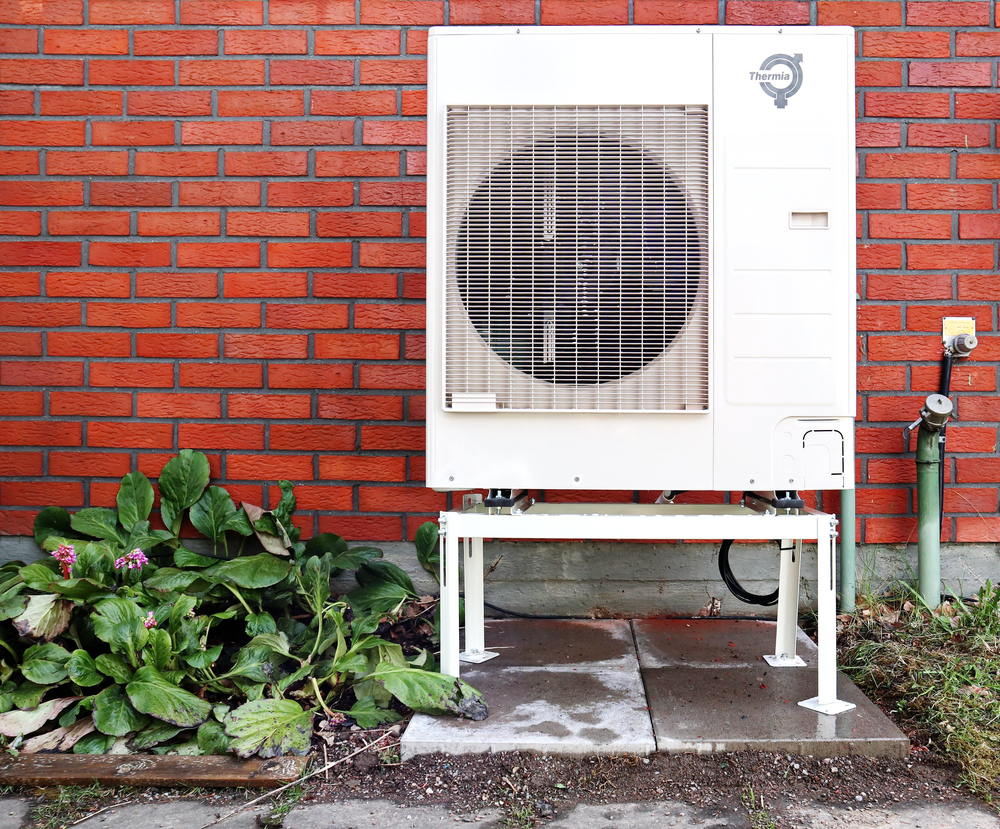
A heat pump can change the flow of refrigerant and can either cool or heat a home. Simply put, a heat pump works when air is blown over an evaporator coil, transferring heat energy from the air to the refrigerant. That heat energy is then circulated in the refrigerant to a condenser coil, where it is released as a fan blows air across the coil. This allows heat to be pumped from one place to another.
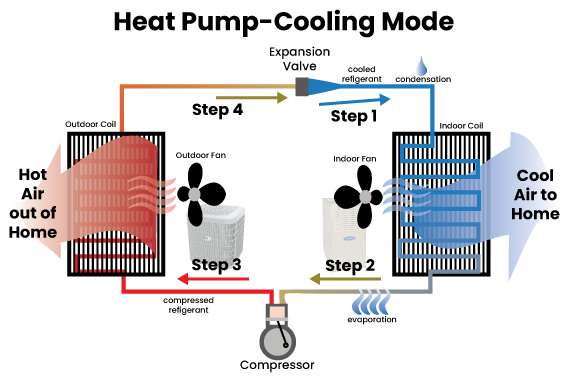
How a Heat Pump Works – Cooling Mode
Heat pumps rely on putting hot air in contact with cooler, lower pressure environments so the heat naturally transfers. Here’s how a heat pump works:
Step 1: Liquid refrigerant is pumped through an expansion device at the indoor coil, which functions as the evaporator. Air from inside the house is blown across the coils and heat energy is absorbed by the refrigerant and the resulting cool air is blown throughout the home’s ducts.
Step 2: The gaseous refrigerant now passes through a compressor, which pressurizes the gas. The process of pressurizing the gas heats it up and the hot, pressurized refrigerant moves through the system to the coil in the outdoor unit.
Step 3: A fan in the outdoor unit moves outside air across the coils, which serve as condenser coils in cooling mode. Because the air outside the home is cooler than the hot compressed gas refrigerant in the coil, heat is transferred from the refrigerant to the outside air. During this process, the refrigerant condenses back to a liquid state as it cools. The warm liquid refrigerant is now pumped through the system to the expansion valve at the indoor unit.
Step 4: The expansion valve reduces the pressure of the warm liquid refrigerant, which cools it. At this point, the refrigerant is in a cool, liquid state and ready to be pumped back to the evaporator coil to begin the cycle again.
How A Heat Pump Works – Heating Mode
A Heat pump in heating mode operates just like cooling mode, except that the flow of refrigerant is reversed. The flow reversal means that the heating source becomes the outside air, and the heat energy is released inside the home. The outside coil now has the function of an evaporator, and the indoor coil now has the role of the condenser. The physics of the process are the same.
Step 1: Heat energy is absorbed in the outdoor unit by cool liquid refrigerant, turning it into cold gas.
Step 2: Pressure is then applied to the cold gas, turning it to hot gas.
Step 3: The hot gas is cooled in the indoor unit by passing air, heating the air, and condensing the gas to warm liquid.
Step 4: The warm liquid is relieved of pressure as it enters the outdoor unit, turning it to cool liquid and renewing the cycle.
Heat Pump Repairs
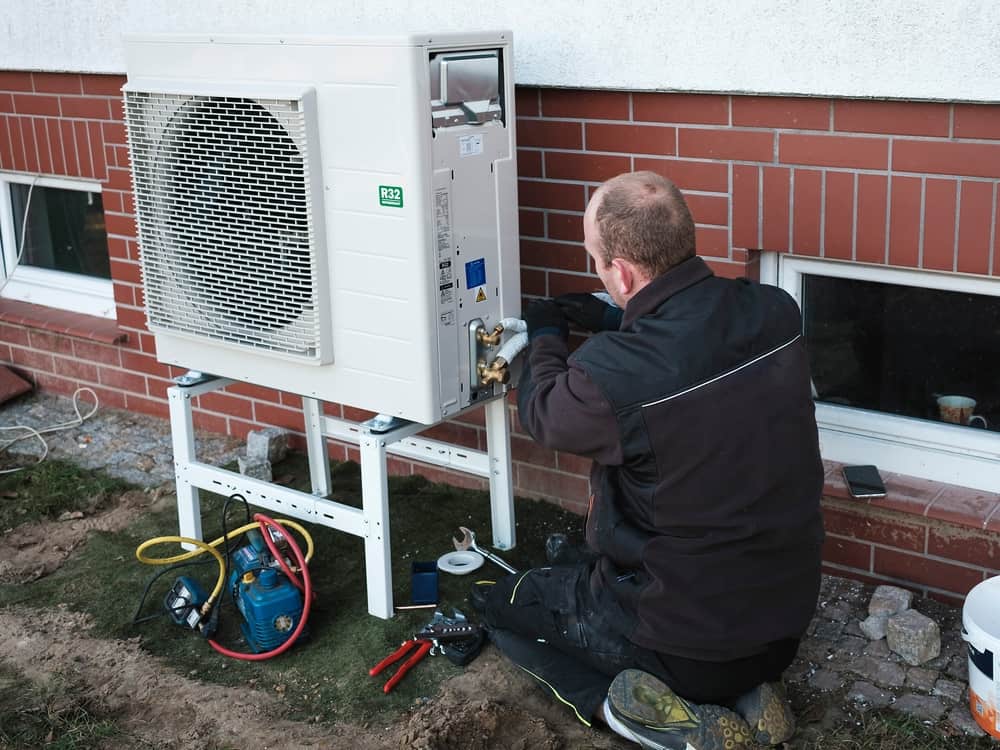
Do you have an existing heat pump that needs to be repaired? Or an aging model that you want to replace with a more energy-efficient brand new one? Heat pumps generally last between 12-16 years, so if yours is experiencing problems, our professional Technicians will review your heat pump and the rest of your system and advise you on the next steps. By providing both heating and cooling, heat pumps experience wear throughout the year, therefore it’s best to schedule heat pump maintenance twice per year in the spring and fall to ensure complete protection. Heat pumps can be a vital part of your home heating and cooling system and our team of experts is ready to get your system up and running.
Here are some signs that you might need a heat pump repair:
• Reduced energy efficiency/increased bills
• Your heat pump is between 12-16 years old
• Insufficient heating or cooling
• Your unit won’t turn on or off
• Development of ice on or near the unit/refrigerant leaks
• Damaged components
• A unit that is making strange noises
• Unusual cycling, both too frequent and infrequent
If your heat pump is experiencing any of the above issues, it’s time to call Baker and have our highly skilled Technicians to make an assessment and advise you on the next course of action. Baker is here to provide excellent service for your heating and cooling system when you need it and to ensure you and your family are always comfortable while saving you big bucks in energy costs!