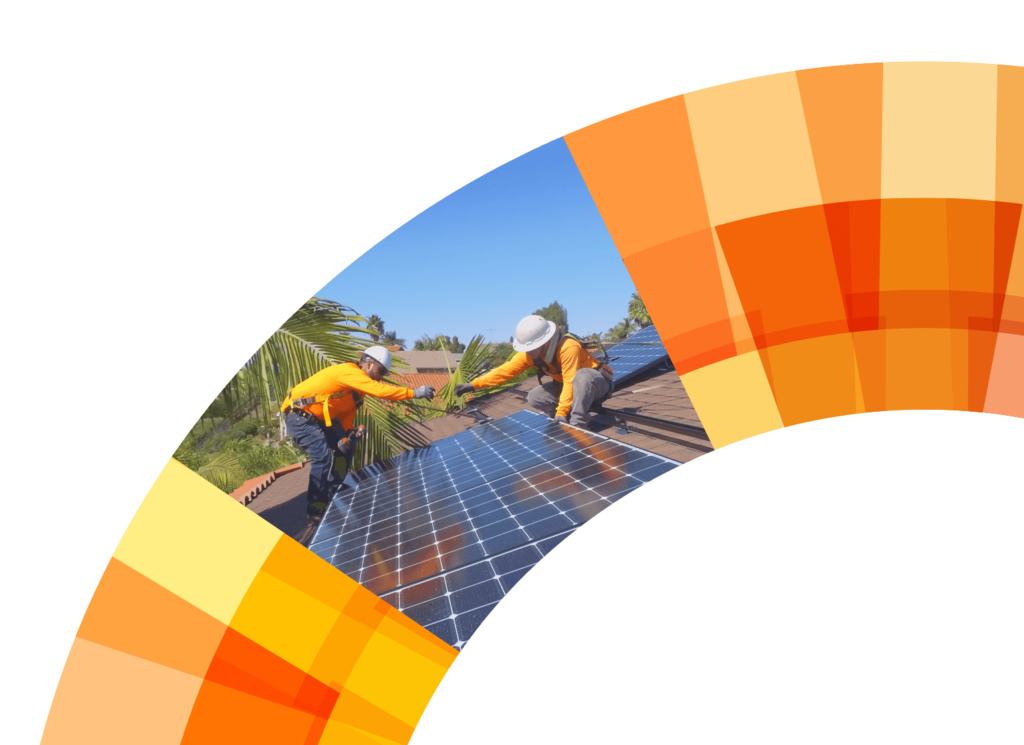
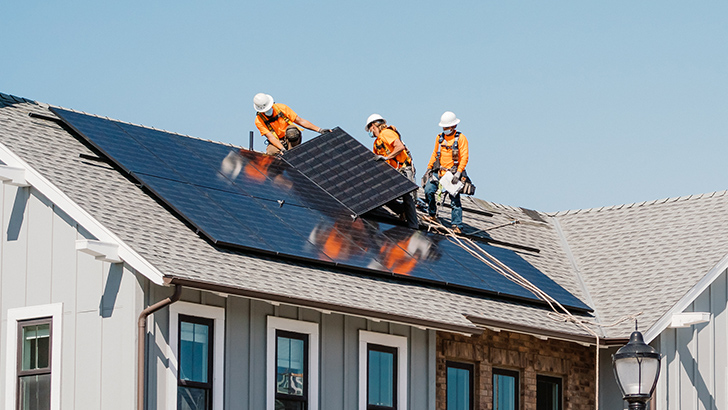
Roof-mounted systems are anchored directly to your roof through a series of roof attachments, module clamps, and mounting rails. This is the most commonly installed system because for most homeowners it offers the most space-saving, sun-light absorbing solution.
Ground-mounted systems
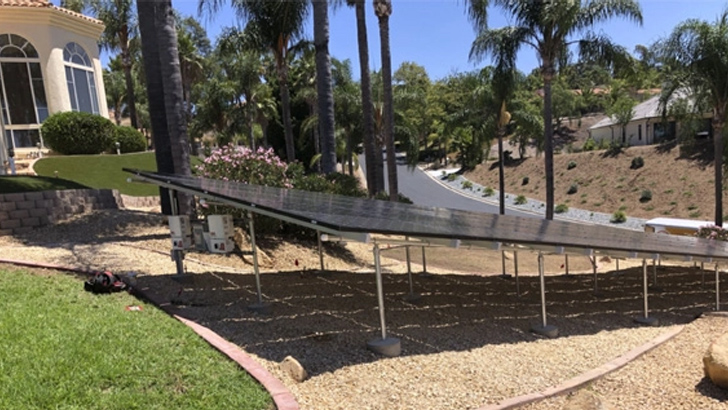
A traditional ground-mounted solar PV system is anchored to the ground, holding several stacked panels with two rails supporting the panels. Panels can be positioned in either landscape or portrait format.
A tracking ground-mounted solar panel system includes a motorized system that tracks the sun throughout the day, making sure your panels are always facing the sun.
Solar Panel Mounting FAQs: Roof vs. Ground Systems
If your roof is in good condition, gets sunlight without extreme shading, and has a decent amount of space, you might be a good candidate for a roof-mounted system. Some shading can even be reduced by trimming nearby trees. Your solar panels may even offer a layer of protection from heat, UV light, rain, etc. for your roof. Not sure about your roof’s condition? Ask us and we can help.
What are the benefits?
Maximizing sun exposure is the most obvious goal of your system placement, and with Southern California perfectly located for loads of direct sunlight, it doesn’t matter which direction your roof faces — odds are you’ve got free sunshine to use.
Installing solar panels on your roof is the best way to put that empty space to work. You can effectively add a return-earning investment without taking up any valuable land space.
Installation costs are typically lower than a ground-mounted system, and your panels are less likely to experience damage from any ground-level accidents.
What are the drawbacks?
The number of panels you can install is limited by the space you have available on your roof. This would only be an issue if your energy needs require more panels than you have space for, though.
One of the most common questions we hear is, “what is the footprint of a ground-mounted solar system?”. This could range from the size of a car to the size of a football field depending on your energy needs. Most will fall closer to the size of a school bus.
If you’ve got room and you’d happy with allocating that space, you might be a good candidate for a ground-mounted system.
What are the benefits?
Ground-mounted systems offer a great alternative if your roof isn’t ideal for a solar panel system and you have some open land.
With ground mounts, we have more control over positioning and can choose angle alignment for maximum energy production. All this leads to more savings for you!
Ground mounts allow more air circulation under your solar panels, which helps them stay cool.
Maintenance is naturally easier since your system is at ground level.
What are the drawbacks?
Installation can be a bit more involved since we first need to build the structure (vs. having a roof structure already).
While you’ll be making good use of it, you need to plan 25+ years in advance how you want to use your land because once you’ve installed your system, you don’t want to move it.
baker college solar system, baker solar system, california residential ground mount solar, solar panel racking system arizona, ground mounted solar panels san diego, ground mounted solar panels review suitability pros cons, ground mounted solar systems, ground mounted solar panels residential, ground mounted solar panels pros cons suitability, residential ground solar panels, residential ground mounted solar panels, what is a roof mounting system in solar pv, roof mounted solar panel, roof mount solar system, baker home energy vs roofing solar installers, roof mount solar array in richmond ky, solar ground system, tesla solar ground mount, ground mounted solar systems atascadero ca, tesla ground mount solar
Comparing Roof-Mounted and Ground-Mounted Systems
When deciding between roof-mounted and ground-mounted solar systems, it's essential to understand their distinct characteristics and suitability for different properties. Roof-mounted systems are ideal for homeowners with suitable roofing conditions, while ground-mounted systems provide flexibility in placement and can be optimized for maximum sunlight exposure.
For instance, if your roof is structurally sound and receives ample sunlight, a roof-mounted system may be more cost-effective and easier to install. Conversely, ground-mounted systems are advantageous for properties with ample land space, allowing for larger installations that can be adjusted for optimal performance without the constraints of roof angles and materials.
Cost Considerations for Solar Installations
Understanding the cost implications of both roof-mounted and ground-mounted solar systems is crucial for homeowners. Typically, roof-mounted systems have lower installation costs due to their accessibility and the reduced need for additional structural supports.
In contrast, ground-mounted systems may incur higher initial costs due to site preparation and installation complexities. However, they can lead to long-term savings on energy bills, especially if they are installed in optimal locations that maximize sun exposure throughout the year.
Maintenance Requirements for Solar Systems
Maintenance is a key factor to consider when choosing between roof-mounted and ground-mounted solar systems. Roof-mounted systems generally require less maintenance since they are less exposed to ground-level debris and potential damage from animals.
On the other hand, ground-mounted systems may require more frequent maintenance, including cleaning and inspections, to ensure optimal performance. Homeowners should factor in these maintenance needs when evaluating the long-term viability of each system type.
Environmental Impact of Solar Energy Systems
The environmental benefits of installing solar energy systems extend beyond individual savings; they contribute significantly to reducing carbon footprints. Both roof-mounted and ground-mounted systems harness renewable energy, reducing reliance on fossil fuels and decreasing greenhouse gas emissions.
Moreover, ground-mounted systems can be strategically placed in less ecologically sensitive areas, allowing for solar energy production without disrupting existing ecosystems. Homeowners can feel confident that their investment in solar technology not only benefits their finances but also supports broader environmental sustainability efforts.