Heating Maintenance Plans — How Baker Compares
Heating maintenance plans are service agreements that schedule inspections, tune-ups, and priority repairs for home heating systems. In Southern California, temperature swings and coastal moisture create wear patterns that affect efficiency and reliability, so these plans matter. Below we explain how maintenance saves energy, extends equipment life, and cuts emergency repair risk, then compare common market plans to Baker Home Energy’s Heating and Air Conditioning Service Plans. You’ll learn which inspection points matter, what costs typically look like in the region, and how to weigh plan tiers, member perks, and long-term ROI. Read on for a practical breakdown of efficiency gains, a routine maintenance checklist, regional cost context, and clear feature-to-benefit comparisons homeowners can use to decide.
What Are the Key Benefits of Heating Maintenance Plans for Southern California Homeowners?
A heating maintenance plan is a preventive service agreement that inspects and maintains heating components on a regular schedule to improve efficiency, safety, and reliability. Routine upkeep fixes issues like clogged filters, poor airflow, and miscalibrated controls—problems that drive up runtime and energy bills. In Southern California, where humidity and intermittent heating stresses systems differently than colder climates, regular checks also help prevent corrosion and condensation-related failures. Below is a clear list of the main benefits homeowners get from a well-run maintenance plan, followed by a short explanation of how each benefit matters locally.
Heating maintenance plans deliver measurable results:
- Energy Savings: Proper tune-ups typically reduce heating energy use by 5–15% through cleaning, calibration, and airflow optimization.
- Extended Equipment Lifespan: Regular maintenance can extend component life by 15–50% by preventing accelerated wear.
- Fewer Emergency Repairs: Planned maintenance lowers the likelihood of mid‑season breakdowns and costly emergency replacements.
- Warranty and Safety Compliance: Routine inspections help meet warranty requirements and reduce safety risks through early detection.
Those outcomes come from straightforward mechanisms—clean components, correct calibrations, and steady airflow—which together translate into lower costs and more consistent comfort over time.
How Do Heating Maintenance Plans Improve Energy Efficiency and Reduce Costs?
Maintenance restores equipment to manufacturer specifications: cleaning heat exchangers, checking or replacing filters, and calibrating controls all reduce wasted energy. When airflow is optimized and combustion or electrical systems operate within spec, the system reaches set temperatures with fewer cycles and less runtime, which lowers energy consumption and utility bills. A 5–15% efficiency gain can mean meaningful seasonal savings and less wear, delaying costly replacements. Energy-efficiency authorities recommend regular tune-ups as a cost-effective way to improve system COP (coefficient of performance) and overall household energy use—so preventative maintenance preserves both comfort and efficiency.
Why Is Preventative HVAC Maintenance Essential for System Longevity and Comfort?
Preventative HVAC maintenance catches small issues before they become big failures: technicians inspect wear-prone parts, lubricate moving components, and check electrical connections and thermostat accuracy. That keeps temperatures steadier and humidity control more consistent because sensors and actuators are working as intended and filters aren’t restricting airflow. Fixing a worn blower bearing early is far cheaper than replacing a burned-out motor or cracked heat exchanger later. In short, preventative care improves day-to-day comfort and protects your investment over the long run.
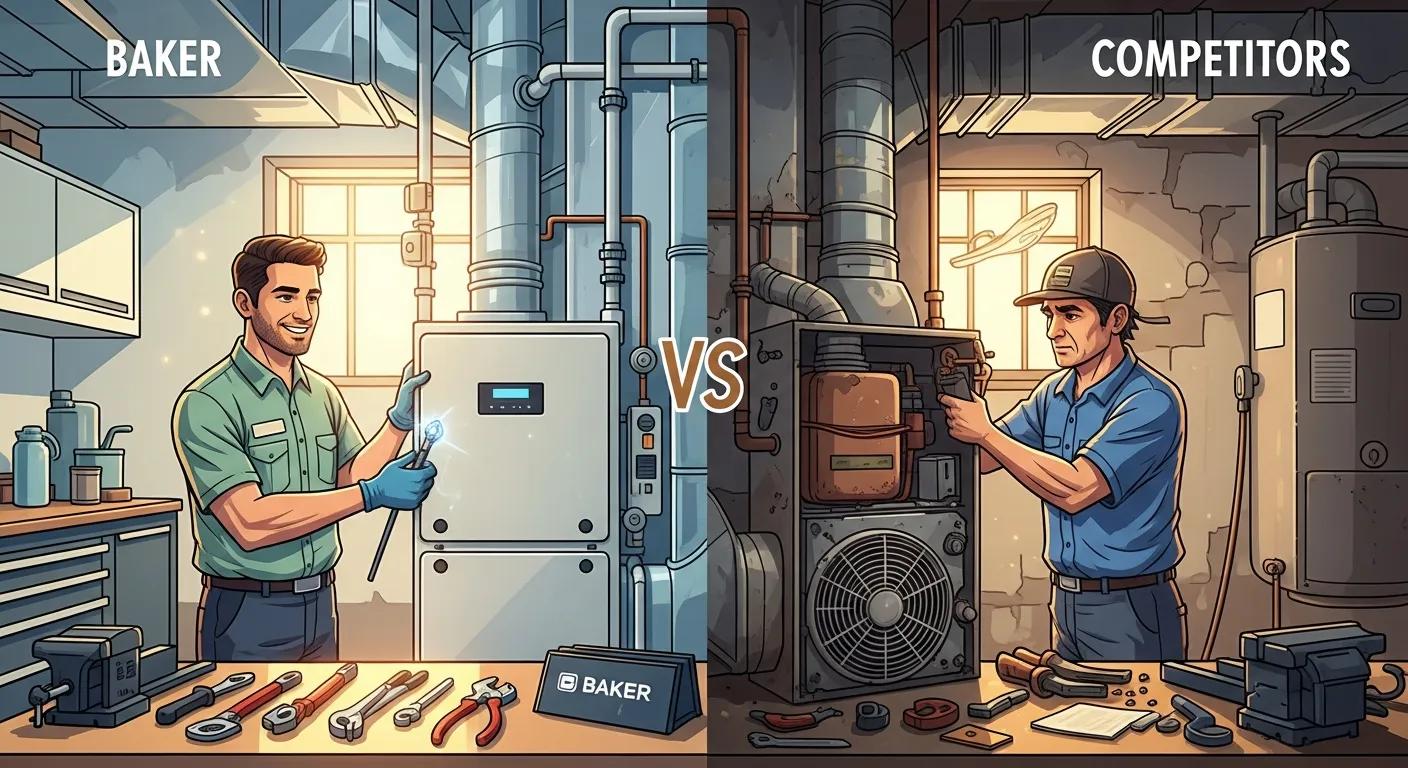
What Does Baker Home Energy’s Heating Maintenance Plan Include Compared to Competitors?
A good comparison looks at visit frequency, inspection scope, technician qualifications, and member perks—those features determine how complete a plan is. Many providers offer a single annual tune-up with varying levels of scope. Comprehensive plans emphasize biannual visits, thorough safety checks, and priority service. Baker Home Energy’s Heating and Air Conditioning Service Plans cover both AC and furnace systems and guarantee two visits per year from licensed technicians, aligning with seasonal readiness best practices. The checklist below summarizes the common inclusions for quick comparison.
Core tune-up checklist for comparison purposes:
- Safety inspection and carbon monoxide/fuel-system checks.
- Filter inspection or replacement guidance and airflow verification.
- Electrical connections check, thermostat calibration, and control verification.
- Cleaning of coils/heat exchangers, lubrication of moving parts, and refrigerant level assessment.
This checklist sets up the EAV-style comparison that follows, showing where Baker’s two-visit guarantee and licensed technicians change outcomes for homeowners.
Introductory table comparing plan features:
This table shows how visit frequency and technician credentials affect reliability and peace of mind. The next section lists what Baker technicians inspect and how those tasks prevent common regional problems.
What Are the Specific Services and Inspection Points in Baker Home Energy’s Tune-Up?
A complete tune-up focuses on combustion safety, airflow, electrical integrity, and control accuracy. During a Baker Home Energy visit, licensed technicians perform a safety inspection, check filters and ducts, verify thermostat calibration, tighten electrical connections, inspect motors and belts, and clean heat-exchange surfaces as needed. These steps reduce carbon monoxide risk, improve comfort, and help systems run closer to design specs—lowering operating costs and reducing unexpected failures common in Southern California systems.
How Do Baker Home Energy’s Plan Tiers and Member Benefits Compare to Other Providers?
Plans typically vary by visit frequency, repair discounts, and priority access. A basic tier often offers a single annual tune-up; premium tiers add visits, larger discounts, and faster scheduling. Baker emphasizes routine biannual visits from licensed technicians and includes member benefits like priority scheduling and repair discounts to reduce downtime and long-term costs. More frequent visits lower emergency failure probability, and priority scheduling shortens outages during peak demand—so tier selection is a balance between upfront plan cost and expected savings from fewer repairs and better efficiency.
How Do Heating Maintenance Plan Costs and Value Compare in Southern California?
Cost comparisons depend on annual plan rates, one-time tune-up fees, and factors like system age, accessibility, and type. The value calculation centers on avoided repair costs, energy savings, and extended equipment life. Below are common pricing factors and a table showing typical regional ranges with notes on expected ROI to help homeowners compare objectively.
Common factors that affect pricing:
- System type (furnace, heat pump, hybrid) and complexity.
- System age and existing condition (older systems require more labor).
- Accessibility of equipment (attic or rooftop units add labor).
- Geographic factors and local labor rates in Southern California.
Cost comparison table for regional context:
Membership-style plans typically deliver stronger long-term value through recurring preventative care and fewer emergency calls. Next we look briefly at local furnace tune-up norms to set homeowner expectations in San Diego and nearby areas.
What Is the Typical Furnace Tune-Up Cost in San Diego and Surrounding Areas?
In San Diego and nearby Southern California communities, single furnace tune-ups generally fall in a moderate range that reflects local labor and travel. One-time tune-ups commonly cost $100–$250 depending on system complexity and whether basic parts (filters, belts) are included. Annual membership plans that bundle multiple visits often range $150–$350 per year, which can be more economical for households that prioritize preventative care. These ranges help homeowners choose between pay-as-you-go service and a plan with predictable scheduling and costs.
How Does Baker Home Energy Provide Long-Term Savings and Flexible Payment Options?
Baker Home Energy uses a whole-home approach—linking HVAC maintenance with other home energy systems—to capture broader efficiency gains and avoid duplicated service work. With two guaranteed visits per year from licensed technicians for AC and furnace systems, Baker’s plans aim to lower emergency repair incidents and keep systems running efficiently, producing long-term savings. Member perks like priority scheduling and repair discounts further reduce out-of-pocket costs over time, giving homeowners a clear comparison between short-term expense and lifecycle savings. Baker’s regional experience also improves diagnosis speed and reliability.
Why Choose Baker Home Energy Over Competitors for Heating Maintenance Plans?
When choosing a plan, prioritize technician qualifications, preventive visit frequency, and how a provider fits maintenance into a broader home energy strategy. Baker Home Energy stands out for its whole-home focus and regional experience with Southern California homes, offering Heating and Air Conditioning Service Plans with two visits per year from licensed technicians. That local expertise and integrated service design help translate maintenance into cross-system efficiency—especially for homes that also use solar, batteries, or other energy technologies. The EAV table below links Baker’s attributes to direct homeowner benefits.
EAV mapping of UVPs to homeowner benefits:
That mapping makes it easier to see how Baker’s features translate into outcomes homeowners care about. Below we explain how decades of local experience speed up accurate diagnosis and better recommendations.
How Does Baker Home Energy’s 86+ Years of Experience Benefit Southern California Homeowners?
Long local experience means familiarity with repeated equipment failure patterns, common installation variations, and climate-driven maintenance needs—so Baker technicians diagnose problems faster and more accurately. Institutional knowledge from decades in the region shapes preventive checklists, targeted inspections, and tailored retrofit or efficiency suggestions. For homeowners, that means more effective maintenance visits that focus on the most failure-prone components and reduce repeat callbacks. That expertise pairs well with Baker’s whole-home approach for broader system improvements.
What Unique Customer Service and Whole-Home Energy Solutions Does Baker Offer?
Baker Home Energy coordinates across HVAC, solar, batteries, and roofing to reduce friction for homeowners and capture compounding efficiency gains. Technicians can flag issues that cross system boundaries—like how air sealing or roof condition affects HVAC load—so recommendations are cohesive rather than siloed. Plan features such as priority scheduling and member benefits help avoid long delays during peak seasons, and coordinated whole-home strategies increase the chance of measurable energy savings. That makes choosing a plan a decision about integrated long-term value, not just single repairs.
What Are Common Questions About Heating Maintenance Plans?
Homeowners often want quick answers about what’s included, how often to service systems, whether plans are worth the cost, and what pricing looks like. Below are concise, practical Q&A responses designed for quick reference and clear guidance.
What Is Included in a Typical Heating Maintenance Plan?
A typical plan covers scheduled tune-ups with safety inspections, filter checks or guidance, thermostat calibration, lubrication of moving parts, electrical connection inspections, and basic cleaning of heat-exchange surfaces. Member plans usually add priority scheduling and repair discounts. These services focus on efficiency, safety, and lowering emergency-service risk while helping preserve warranty coverage and equipment life.
How Often Should I Service My Heating System for Optimal Performance?
Service once or twice a year—ideally before the heating season—for best results. Biannual visits catch wear that builds between seasons, reduce the chance of mid‑season breakdowns, and help meet warranty requirements. That schedule is especially useful in mixed-climate Southern California homes where heating use is intermittent.
- Plan inclusions: Confirm the scope of inspections and any repair discounts.
- Visit frequency: Check whether a provider guarantees one or two annual visits.
- Technician credentials: Verify licensed technicians for safety and code compliance.
Those three checkpoints help homeowners compare offerings and choose a plan that fits their priorities and budget. After reviewing these points, most homeowners will either request a quote or enroll in a plan that matches their comfort and cost goals.
- Next steps: Compare your service history to the checklist above to spot any gaps.
- If undecided: Favor plans with biannual visits and licensed technicians for stronger preventive value.
- If cost-sensitive: Compare a plan’s annual fee to recent emergency repair bills to estimate ROI.
This checklist turns benefits into concrete decisions and helps homeowners move confidently toward the right maintenance approach.
Frequently Asked Questions
What Should Homeowners Look for When Choosing a Heating Maintenance Plan?
Look at visit frequency, technician qualifications, and the specific services included. Also review member perks like priority scheduling and repair discounts. Together, these elements determine how quickly issues are handled, how thorough inspections are, and whether the plan offers strong long-term value for your home.
How Can Homeowners Ensure Their Heating System is Ready for Winter?
Schedule a maintenance check before the heating season: inspect or change filters, confirm thermostat settings, and make sure components run correctly. Simple homeowner tasks like cleaning vents and keeping the area around the unit clear help too. These steps reduce surprises and keep the system running efficiently all winter.
Are There Any Risks Associated with Skipping Heating Maintenance?
Yes. Skipping maintenance can lower energy efficiency, raise utility bills, increase the chance of breakdowns, and even void warranties. It can also raise safety risks, such as carbon monoxide exposure. Regular inspections catch small issues before they become costly or dangerous.
What Are the Signs That My Heating System Needs Maintenance?
Watch for unusual noises, uneven heating, higher energy bills, strange odors, frequent cycling, or failure to reach set temperatures. Any of these signs suggest it’s time for a professional check to prevent bigger problems down the line.
How Do I Know If a Heating Maintenance Plan is Worth the Investment?
Compare the plan cost to recent emergency repair bills and potential energy savings. A plan that reduces breakdowns and improves efficiency often pays back through fewer repairs and lower bills, plus the added value of predictable maintenance and priority service.
Can Heating Maintenance Plans Be Customized to Fit My Home’s Needs?
Yes. Many plans offer tiers with different visit frequencies and coverage levels. Talk with the provider about your system type, usage patterns, and priorities so they can tailor a plan that matches your home and budget.