
Heating Installations Tailored for Southern California Homes
With energy prices rising and SoCal’s microclimates varying block by block, choosing and installing the right heating system matters. Start by understanding the technical details and the installation process so you can make smarter decisions. This article breaks down how modern heating systems work, how to weigh heat pumps against furnaces, and what a best-practice installation looks like—so you can evaluate contractors confidently. We cover efficiency metrics (SEER, HSPF, AFUE), possible rebates, and how coastal versus inland climates affect equipment choice. Throughout, you’ll find practical comparisons, clear installation standards, and concise checklists that show why correct sizing, commissioning, and code compliance matter. We also explain where Baker Home Energy’s in-house teams, whole‑home integration, and local know‑how can help homeowners achieve reliable performance and verified savings. Read on to learn how to compare options, what questions to ask installers, and how climate and incentives should shape your heating decision.
What Makes Baker Home Energy’s Heating Installation Unique in Southern California?
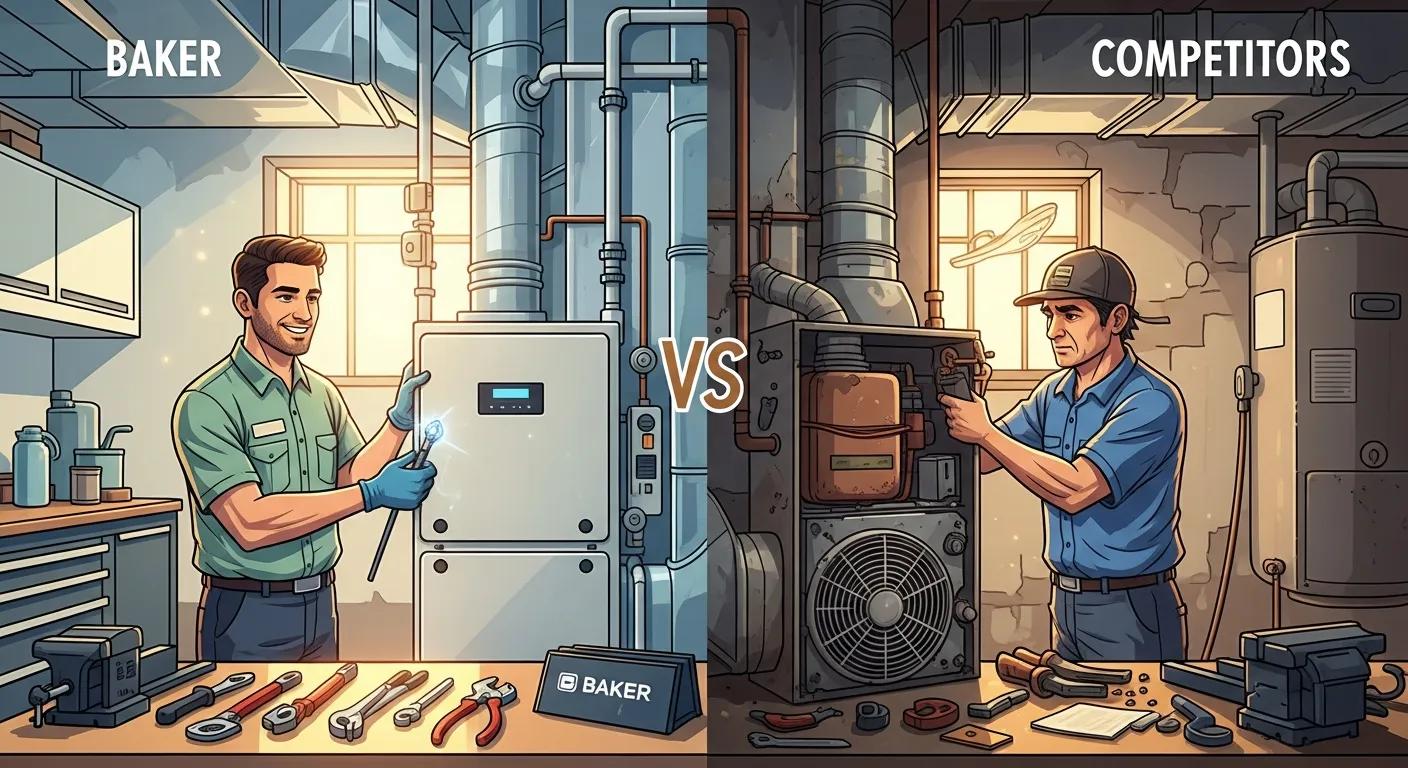
Great heating starts with consistent workmanship, accurate sizing, and solutions tuned to local climate and code. Baker Home Energy stands out by using in‑house technicians, integrating HVAC with solar and battery systems when it makes sense, and relying on deep local experience to deliver comfort and lower lifecycle costs. That model reduces handoffs between trades and helps align equipment, controls, and storage for better long‑term economics. Because our installers are employees—not subcontractors—accountability for installation quality and follow‑up service is clearer, which tends to improve warranty outcomes and system reliability. The sections that follow explain how our in‑house teams, decades of regional experience, and integrated energy strategies turn into measurable homeowner benefits and what to look for when choosing a contractor.
Baker-specific integration (brief mention per strategy): We prioritize in‑house expertise, whole‑home integration (solar + battery + HVAC), and a deep understanding of local market needs—advantages that improve efficiency and coordination for Southern California homes. If you’d like a tailored quote or site assessment, we can evaluate your microclimate, ductwork, and rebate eligibility.
How Does Baker’s In-House Expertise Ensure Quality and Reliability?
Keeping technicians on payroll lets us standardize training, track certifications, and maintain a consistent installation method—reducing variability and increasing first‑time‑right results. We centralize responsibility for Manual‑J load calculations, matched equipment selection, and on‑site supervision so sizing and duct integration are handled by teams following the same quality protocols. That alignment supports repeatable commissioning steps—pressure testing, refrigerant charge checks, and thermostat calibration—that directly affect long‑term efficiency and comfort. Because our crews are employees, warranty and follow‑up service are coordinated internally, making claims and maintenance simpler for homeowners. The next section explains why a long local history amplifies these advantages for Southern California customers.
Why Is 80+ Years of Local Experience Important for Southern California Homeowners?
Being in the market for decades builds institutional knowledge about local climate zones, permit processes, and incentive programs. With 80+ years of local experience, Baker has developed practical templates for coastal corrosion prevention, inland load management, and SCAQMD compliance. That institutional memory shortens the learning curve with code updates, speeds permit submissions, and reduces specification errors that can hurt performance. For homeowners, that means fewer surprises, faster project completion, and better access to parts and suppliers. The next section compares heat pump types and how microclimate and site factors affect which technology is the right fit.
How Does Baker Home Energy Compare Heat Pump Installation Options in Southern California?
Choosing a heat pump starts with site constraints and performance goals: air‑source heat pumps fit many SoCal homes with lower upfront cost, while geothermal systems can deliver higher steady‑state efficiency where a ground loop is practical. Our recommendations weigh installation complexity, expected operating savings, and rebate eligibility to find the best match for each property. Correct equipment selection always begins with a Manual‑J load calculation and an inspection of ductwork and the building envelope; those inputs determine system sizing, refrigerant choice, and control strategies. Below is a compact comparison that highlights practical differences, followed by a concise table that clarifies efficiency, cost, and rebate considerations.
Air-source vs geothermal comparison (snippet-style):
- Air-source heat pumps: broadly applicable, lower upfront cost, and increasingly efficient with modern variable‑speed compressors.
- Geothermal heat pumps: higher initial cost but very high, steady efficiency—best where ground loops are feasible.
Intro to EAV table: The table below compares common heat pump types across efficiency, cost range, typical applications, and rebate eligibility to help homeowners compare options objectively.
This comparison shows that the right system depends on site feasibility and desired payback. The next subsection outlines the practical benefits and trade‑offs of each option.
What Are the Benefits of Air-Source vs. Geothermal Heat Pumps?
Air‑source heat pumps offer strong seasonal performance with less installation disruption; modern variable‑speed models keep efficiency up across wide temperature ranges, making them ideal for many retrofits and homes with existing ductwork. Geothermal systems use the earth’s stable temperatures for higher COP and lower operating costs over time, but they require more site work and higher upfront capital. Ductless mini‑splits extend air‑source benefits to rooms or additions without ducts, delivering zonal control and excellent part‑load efficiency. Choosing depends on priorities—lower upfront cost and simpler installation versus maximum operating efficiency and long‑term savings—and the following subsection explains how we optimize installations to capture those efficiencies.
How Does Baker’s Heat Pump Technology Optimize Energy Efficiency?
Delivering real efficiency starts with an accurate Manual‑J, properly matched indoor and outdoor components, and diligent commissioning to confirm refrigerant charge and airflow. We emphasize system matching and commissioning—checking refrigerant pressures, measuring supply/return temperatures, and verifying thermostat calibration—so field performance aligns with rated efficiency. Integrating controls, smart thermostats, and demand‑response settings unlocks time‑of‑use savings when paired with solar and battery storage. Ongoing maintenance and performance monitoring catch issues like compressor degradation or airflow restriction before they erode efficiency. The next section moves from component‑level optimization to the end‑to‑end installation process that makes these practices standard on every job.
What Is the Unique HVAC Installation Process Baker Home Energy Follows in Southern California?
A reliable installation starts with a thorough site survey and Manual‑J load calculation to size the system correctly, followed by careful equipment selection and a permit‑driven install that includes commissioning and homeowner education. Our in‑house approach standardizes each phase—survey, permitting, installation, commissioning—so responsibilities are traceable and quality checkpoints are enforced. Clear on‑site supervision reduces rework and ensures duct sealing, correct refrigerant charging, and proper control setups. Below is a practical table that maps key steps to who’s responsible and the expected outcome, so homeowners know what documentation and sign‑offs to expect.
Intro to EAV table: The following table outlines Baker’s typical installation phases, the responsible party, and the expected homeowner outcome to make expectations transparent.
Mapping steps to who’s responsible clarifies how in‑house teams cut coordination friction and provide clearer warranty handoffs. The next subsection describes communication and QA touchpoints during a typical project.
What Are the Key Steps in Baker’s Step-by-Step Heating Installation?
Our workflow follows a clear sequence: site assessment and Manual‑J sizing, equipment selection and permit submittal, in‑house installation with QA checkpoints, and commissioning with performance verification and homeowner handoff. The site assessment includes duct leakage testing and an envelope inspection to determine whether duct repairs or envelope upgrades are needed before startup. During installation, crews make sealed connections, apply corrosion‑resistant details for coastal installs, and mount matched components to minimize vibration and noise. Commissioning verifies refrigerant charge, airflow, and control logic, and we finish with an owner’s walkthrough and a scheduled maintenance plan. The next subsection covers the communication cadence and QA artifacts homeowners should expect during and after installation.
How Does Baker Ensure Customer Communication and Quality Control?
Clear communication begins with a pre‑install briefing that explains the timeline, permit expectations, and homeowner preparations, and continues with scheduled on‑site updates at major milestones. Our supervisors use QA checklists at key stages—after ductwork, equipment set, and final commissioning—and provide documented results to the homeowner. After install, customers receive system documentation, recommended maintenance intervals, and a straightforward warranty explanation tied to our in‑house work model to simplify future service. This structured communication and documented QA reduce ambiguity and support long‑term performance. The section that follows explains how these technical practices translate into energy savings and incentive eligibility.
Why Are Baker Home Energy’s Heating Solutions the Best Choice for Energy Efficiency in Southern California?
Energy‑efficient heating relies on the right performance metrics—SEER for cooling efficiency, HSPF for heat pump heating, and AFUE for furnace combustion—and using them to estimate operating costs in local climate conditions. Choosing systems with competitive combined metrics and ensuring field commissioning realizes the rated efficiency in the home. Baker helps homeowners interpret these numbers, run simple payback estimates, and pursue rebates that improve project economics. The table below defines each metric and explains practical homeowner impact so you can compare rated performance to expected in‑home savings.
Intro to EAV table: This table clarifies common efficiency metrics and how they affect operating costs in Southern California housing contexts.
Knowing these metrics helps homeowners compare systems on a common basis and prioritize commissioning and controls that preserve rated efficiency. The next subsection explains how rebates and incentives change the financial picture.
How Do SEER, HSPF, and AFUE Ratings Impact Heating Performance?
SEER, HSPF, and AFUE quantify seasonal performance and serve as proxies for operating costs when combined with local weather and usage. In Southern California, cooling loads often dominate bills in inland zones, so SEER matters for overall HVAC economics, while HSPF is more important where winter heating hours add up. AFUE remains the key number for gas furnace efficiency; higher AFUE reduces fuel use but should be weighed against heat pump options that can lower emissions and pair better with solar. To translate ratings into household impact, combine expected hours of use with local energy rates and available incentives—installers can help with those estimates and paperwork.
What Rebates and Incentives Are Available for Energy-Efficient Heating Systems?
Rebates and incentives include federal tax credits, state and utility rebates, and local programs that target high‑efficiency heat pumps, duct upgrades, and electrification. Eligibility depends on equipment type, installation quality, and program rules. Many programs favor heat pump adoption and may offer larger incentives for paired envelope upgrades or replacements of high‑emission systems. Baker helps customers identify eligible programs and compiles the documentation—equipment specs, commissioning reports, and invoices—needed for rebate and tax claims. Homeowners should confirm current program rules and schedule projects to align with available incentives. The next section explains why homeowners trust contractors with proven performance and recognized credentials.
Why Do Southern California Homeowners Trust Baker Home Energy as Their Heating Contractor?
Homeowners trust contractors that deliver consistent work, document results, and earn third‑party recognition. Baker’s local reputation is backed by awards and strong customer ratings that reflect our in‑house workmanship and integrated service model. Social proof appears when multiple customers report improved comfort and lower bills after properly sized and commissioned installs, and when installers provide complete documentation and dependable follow‑up. Our focus on whole‑home integration—matching HVAC decisions with solar and battery options—helps homeowners see the bigger savings picture rather than a single equipment change. The following subsections summarize the signals of service quality and common review themes homeowners cite when evaluating contractors.
What Do Customer Testimonials Reveal About Baker’s Service Quality?
Customer feedback typically highlights punctual crews, professional communication, and noticeable comfort improvements. Homeowners often report fewer temperature swings and better system responsiveness after a correctly sized and commissioned installation. Reviews also emphasize the value of clear documentation and prompt warranty handling—benefits of an in‑house service model where responsibility stays internal rather than scattered among subcontractors. When reading testimonials, look for consistent mentions of on‑time completion, commissioning verification, and reliable post‑install support to confirm a contractor’s day‑to‑day performance.
Which Awards and Certifications Highlight Baker’s Commitment to Excellence?
Third‑party recognitions—like local “Best Of” awards, high Google ratings, and reputable industry acknowledgements—signal a focus on customer service and operational standards when they appear consistently across platforms. These distinctions suggest the company resolves issues transparently and maintains steady service delivery. Paired with commissioning reports, clear warranty terms, and technician certifications, awards form a broader trust signal for homeowners. The next section explains how local climate factors should guide equipment selection and installation practices.
How Does Southern California’s Climate Influence Baker Home Energy’s Heating Installation Solutions?
Southern California spans many microclimates—from cool coastal zones to hot inland valleys—so heating choices should reflect local load profiles, humidity, and corrosion risk. Coastal homes typically need corrosion‑resistant materials and systems sized for milder heating loads, while inland homes require equipment that handles higher cooling peaks and larger temperature swings. We adapt equipment, sealing practices, and control logic to those differences so the final solution matches the home’s envelope and local code. The next subsection breaks down coastal versus inland considerations and equipment recommendations.
What Are the Differences Between Coastal and Inland Heating Needs?
Coastal homes usually have smaller heating loads but face higher humidity and salt‑air exposure, which calls for corrosion‑resistant outdoor components and careful condensate handling—air‑source heat pumps with durable coatings and scheduled maintenance are often the best fit. Inland homes see larger diurnal swings and higher cooling demand, so systems with strong part‑load efficiency and staged compressors deliver better year‑round economics. Ductwork priorities differ too: coastal installations may focus on balanced ventilation and dehumidification, while inland homes emphasize tight duct sealing and insulation to control heat gains. Recognizing these differences helps homeowners choose equipment and maintenance plans that extend service life and keep systems efficient.
How Does Baker Adapt Heating Systems to Meet Local Regulations and Codes?
Local rules—air quality district requirements and building codes—affect allowed equipment, combustion appliance placement, and necessary documentation. Baker’s local experience helps us pick compliant equipment, secure permits, and prepare inspection‑ready records.
Our in‑house coordination of permits, inspections, and paperwork streamlines regulatory steps for homeowners and helps keep projects on schedule.
This regulatory familiarity complements the technical practices described earlier and supports reliable, code‑compliant results.
- Key installation documentation homeowners should request: A completed Manual-J load calculation Commissioning report with measured temperatures and refrigerant charge verification Warranty documentation tied to in-house workmanship
- Checklist for evaluating installers: Request proof of on-site commissioning and a written maintenance schedule Confirm an in-house technician model rather than heavy subcontracting Ask how the installer supports rebate paperwork and post-install service
- Maintenance priorities after installation: Annual airflow and refrigerant checks Duct leakage testing every few years on older homes Corrosion inspections for coastal installations
These lists give homeowners clear, actionable steps to compare proposals and ensure installations meet both performance and compliance expectations.
Frequently Asked Questions
What should homeowners consider when selecting a heating system for their home?
Start with a Manual‑J load calculation to size the system correctly. Consider home size, local climate, energy efficiency ratings, and whether your existing ductwork is in good condition. Balance upfront cost against long‑term savings and available rebates. A qualified installer can review your envelope, run the numbers, and outline options that fit your priorities and budget.
How can homeowners maximize energy efficiency after installation?
Keep a regular maintenance schedule—annual airflow and refrigerant checks are key. Use a smart thermostat to match heating to occupancy patterns, seal ducts, and maintain insulation to reduce losses. If you have solar or storage, coordinate controls to take advantage of time‑of‑use rates. Staying current on local rebate programs can also uncover incentives for additional upgrades.
What are the common signs that a heating system needs maintenance?
Watch for uneven temperatures, strange noises, higher energy bills without changed usage, or unusual odors. Short cycling or failure to reach set temperatures are signs to call a professional. Timely maintenance prevents small issues from becoming costly repairs and preserves system efficiency.
How do local climate conditions affect heating system performance?
Climate matters. Coastal homes face mild heating needs but more humidity and salt exposure, which calls for corrosion‑resistant details. Inland homes contend with higher cooling demand and wider temperature swings, so part‑load performance and tight ductwork are more important. Installers should tailor equipment, sealing, and controls to those local conditions.
What role do rebates and incentives play in heating system selection?
Rebates and tax incentives can significantly lower project costs and change which option makes the most sense financially. Many programs favor heat pumps and may boost savings when paired with envelope improvements. Work with your installer to identify eligible programs and gather the necessary documentation for claims.
What should homeowners expect during the installation process?
Expect a site assessment with a Manual‑J calculation, permit handling, and a scheduled installation. During the job, crews will complete ductwork or sealing as needed, set equipment, and perform commissioning tests. You’ll receive a final walkthrough, documentation of measured performance, and guidance on operation and maintenance.
How can homeowners ensure they choose a reliable heating contractor?
Look for companies with consistent local experience, positive reviews, and verifiable certifications. Ask for commissioning proof, warranty terms tied to in‑house work, and references. A contractor who communicates clearly about timelines, permits, and post‑install support is more likely to deliver a worry‑free outcome.