
Flexible HVAC Financing Options in Southern California — Baker Home Energy
Financing your HVAC upgrade makes installing a new or more efficient heating and cooling system realistic for many Southern California homeowners. Instead of one large upfront payment, flexible plans spread costs over time so you can start saving on energy and enjoy better comfort right away. This guide walks you through how the financing works, who typically qualifies, and practical steps to compare offers and pair financing with local rebates and incentives. You’ll learn the common plan types, how to estimate monthly payments, what documents lenders usually ask for, and where to find calculators to compare options. We also show the measurable benefits of energy-efficient equipment, how rebates lower the financed balance, and simple decision steps tailored for Southern California homes. Throughout, Baker Home Energy’s role as your financing partner is clarified so you can move forward with confidence.
What Flexible Financing Plans Does Baker Home Energy Offer for HVAC Services?

We arrange a range of flexible financing options so homeowners can choose what fits their budget and timeline. Typical options include short-term promotional offers, multi-year low-interest loans, and customized payment plans sized to the project. Each option turns the project cost into a scheduled payment based on interest, term, and any introductory deferments — lowering the upfront cash you’ll need and letting you start enjoying the benefits sooner. Knowing how each plan works helps you compare monthly payments, total interest, and any eligibility rules before you commit. Below are the common plan categories Baker Home Energy helps arrange for qualifying projects.
- Short-term promotional financing — limited-time offers that sometimes include 0% APR for an introductory period.
- Long-term low-interest loans — spread the cost over several years to lower monthly payments while paying interest.
- Customized payment plans — tailored term lengths and deposit structures to match your project and budget.
Each plan balances monthly cashflow against total interest in different ways; the right choice depends on your credit profile, how quickly you expect rebates, and whether you prefer lower monthly payments or lower total cost. Below is a quick comparison of typical plan mechanics to help you see the differences at a glance.
Different financing plans create clear trade-offs in rates, terms, and monthly impact.
This table highlights that promotional offers can reduce or remove near-term interest, while long-term loans lower monthly payments but increase total interest. Use these distinctions to match a financing approach to your financial goals. Next, we cover typical payment scenarios and example calculations to help visualize the choices.
Overview of Payment Plans and Loan Options Available
Payment plans mainly differ by interest structure, repayment term, and borrower eligibility — and those differences drive monthly cost and total interest. Promotional plans with short 0% APR windows are useful if you plan to pay off the balance quickly or expect rebates to arrive soon. Long-term loans provide predictable, lower monthly payments for homeowners who want steady budgeting. Use side-by-side examples to compare a financed balance over different terms so you can see monthly cost versus cumulative interest and understand how rebates reduce the principal.
- Basic calculation: Divide the financed balance by the term to get a base monthly amount, then factor in APR to estimate the true monthly payment.
- Compare scenarios: Look at a 36-month 0% promotional plan versus a 120-month low-rate loan to see monthly cashflow and total-interest differences.
- Eligibility note: Promotional plans may require stronger credit or on-time payments to avoid deferred-interest clauses.
These comparisons help you choose whether to minimize interest or protect monthly cashflow, and lead into the application steps that follow.
How Can Southern California Homeowners Qualify for HVAC Financing?
Most lenders look for basic documentation: proof you own or are authorized to work on the property, ID, income information, and a credit profile that meets their minimums. Some lenders accept alternative proof of steady income or recent utility bills, and many offer pre-qualification or soft-credit checks so you can see likely terms without a hard inquiry. Having the typical documents ready shortens processing and helps you coordinate financing with installation and rebate timelines. Here’s a short checklist to prepare before you apply.
- Proof of homeownership or authorization: deed, mortgage statement, or homeowner account details.
- Income verification: recent pay stubs, tax returns, or bank statements showing steady income.
- Identification: government ID and Social Security number for credit checks.
Gathering these items beforehand improves approval odds and speeds the process. The next section walks through the application from quote to funding and explains how Baker Home Energy supports you at each step.
Step-by-Step Guide to Applying for Baker Home Energy Financing
Start by requesting a detailed project quote and pre-qualifying to see available plans; Baker Home Energy can help arrange a soft credit check so you can preview terms without impacting your score. After pre-qualification, upload or submit the required documents — proof of ownership, income, and ID — through the lender or our financing portal, then pick the plan that fits your budget and schedule. Approval times vary by lender, from same-day decisions to a few business days if more documentation is needed. Once financing is approved, we’ll coordinate funding and installation timing. Watch for common issues like missing paperwork or deferred-interest clauses and ask our team to explain any terms you’re unsure about.
- Request a quote and begin pre-qualification to identify affordable plan options.
- Gather and submit documents including proof of ownership, income, and ID.
- Review approval terms and finalize your installation schedule once financing is confirmed.
Following these steps reduces surprises and keeps project milestones aligned with funding and rebates for a smoother installation.
What Are the Benefits of Energy Efficient HVAC Systems with Flexible Financing?
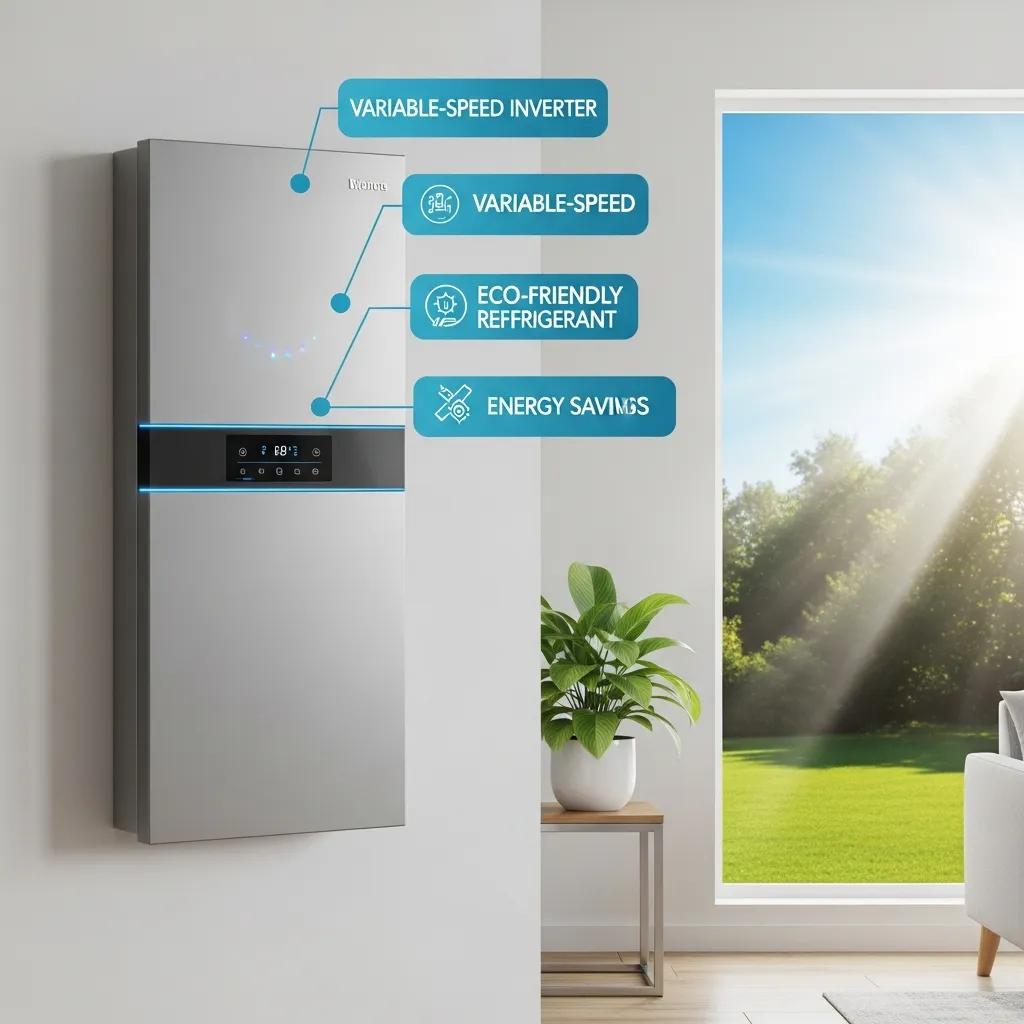
Energy-efficient HVAC systems lower energy use, improve comfort, and often improve indoor air quality. Financing turns what would be a large one-time cost into manageable monthly payments, so you can start saving on energy sooner. Higher-efficiency equipment uses less electricity to deliver the same comfort, reducing utility bills and producing measurable payback over time; financing simply helps you capture those savings earlier. Exact savings depend on the efficiency gain and local climate, but homeowners usually see steadier temperatures, better humidity control, and lower seasonal energy bills. The table below links common upgrades to expected energy and comfort benefits to help with ROI calculations when paired with financing.
Efficiency upgrades deliver measurable energy savings and comfort improvements that shorten payback when financed.
These figures help you build return-on-investment comparisons and decide whether to stage upgrades or do a full replacement. Matching financing length to expected savings and equipment life helps you balance monthly affordability with total cost.
Cost Savings and Home Comfort Improvements Explained
To estimate savings, start with your current HVAC energy spend and apply the expected percentage improvement from the new system. Multiply that reduction by your local utility rate to get annual dollar savings. For example, a 15% reduction on a yearly HVAC electricity bill of a few thousand dollars can add up quickly and shorten the payback period when compared to financed monthly payments. Comfort gains — more even temperatures, less humidity fluctuation, and quieter operation — are important non-monetary benefits that increase daily enjoyment and perceived value. When combined with rebates, efficiency savings lower the net financed amount, improving the monthly payment-to-savings ratio and sometimes producing immediate positive cashflow versus older systems.
- Estimate your baseline HVAC cost and apply the expected efficiency gain to project annual savings.
- Compare the financed monthly payment to estimated monthly energy savings to check near-term cashflow.
- Include non-monetary benefits like improved comfort and air quality in your total-value assessment.
These steps clarify the ROI and help you choose financing terms that balance monthly budget and long-term value.
Which Local Rebates and Incentives Support HVAC Financing in Southern California?
In Southern California you can often stack local utility rebates, state incentives, and federal tax credits with financing to lower the net project cost. Programs usually reward higher-efficiency equipment and may cover parts of labor or required testing. Each program has its own eligibility rules, application steps, and payout timing, so coordinating rebate pre-approval with financing is key to avoid cashflow gaps. The table below summarizes common incentive types, typical amounts, and what you’ll usually need to apply so you can anticipate how rebates will reduce your financed principal and monthly payments.
Rebates and incentives lower the financed balance and should be coordinated with lenders and installers for best timing.
Depending on program rules, rebates may be applied before or after financing is finalized, so plan the sequence to maximize your net savings. The next section explains how to combine Baker Home Energy financing with government rebates to avoid surprises.
How to Combine Baker Home Energy Financing with Government Rebates
Whenever possible, get rebate pre-approval before you finalize financing — some programs require pre-approval or licensed contractors on file. Baker Home Energy can document equipment specs and installation dates necessary for rebate claims, and in some cases we can help sequence disbursements so rebates reduce the financed balance or are credited at closing. Keep in mind that some rebates arrive as post-installation reimbursements while loans fund the upfront cost, so plan for interim cashflow or request rebate-crediting terms in the financing agreement. A simple checklist makes coordination straightforward and avoids delays.
- Obtain rebate pre-approval or confirm eligibility before finalizing financing.
- Include rebate documentation (equipment specs, install date) with lender submissions.
- Confirm rebate payout timing and how rebate proceeds will be applied to the financed balance.
Following these steps helps ensure rebate dollars reduce your financed costs and monthly payments as intended.
What Do Customers Say About Baker Home Energy’s HVAC Payment Plans?
Customer summaries show how financing helps households move forward with efficiency upgrades that improve comfort and lower energy costs. Many homeowners who delayed replacement because of upfront cost found that monthly payment plans made higher-efficiency systems affordable — often with payments similar to or lower than their previous energy bills. These examples show financing can be a practical way to get immediate comfort and long-term savings without draining savings. If you want similar projections for your home, request a tailored estimate and we’ll model payments, savings, and rebate impacts.
- Homeowner A lowered monthly HVAC costs after switching to a financed high-efficiency system and noticed more even temperatures throughout the house.
- Homeowner B used a short-term promotional plan to cover upfront costs and applied a utility rebate to reduce the financed principal.
- Homeowner C chose a long-term loan to minimize monthly payments and keep household budgeting predictable.
These anonymized examples show common routes homeowners take to balance affordability and efficiency. For a personalized projection, Baker Home Energy can prepare a quote that models monthly payments, expected energy savings, and rebate effects for your property.
Success Stories from Southern California Homeowners
Real cases demonstrate that financing, when paired with properly sized equipment and quality installation, can produce measurable monthly and annual benefits. In one example, a homeowner financed a high-efficiency heat pump over several years; lower electricity use offset monthly payments, creating net monthly savings within the first year and strong lifetime value. In another case, a promotional financing offer plus a utility rebate nearly eliminated the upfront cost, allowing immediate installation and fast comfort gains. These outcomes highlight the importance of aligning financing, rebates, and equipment choice to maximize both financial and comfort results.
- Outcome metrics: monthly payment versus prior HVAC costs and annual energy-dollar savings.
- Process benefit: faster installation thanks to quick financing approvals and coordinated rebate submissions.
- Comfort result: more even temperatures and better humidity control soon after the upgrade.
These examples illustrate how financing can translate into real improvements for Southern California homeowners and point toward the next steps: planning, comparing, and getting a quote.
Where Can You Find Tools to Compare and Calculate HVAC Financing Options?
Interactive calculators and comparison worksheets make it easy to plug in loan term, interest rate, rebate amounts, and down payment to estimate monthly payments and total interest. Good tools highlight the difference between monthly cashflow and lifetime cost and let you test scenarios like a 0% promotional period or different loan lengths. Below are the types of tools and inputs that produce reliable estimates, plus a short guide to interpreting the results for decision-making.
- Monthly payment calculators that take principal, APR, and term to compute amortization schedules.
- Total-cost calculators that include rebates, incentives, and expected annual energy savings to show net cost over time.
- Comparison worksheets for side-by-side views of promotional terms versus long-term loans.
When reviewing results, pay attention to total interest paid, monthly affordability, and how rebate timing affects the net financed principal. The next section shows a simple way to use a calculator to compare financing choices.
Using Financing Calculators and Infographics for Better Decisions
Start by entering the project’s estimated gross cost, any expected rebate amount, your desired down payment, and candidate financing terms into a payment calculator to produce monthly payment and total-interest figures. Compare those monthly payments to projected monthly energy savings and include non-monetary benefits like comfort improvements when evaluating options. Visual tools — charts that plot monthly cost against cumulative savings over the equipment’s expected life — make breakeven points and payback timing easy to spot. If you want a tailored comparison, request a quote and we’ll model results using your actual utility bills and property details.
- Key inputs: project cost, rebate amount, APR, term, and expected annual energy savings.
- Interpretation tip: prioritize options where monthly payments align favorably with monthly energy savings for immediate net benefit.
- Visualization: use amortization and cumulative-savings charts to identify breakeven timing and long-term value.
Using tools this way turns abstract financing terms into clear financial and comfort outcomes so you can choose confidently for your HVAC upgrade.
Frequently Asked Questions
1. What factors should I consider when choosing an HVAC financing plan?
Think about your credit score, how much the project will cost, and how much you can comfortably pay each month. Compare interest rates, loan terms, and any promotional details. Also consider whether you want to minimize monthly payments or total interest over time. Finally, factor in expected energy savings from a more efficient system — those savings can offset financing costs.
2. How do I know if I qualify for HVAC financing?
Lenders typically ask for proof of homeownership, income verification, and a credit check. Gather recent pay stubs, tax returns, and identification. Many lenders offer pre-qualification or soft-credit checks so you can see likely terms without affecting your credit score. It’s also a good idea to check your credit report for errors before applying.
3. Can I combine multiple financing options for my HVAC project?
Yes. Homeowners often combine options — for example, a long-term loan for most of the cost plus a short-term promotional offer for certain components — and stack rebates and incentives to reduce the financed amount. Coordination is key so everything lines up with your budget and project timeline.
4. What are the common pitfalls to avoid when applying for HVAC financing?
Common mistakes include not having required documents ready, overlooking promotional fine print (like deferred-interest clauses), and taking on payments that exceed your budget. Also be careful to coordinate rebates with financing so you don’t miss savings or create a cashflow gap.
5. How can I maximize my energy savings after upgrading my HVAC system?
Make sure your system is correctly sized and professionally installed, and keep up with regular maintenance like filter changes and annual tune-ups. Use programmable or smart thermostats, seal ducts where needed, and improve insulation to reduce energy loss — all of which help you capture the most savings.
6. What types of HVAC systems are eligible for financing and rebates?
Most financing and rebate programs cover high-efficiency systems such as central air conditioners, heat pumps, and qualifying furnaces. Eligibility often depends on SEER, HSPF, or other efficiency ratings. Check with your financing partner and local utility to confirm which models qualify.
7. How do I calculate the return on investment (ROI) for my HVAC upgrade?
Estimate annual energy savings based on the efficiency improvement, then divide the total upgrade cost by those savings to find the payback period. Include rebates and incentives to lower upfront cost, and remember to account for non-monetary benefits like comfort and air quality when judging overall value.