HVAC Installation Warranties: How Baker Home Energy Protects Your Home and Investment
An HVAC installation warranty is a written promise that certain equipment faults, installation workmanship, and related labor will be repaired or replaced under defined conditions. Knowing what that promise covers protects your comfort and your wallet. This guide explains the common elements of HVAC installation warranties, how different warranty types interact, typical timeframes and conditions that affect coverage, and a practical path to filing a claim. Homeowners often wonder whether a failing compressor, a leaking coil, or a startup problem is covered by the manufacturer, the installer, or an extended plan — this article clarifies those lines and gives you steps to take. You’ll learn which components are usually covered, common exclusions, how manufacturer and installer warranties differ, and what documentation and maintenance you should keep to preserve coverage. The sections that follow walk through coverage details, a side-by-side warranty comparison, typical durations and maintenance obligations, a step-by-step claim process for working with Baker Home Energy, and the specific benefits warranty-backed installations bring to Southern California homes. Read on for a clear, practical understanding of what warranties are available for HVAC equipment, how to keep them valid, and what to do if you need service.
What Does an HVAC Installation Warranty Cover?
An HVAC installation warranty spells out which parts and installation work the installer guarantees to support. It typically covers defective components and corrective labor for installation errors. Coverage exists because failures can stem from manufacturing defects, incorrect installation (for example, wrong refrigerant charge or poorly sealed ducts), or startup issues that surface early — a comprehensive warranty assigns responsibility so you know who pays for diagnosis and repair.
Common warranty protections include parts replacement for covered component failures, labor to fix installation mistakes, and a workmanship guarantee for items like refrigerant charge, duct sealing, and system startup and calibration. Knowing these distinctions helps you decide whether to contact the manufacturer or the installer first, and it underscores why registration and timely maintenance matter to keep coverage in force.
Typical HVAC installation warranty coverage includes:
- Parts replacement for covered equipment defects, such as compressor or control board failures.
- Labor and corrective work for installation errors, including improper refrigerant charge or incorrect ductwork connections.
- Workmanship guarantees for startup, system calibration, and installation tasks performed by the installer.
Read the exclusions below to understand limits to coverage and avoid actions that could void your warranty.
Which Equipment and Installation Aspects Are Protected?
Component-level protection usually covers the main mechanical parts of an HVAC system — compressor, heat exchanger, evaporator coil, and control board — though exact lists vary by warranty. Installer workmanship warranties generally cover installation labor and performance issues tied to sizing, mounting, refrigerant charging, and commissioning at startup. For example, a persistent refrigerant leak caused by improper brazing would be the installer’s responsibility, while an internal compressor motor failure is typically handled by the manufacturer. Together, manufacturer parts coverage plus installer labor warranty give homeowners a fuller safety net: the manufacturer replaces defective parts while the installer handles the work to correct installation-related problems. Knowing these roles clarifies who to call first and how claims get routed between manufacturer and installer.
What Are Common Warranty Exclusions and Limitations?
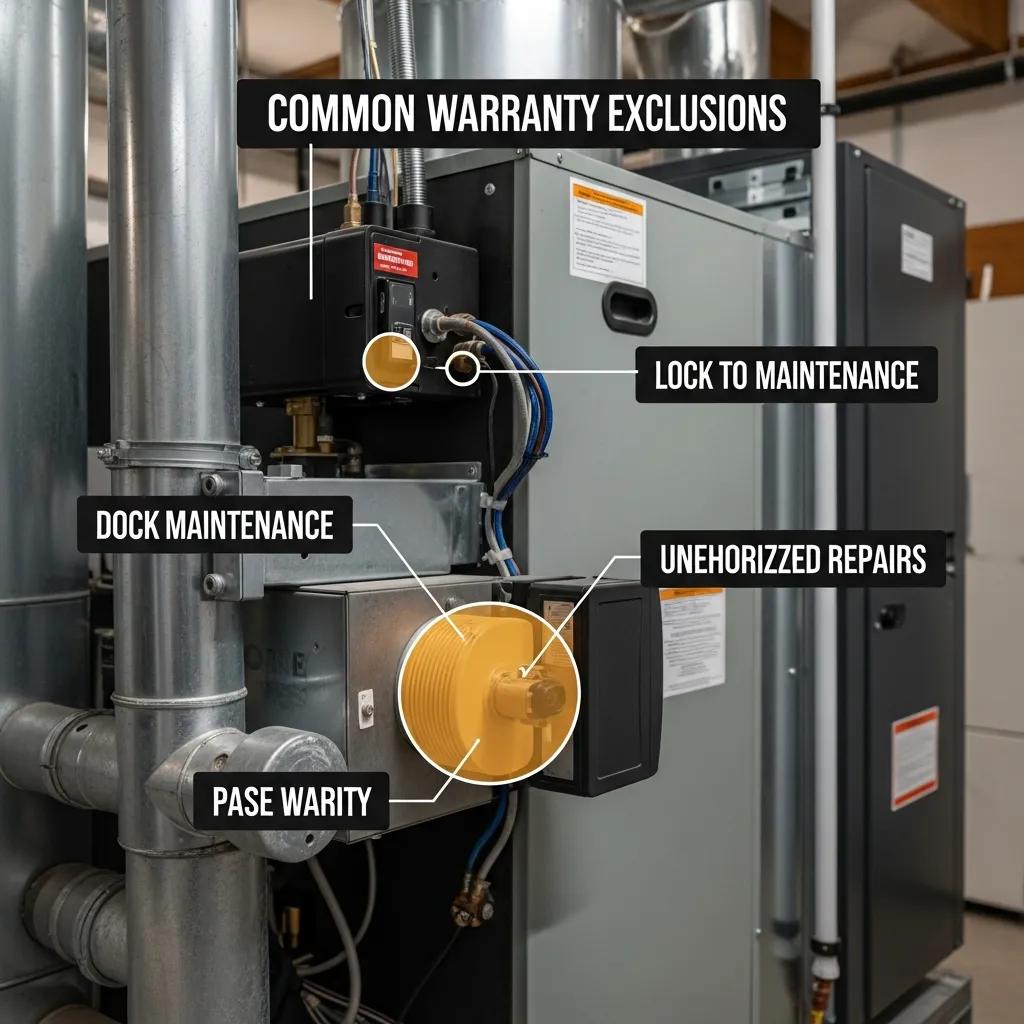
Most warranties list exclusions that limit liability and protect manufacturers and installers from misuse or neglect. Common exclusions include:
- Lack of required maintenance
- Unauthorized repairs or modifications
- Environmental damage, such as corrosion or flood-related issues
Warranties often require scheduled maintenance — annual tune-ups, timely filter changes, and documented service invoices — and failing to meet those terms is one of the most frequent reasons claims are denied.
Other typical limitations include exclusions for cosmetic damage, normal wear and tear, or failures caused by third-party equipment (for example, aftermarket thermostats or non-compatible controls). Avoid unapproved modifications and keep clear maintenance records to reduce the risk of invalidation.
Preventing exclusion-based denials means following the maintenance schedule, using qualified technicians for service, and registering equipment when required.
What Types of HVAC Equipment Warranties Are Available?
A single HVAC system can be covered by multiple overlapping warranty types: manufacturer parts warranties, installer workmanship/labor warranties, and optional extended service contracts or specialty coverage for high-efficiency components. Manufacturer warranties focus on parts and sometimes include limited labor; installer warranties cover installation work and the labor to correct installation errors; extended service plans add coverage for labor, parts, or maintenance beyond the baseline. Knowing which warranty applies to a specific failure — whether a compressor defect or an installation-induced refrigerant leak — helps you direct claims correctly and anticipate out-of-pocket costs.
The table below compares warranty types so you can see provider responsibilities and typical coverage lengths.
This comparison shows manufacturers generally replace defective components while installers address installation faults and labor. Understanding these roles helps you file the right claim and protect your coverage.
How Do Manufacturer and Installer Warranties Differ?
Manufacturer warranties guarantee parts against defects in materials or manufacturing and often require proof of purchase and registration. Installer warranties focus on workmanship, startup, and installation tasks and typically cover the labor to correct those issues. Contact the manufacturer for a failed internal component (for example, an electrical fault in a compressor); contact the installer for persistent operational problems that began at or soon after installation (such as poor airflow from incorrect duct connections).
Claims usually start with the installer for troubleshooting. If a failed part is covered by the manufacturer, the installer will coordinate replacement and may bill the manufacturer for the covered component while handling labor under their workmanship warranty. Knowing this distinction helps avoid unnecessary delays during claim resolution.
What Are Extended and Energy-Efficient HVAC Warranty Options?
Extended warranties and service plans extend coverage beyond factory terms and can be worth considering for high-use homes or systems with advanced components like inverter compressors or variable-speed motors. Extended plans may add longer parts coverage, labor for component replacement, and maintenance credits that help keep warranties valid; they do carry additional cost and specific terms homeowners should weigh against likely repair costs.
For energy-efficient or smart components — such as inverter-driven compressors or smart thermostats — manufacturers sometimes offer specialty warranties or registration programs with extended parts coverage, but these often require professional maintenance to stay valid. When evaluating extended options, compare the extra cost to potential repair risks and factor in local climate and usage patterns to judge value.
How Long Do HVAC Warranties Last and What Are Their Terms?
Warranty lengths vary by component and provider, with common ranges for compressors, heat exchangers, and general parts. Many warranties require registration and periodic maintenance to remain valid.
Typical conditions include mandatory annual service, use of authorized technicians for repairs, and timely registration after installation. These conditions tie the warranty’s promise to verifiable homeowner actions, so keep clear documentation.
Below is a concise table mapping common components to typical warranty lengths and frequent conditions or exclusions you should watch for.
This timeline shows compressors and heat exchangers typically get the longest parts coverage, while labor and smaller parts have shorter terms and stricter conditions tied to service history.
What Is the Typical Warranty Duration for HVAC Systems?
Many manufacturers offer multi-year parts warranties — commonly five to ten years on major components — while installer workmanship warranties and labor coverage tend to be shorter, often one to five years. Variations depend on component type (compressors and heat exchangers usually receive longer protection), the system’s efficiency class, and whether the equipment was registered promptly after installation.
Extended warranties or special registration programs can lengthen parts coverage but typically require strict maintenance compliance, so longer durations aren’t automatic.
Homeowners should check serial numbers and warranty documents at installation and keep copies of registration confirmations to verify exact durations.
How Do Maintenance and Usage Affect Warranty Validity?
Routine maintenance — annual tune-ups, timely filter changes, and documented service visits — preserves warranty validity because most warranties make scheduled service a condition of coverage and a way to prevent avoidable failures.
Heavy usage or misuse, such as running incompatible controls or ignoring airflow restrictions, accelerates wear and can lead to claim denials if the cause is judged neglect or abuse.
Keep a maintenance log with invoices, technician notes, and registration receipts. Those records are essential evidence when filing claims and show you met conditional terms. Preventive maintenance also helps maintain rated SEER performance and reduces the chance of ambiguous failure claims that could be excluded.
How Do You File a Warranty Claim with Baker Home Energy?
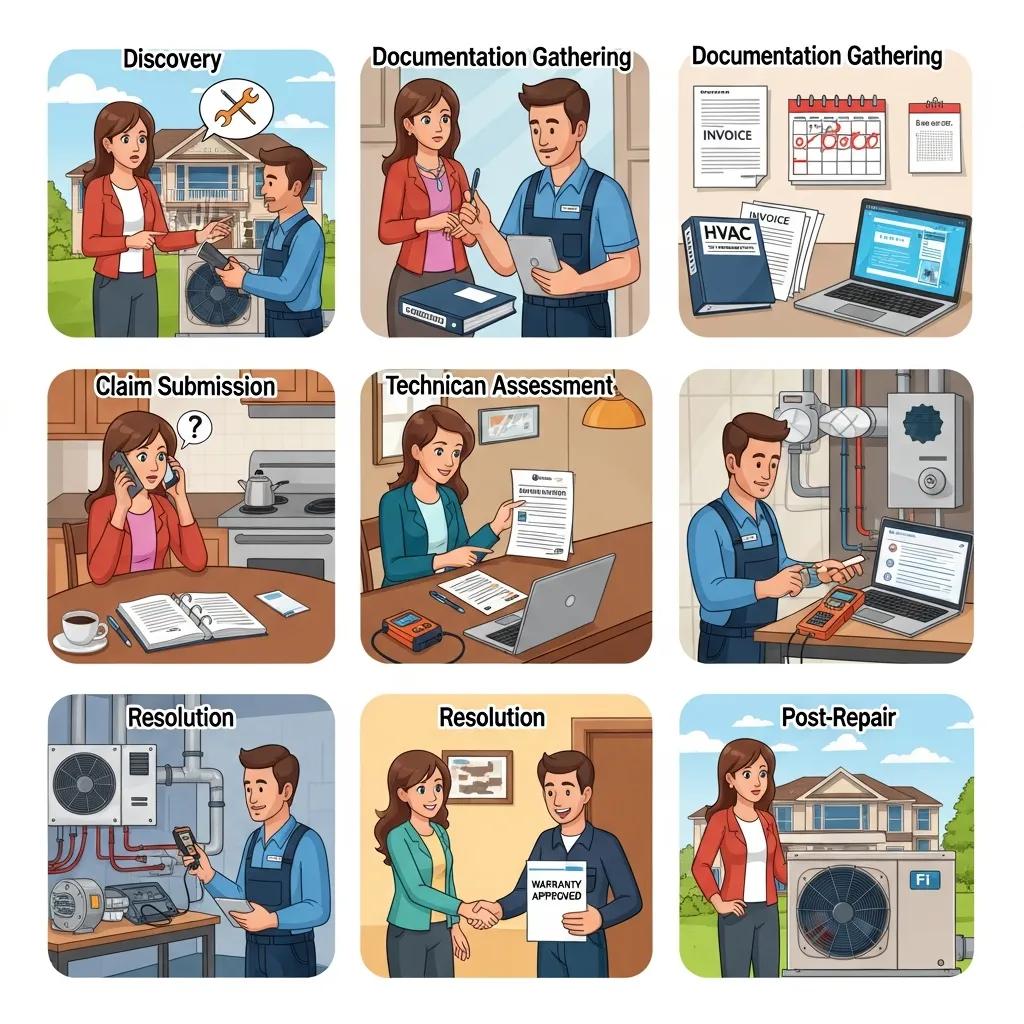
When a covered failure happens, a clear process reduces friction: identify the symptom, gather documentation (installation invoice, model and serial numbers, maintenance records), contact your installer for troubleshooting and an onsite inspection, and coordinate with the manufacturer if parts replacement is required. Baker Home Energy is a Southern California company focused on home energy solutions and HVAC installation. We install systems backed by warranties that protect both equipment and workmanship.
Our local expertise, energy-focused solutions, and warranty-backed service make it easier to keep your system running. The steps below explain the typical workflow to start a claim or request service from an installer like Baker Home Energy and what supporting documents to prepare.
- Gather basic documentation: installation date, proof of purchase, and equipment model and serial numbers.
- Contact your installer to report the issue and request remote troubleshooting or a technician visit.
- Let the installer inspect, diagnose, and document the failure; they’ll determine whether manufacturer involvement is needed.
- Follow the installer’s directions for repairs or parts replacement and keep all service reports and invoices for your records.
These steps make the claim process predictable and help determine whether the installer or manufacturer will handle parts and labor.
Before the documentation table, here’s a short list of what to collect before contacting the installer:
Documentation to collect before filing a claim:
- Proof of purchase or installation invoice showing date and installer name.
- Equipment model and serial numbers from the unit’s nameplate.
- Maintenance records and any registration confirmation for the equipment.
What Are the Step-by-Step Procedures for Warranty Claims?
The practical workflow starts with the symptoms you observe and an initial diagnostic call with the installer. The installer will try remote troubleshooting when possible and schedule an onsite inspection if needed.
During inspection, the technician documents failure modes, photographs affected components when useful, and cross-references serial numbers and installation records to confirm warranty applicability. If the issue looks like a manufacturing defect, the installer coordinates with the manufacturer for parts authorization and replacement.
After repairs, the installer provides invoices and service records you should file with your warranty documents. If coverage is disputed, escalation paths typically involve submitting documented evidence to the manufacturer or using the mediator named in the warranty contract. Clear documentation and prompt reporting reduce denials and speed resolution.
What Documentation and Information Are Required?
Before you initiate a claim, prepare a concise packet that includes proof of purchase or installation invoice, equipment model and serial numbers, the installation date, and maintenance records showing compliance with required service intervals. These items prove ownership and adherence to warranty conditions.
What Are the Benefits of HVAC Installation Warranties for Southern California Homeowners?
Warranty-backed HVAC installations protect you from unexpected repair costs, help maintain energy-efficient performance in warm coastal and inland climates, and support long-term savings by ensuring timely professional intervention when needed.
In Southern California, where cooling demands are significant, proper installation and warranty-backed maintenance help systems run at intended SEER ratings, reducing energy waste and monthly utility bills.
Warranties also support property value and buyer confidence because documented, transferable coverage can be attractive to buyers. Fast local service from an installer reduces downtime and the risk of heat-related discomfort or damage. These practical benefits make warranty terms a key factor when selecting equipment and an installer.
Key homeowner benefits of warranty-backed HVAC installation:
- Financial protection from major component failures and corrective labor costs.
- Preserved energy efficiency and lower operating expenses through required maintenance.
- Faster, local service response and coordinated manufacturer claims support.
These advantages show why warranty terms should influence equipment selection and installer choice, especially in climate-sensitive regions.
How Do Warranties Enhance Energy Efficiency and Cost Savings?
Correct installation preserves design efficiency by ensuring proper sizing, correct refrigerant charge, and balanced airflow — all critical to maintaining rated SEER performance and avoiding energy loss. Warranty-backed maintenance ensures those conditions are checked and corrected over time.
By reducing the risk of premature component failure and enforcing scheduled tune-ups, warranties help prevent efficiency degradation that raises operating costs. In many cases, avoiding a single major component replacement offsets the cost of extra coverage.
For Southern California homeowners, maintaining efficient cooling during peak months delivers direct savings and better comfort. Warranty-backed preventive maintenance gives you the structure to sustain those savings.
Why Choose Baker Home Energy’s Warranty-Backed Services?
Baker Home Energy is a Southern California-based company focused on home energy solutions and HVAC installation. We install systems backed by warranties that protect equipment and workmanship, and we stand behind our work with local service you can count on.
Our advantages include local climate expertise, energy-efficient solutions, and dependable warranty-backed service. For homeowners who value energy savings and a low-friction warranty experience, choosing an installer that pairs workmanship guarantees with manufacturer parts coverage simplifies claims and helps preserve system performance over time. If you’re ready for a quote or a warranty review, gather your installation invoice, equipment serial numbers, and maintenance records, then contact your installer to begin the documented claim or review process.
- Local climate expertise: Installer knowledge tailored to Southern California needs helps ensure proper sizing and system choice.
- Warranty-backed reliability: Workmanship guarantees plus manufacturer parts coverage reduce homeowner risk.
- Energy-efficient focus: Correct installation and regular maintenance help preserve rated efficiencies and lower lifetime costs.
Frequently Asked Questions
What should I do if my HVAC system fails shortly after installation?
If your system fails soon after installation, gather your documentation — proof of purchase, installation details, and any maintenance records — then contact your installer to report the issue and request an inspection. The installer will determine whether the problem stems from a manufacturing defect or an installation error and advise whether to file a manufacturer claim or use the installer’s workmanship warranty.
Are there any specific maintenance tasks required to keep my warranty valid?
Yes. Most HVAC installation warranties require regular maintenance: annual tune-ups, timely filter changes, and inspections by qualified technicians. Keep detailed records of these services because failing to follow the maintenance schedule is a common reason claims are denied. Review your warranty documents to understand the exact maintenance requirements.
Can I transfer my HVAC warranty if I sell my home?
Many HVAC warranties are transferable, which can help when you sell your home. Transferability depends on the manufacturer’s or installer’s terms — some require notification of the change in ownership or other steps. Check your warranty documents for transfer conditions and follow the process so coverage remains active for the new owner.
What happens if I modify my HVAC system after installation?
Modifying your system may void the warranty, especially if the changes involve unauthorized repairs or incompatible components. Warranties typically exclude alterations not approved by the manufacturer or installer. If you plan changes, consult your installer first to confirm they won’t affect coverage. Keeping the system as installed is the best way to protect your warranty.
How can I ensure my HVAC system operates efficiently under warranty?
Follow the required maintenance schedule, use manufacturer-approved parts, and avoid unauthorized modifications. Keep a detailed log of all maintenance and repairs to show compliance with warranty terms. This proactive approach preserves your warranty and keeps the system running efficiently for longer.
What should I do if my warranty claim is denied?
If a claim is denied, review the denial notice to understand why. Common reasons include missing maintenance records or unmet warranty conditions. If you believe the denial is incorrect, gather all relevant documentation — maintenance logs, installation records, and invoices — and contact the installer or manufacturer to discuss next steps. You may have options to appeal or seek mediation as outlined in the warranty agreement.
Are there any additional costs associated with extended warranties?
Yes. Extended warranties usually carry extra costs that vary by plan: upfront fees, monthly charges, or service-call deductibles. When considering an extended warranty, compare the potential repair costs to the plan price and review coverage details to ensure it meets your needs, especially for high-use systems or advanced components.