New AC Unit Installation & Replacement Services in Southern California: Expert Solutions for Energy Efficiency and Comfort
Upgrading or replacing your air conditioner is one of the most effective ways to boost home comfort and cut summer electric bills in Southern California. This guide helps you know when to replace an AC, compares central systems, ductless mini‑splits, and heat pumps, and walks through the installation steps and cost factors — all with a focus on energy‑efficient choices. You’ll find clear signs to watch for, realistic lifespans for local conditions, how SEER ratings and modern refrigerants affect savings, and what to expect from a professional install and follow‑up service. Our goal: help you decide between repair and replacement, pick the system that fits your layout and electrification goals, and understand the installation process from quote to commissioning.
Why Choose Baker Home Energy for Your AC Installation and Replacement Needs?
Picking the right contractor matters because proper sizing, equipment selection, and installation determine comfort and operating costs for years. At Baker Home Energy we treat HVAC as part of a whole‑home energy plan — pairing AC work with solar, battery, and roofing upgrades so you get smart, cost‑effective results. Local knowledge matters in Southern California: climate, utility rate structures, and available rebates influence sizing and refrigerant choices. Below are the core reasons homeowners choose Baker Home Energy.
- Proven whole‑home approach: we coordinate HVAC choices with solar and battery planning to maximize savings and resilience across your home.
- Recognized credibility: local awards and strong ratings that give homeowners clear trust signals and peace of mind.
- Service clarity and range: transparent, well‑defined services — installation, replacement, repairs, and tune‑ups — covering every stage of your system’s lifecycle.
These advantages explain why many homeowners prefer a provider that sees HVAC as part of the home’s broader energy ecosystem. Next we’ll outline the company experience and recognitions that back up those claims.
What Experience and Awards Set Baker Home Energy Apart?
Baker Home Energy’s experience shows across multiple public recognitions and a broad suite of home energy services — solar, battery storage, roofing, heating, and air conditioning. Awards and positive ratings signal consistent service quality and customer satisfaction, reducing the risk homeowners face when investing in a major project like an AC replacement. Those credentials typically translate into smoother project management, clearer warranty handling, and installation practices that follow industry best standards. Our local focus also means technicians understand Southern California cooling loads, typical shading patterns, and refrigerant transitions — all useful when choosing new equipment. Knowing this helps homeowners move from decision to quote with confidence.
How Does Baker Home Energy Ensure Customer Comfort and Cost Savings?
We emphasize accurate system sizing, matching high‑SEER equipment to real load calculations, and adding smart controls to cut run time while improving comfort. Manual J–based load calculations and right‑sized equipment prevent short‑cycling and promote even temperatures, while high‑SEER models lower energy use during hot months. Smart thermostats and zoning reduce runtime in unused areas so you see real reductions on your energy bill and better comfort where you live. Post‑install commissioning and follow‑up verify refrigerant charge, airflow, and thermostat settings meet manufacturer specs — all steps that reduce operating costs and keep your home comfortable.
When Should You Replace Your AC Unit? Signs and Lifespan Explained
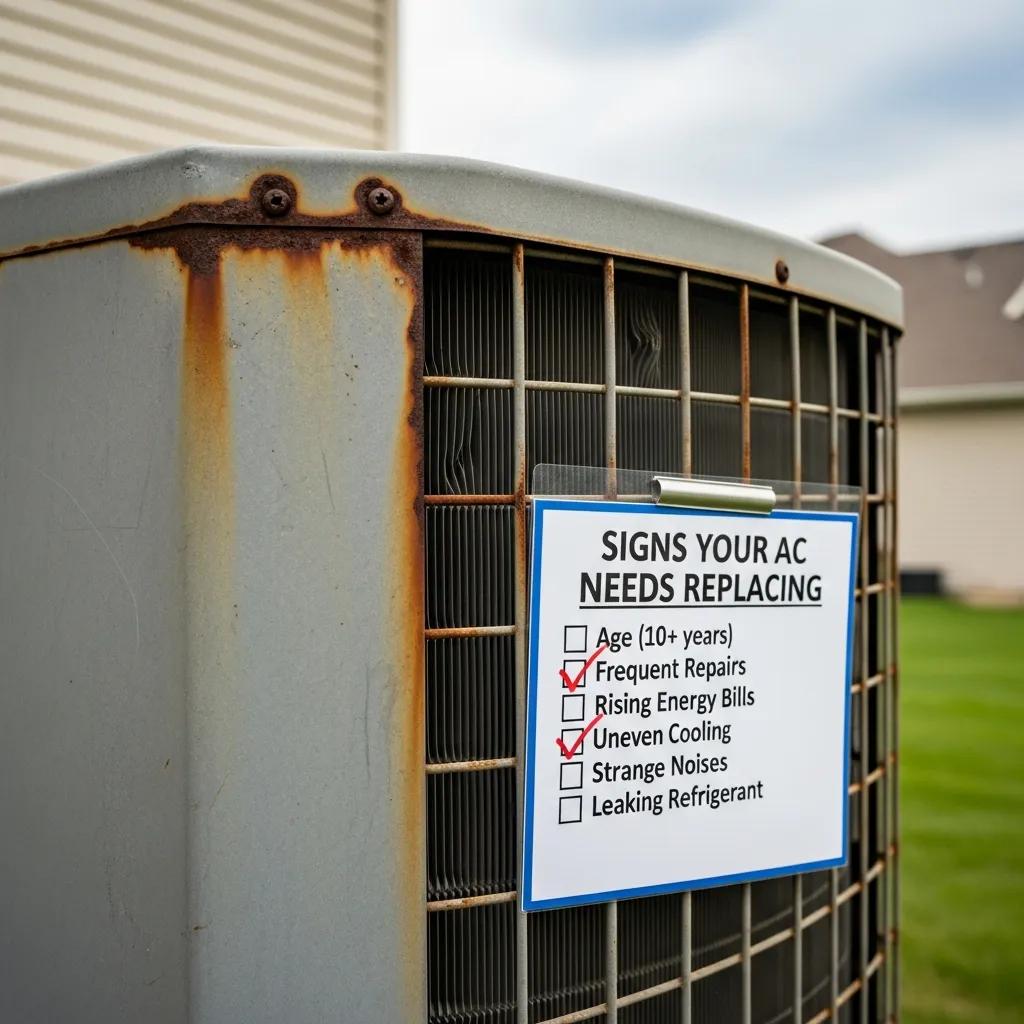
Deciding to replace an AC blends objective age, performance symptoms, and a practical repair‑vs‑replace cost comparison. In Southern California, systems often run hard in summer; consider replacement when age, efficiency loss, or repeated repairs start to outweigh repair costs — replacing sooner can mean better comfort and lower energy use over time. Use the checklist below to spot common replacement triggers, then we’ll explain a simple rule of thumb for weighing repair against replacement.
- Age threshold: Units older than about 12–15 years are strong candidates for replacement due to efficiency loss and refrigerant phase‑outs.
- Rising energy bills: Noticeable increases in cooling costs despite routine maintenance usually point to reduced system efficiency.
- Frequent, costly repairs: Repeated failures or repair bills climbing toward a large fraction of replacement cost favor replacement.
- Uneven cooling: Persistent hot spots or poor capacity even after repairs suggest the system may be undersized or failing.
- Obsolete refrigerant: Systems using phased‑out refrigerants are more expensive to service and often make replacement the wiser option.
This checklist gives a practical framework for deciding whether to repair or replace. Next we’ll cover expected lifespans and how local conditions alter them.
What Are the Common Signs Indicating AC Replacement Is Needed?
Clear replacement signs include recurring mechanical failures, growing repair costs, and declining energy performance despite maintenance. Frequent compressor issues, refrigerant leaks, persistent airflow problems, or ignition faults on packaged units often mean a component repair won’t restore original efficiency. If your seasonal bills rise while thermostat settings stay the same, declining SEER performance or compressor wear is usually the cause. And when rooms remain unevenly cooled after checking ducts and thermostats, the system often lacks sufficient capacity. Combine these symptoms with the unit’s age to make the most reliable replacement decision.
How Long Do AC Units Typically Last in Southern California Homes?
Under normal maintenance, central air and heat pump systems in Southern California typically last about 12–15 years, though climate, installation quality, and usage patterns can shift that range. Heavy seasonal use accelerates wear on compressors and fans, while regular maintenance, correct refrigerant charge, and good airflow help systems reach the upper end of the range. Older systems using phased‑out refrigerants often prompt earlier replacement because parts and servicing become more costly or scarce. Planning ahead — before a summer breakdown — usually lowers lifetime costs and avoids emergency replacement at peak demand.
What Types of AC Units Are Best for Southern California Homes? Comparing Central AC, Ductless Mini-Splits, and Heat Pumps
Choosing the right system depends on existing ductwork, your home’s layout, electrification goals, and desired efficiency. Central air works well for whole‑home cooling when ducts are in good shape. Ductless mini‑splits offer efficient, low‑impact zoned cooling. Heat pumps provide efficient cooling plus electric heating and are an excellent option if you’re moving toward electrification or integrating solar. The table below compares these systems across key attributes to help you decide by efficiency, cost, and installation complexity.
Match system choice to home size, existing infrastructure, and long‑term energy goals. Below are pros and cons specific to central systems, followed by a comparison of mini‑splits and heat pumps.
What Are the Pros and Cons of Central Air Conditioning Systems?
Central air delivers consistent whole‑home comfort when ductwork is properly sealed and insulated and works well with central thermostats and zoning dampers. Advantages include even temperature control, well‑established installation practices, and compatibility with many high‑efficiency compressors. Drawbacks include distribution losses from leaky or poorly insulated ducts — which can erase efficiency gains — and higher retrofit costs when ducts need replacement. Older central systems may also face costly refrigerant or compressor repairs as they age. Evaluating duct condition and distribution efficiency is essential when deciding whether to keep or replace a central setup.
How Do Ductless Mini-Split and Heat Pump Systems Compare for Energy Efficiency?
Ductless mini‑splits deliver high point‑of‑use efficiency with almost no duct losses, offering flexible zoning and lower standby losses. Heat pumps provide efficient cooling and electric heating, which can significantly reduce fossil‑fuel use when replacing gas furnaces and pair well with solar and battery systems. Upfront costs for mini‑splits and heat pumps can be higher per ton than simple central replacements, but lifecycle savings, improved zone control, and modern refrigerants often produce attractive payback — especially in homes with inefficient or no ducts. For homeowners prioritizing efficiency and environmental impact, both options are strong contenders.
How Does the AC Installation Process Work with Baker Home Energy? Step-by-Step Guide
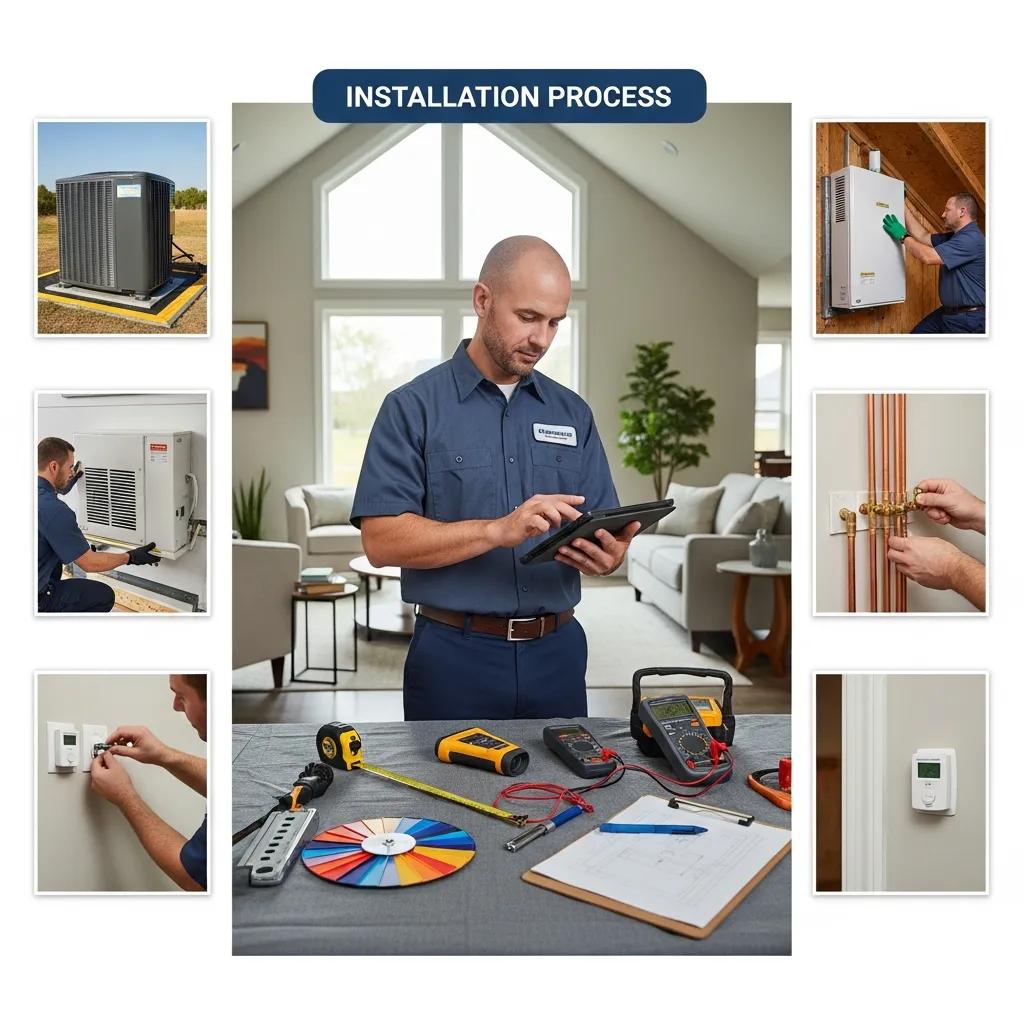
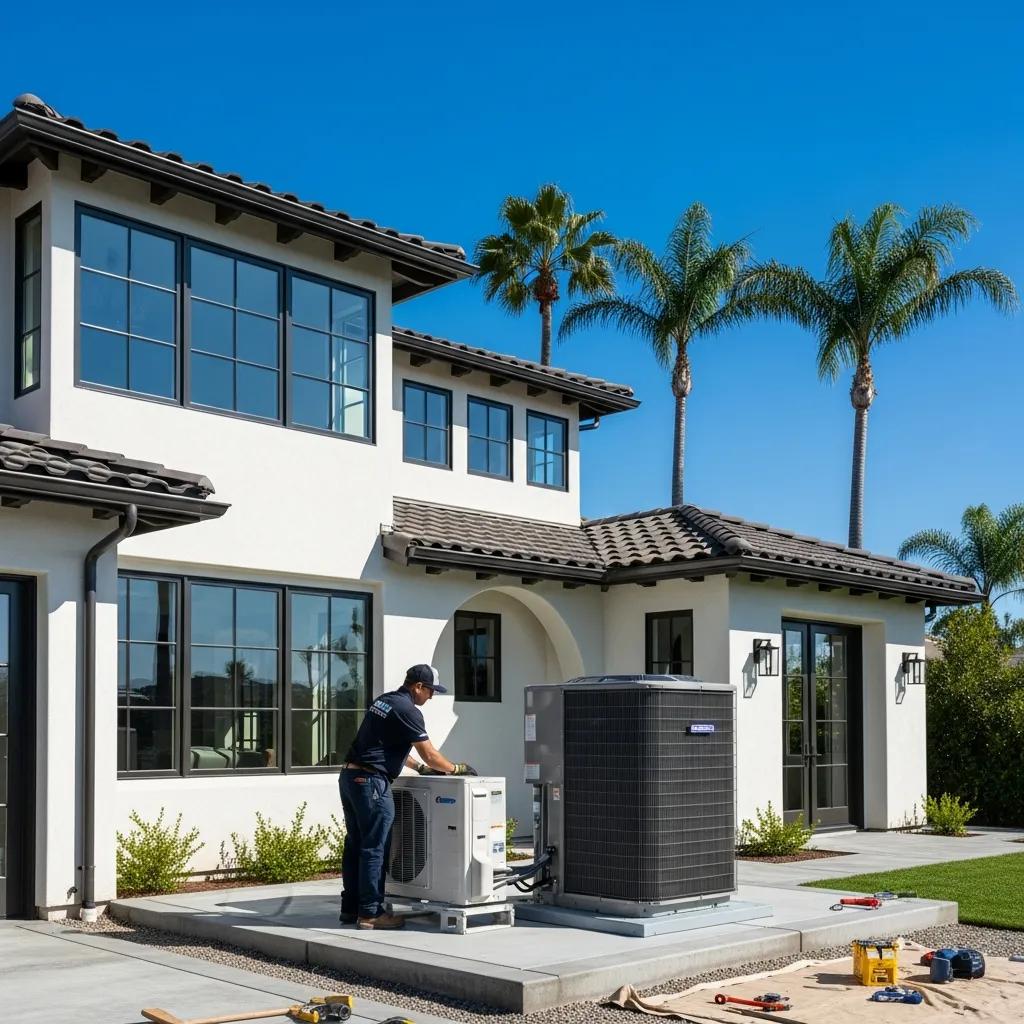
A professional installation follows a clear sequence designed to protect equipment performance and homeowner expectations. Our workflow focuses on precise load assessment, careful equipment selection, safe removal of existing components, and thorough commissioning and testing to confirm efficiency and comfort. Below is a numbered summary of the key steps you should expect during a replacement or new installation; each step affects final performance and warranty compliance.
- Consultation and site assessment: We gather home details, inspect existing equipment, and perform preliminary load checks to scope the job.
- Detailed load calculation and equipment selection: We use Manual J (or equivalent) to size equipment and choose a model that fits your performance goals and local conditions.
- Permits and scheduling: We secure required local permits and schedule a multi‑day window for safe removal and installation.
- Removal and preparation: Old equipment is removed safely, refrigerant is disposed of per regulations, and pads, ducts, and electrical connections are prepared.
- Installation and connection: New condenser, air handler or indoor units are installed, refrigerant lines are run, and electrical hookups are completed to manufacturer specs.
- Testing, commissioning, and homeowner orientation: We balance airflow, verify refrigerant charge, calibrate the thermostat, and walk you through operation and maintenance tasks.
This timeline helps set expectations and reduce surprises. The sections that follow cover typical homeowner timelines and the technical basis for load calculations and testing.
What Are the Key Steps from Consultation to Post-Installation Support?
In the consultation we verify factors that affect load calculations and equipment placement, explain permit timelines, and outline homeowner responsibilities like clearing access paths. Permit turnaround and scheduling usually set the overall timeline, and most residential replacements take a few days from removal to final commissioning. After the install, commissioning verifies refrigerant, airflow, and thermostat programming, and we provide documentation for warranties and recommended maintenance. Post‑install support includes a handoff package with maintenance intervals and contact points so your system continues to deliver expected efficiency and comfort.
How Is Load Calculation and System Testing Performed?
Load calculations follow established protocols (Manual J for loads and Manual S for equipment selection) to determine heating and cooling needs based on square footage, insulation, orientation, and window characteristics. Accurate sizing prevents oversized units that short‑cycle or undersized systems that struggle on peak days. Testing and commissioning verify refrigerant charge, static pressure, airflow rates, and electrical performance to meet manufacturer specifications and confirm efficiency targets. Proper testing reduces callbacks and ensures your new system operates within expected SEER performance — which directly affects bills and comfort.
What Are the Costs Involved in AC Replacement in Southern California? Understanding Your Investment
Replacement costs vary widely with unit type, capacity, efficiency, labor complexity, and additional work like duct repair or electrical upgrades. Expect total project costs to include equipment, labor, permits, disposal, and any required upgrades. Below we break those drivers down so you can budget realistically and spot where investments return the most value. The table highlights common installation components, their cost drivers, and typical impacts on total price.
With these components in mind, you can compare quotes to see where most money is allocated and where efficiency investments yield the best payback.
Which Factors Influence AC Replacement Costs?
Major cost drivers include system capacity (tons), SEER rating, duct condition, installation complexity, needed electrical upgrades, and permit requirements. Bigger units or higher‑SEER models raise equipment costs but can lower operating expenses over time — a trade‑off to evaluate. Duct repairs or full replacements add significant labor and materials costs in retrofit jobs with limited access. Electrical panel upgrades or added disconnects increase cost when the new system draws more power or when older wiring must be replaced for safety. Understanding these variables helps you set realistic budgets and compare contractor proposals effectively.
What Financing Options Are Available for New AC Installations?
Homeowners finance AC replacements through vendor financing plans, home improvement loans, and utility rebate programs — options vary by provider and credit profile. Baker Home Energy helps outline financing pathways and provides accurate, itemized quotes you can use to evaluate monthly payments and projected payback from energy savings. Utility incentives and local rebates in Southern California can offset upfront cost for qualifying high‑efficiency equipment; we’ll help identify and apply those where available. For a tailored financing review and estimate, request a quote and talk with our team about payment options.
How Can Energy-Efficient and Smart AC Systems Improve Your Home Comfort and Savings?
High‑efficiency equipment and smart controls reduce run time, improve zonal comfort, and lower monthly bills while supporting environmental goals. Higher SEER units and low‑GWP refrigerants deliver measurable energy savings, and smart thermostats add schedule and behavior controls that capture extra savings. The table below summarizes common efficiency and smart components, their features, and homeowner benefits.
Knowing how these pieces work together helps prioritize upgrades that give the best combined performance and savings. Next, we look more closely at SEER and refrigerant benefits.
What Benefits Do High SEER Ratings and Eco-Friendly Refrigerants Offer?
Higher SEER ratings reduce seasonal energy use by improving compressor and heat‑exchange efficiency, often yielding significant electricity savings over a unit’s lifetime. New low‑GWP refrigerants lower environmental impact and ease compliance as older refrigerants are phased out. Payback for higher‑SEER equipment depends on local electricity rates and usage, but in hot climates many homeowners see attractive returns. Modern refrigerants and high‑efficiency components also require technicians familiar with current best practices to maintain peak performance.
How Do Smart Thermostats and Home Automation Enhance AC Performance?
Smart thermostats and home automation offer precise scheduling, learning‑based optimization, and remote control that reduce unnecessary run time and match comfort to occupancy. Features like geofencing, adaptive schedules, and energy reports help systems run only when needed, producing measurable energy savings and improved comfort. When combined with zoning, smart controls allow room‑by‑room temperature management to avoid overcooling and reduce cycling, which can extend equipment life. During equipment selection we check compatibility so control systems integrate smoothly with your HVAC gear.
Ready for a Cooler, More Efficient Home? Request a Quote Today!
If you’re considering a replacement or new AC installation, the next step is a professional load assessment and a clear, itemized quote. Baker Home Energy provides local expertise across Southern California and offers integrated home energy solutions that pair HVAC upgrades with solar and storage when it makes sense. Request a personalized consultation and a no‑obligation estimate to review system options, projected savings, and available incentives. Contact our team to schedule an assessment and receive a tailored proposal outlining equipment choices, scope of work, and next steps.
Frequently Asked Questions
What is the average cost of AC installation in Southern California?
Costs vary widely depending on system type, efficiency, and installation complexity. Expect a typical range from roughly $3,000 to $10,000 or more, which generally includes equipment, labor, permits, and any required duct or electrical work. Get multiple quotes and weigh long‑term energy savings when comparing options.
How can I improve the energy efficiency of my existing AC unit?
Regular maintenance — cleaning or replacing filters, checking refrigerant levels, and ensuring proper airflow — improves performance. Adding a smart thermostat, sealing ducts, and improving insulation also reduce energy loss. For older units, consider high‑efficiency component retrofits or replacement for bigger gains.
What are the benefits of using eco-friendly refrigerants in AC systems?
Eco‑friendly refrigerants like R‑32 and R‑454B have much lower global warming potential than older blends. They help reduce environmental impact and keep systems compliant with evolving regulations, and they can also improve overall system efficiency — a win for both your bills and the planet.
How often should I schedule maintenance for my AC unit?
We recommend at least one professional maintenance visit per year, ideally before the cooling season. Annual checks help ensure efficient operation, extend equipment life, and prevent surprises. Between professional visits, replace or clean filters regularly — typically monthly during heavy use.
What should I consider when choosing between central AC and ductless mini-split systems?
Consider your home’s layout, existing ductwork, and cooling needs. Central AC is ideal if ducts are in good condition and you want whole‑home control. Ductless mini‑splits are efficient, flexible, and great for zone control without major ductwork. Compare installation cost, energy ratings, and future plans when deciding.
Are there any rebates or incentives available for energy-efficient AC installations?
Yes. Many utilities and government programs offer rebates and incentives for high‑efficiency AC systems and qualifying refrigerants. Available programs vary by location; Baker Home Energy can help identify rebates and incorporate them into your financing plan to lower upfront cost.