
HVAC Financing in Southern California: How Baker Home Energy Compares to Other Providers
HVAC financing includes loans, leases, and payment plans that let homeowners spread the cost of a new or upgraded heating, ventilation, and air conditioning system over time. Instead of paying the full price up front, you convert that expense into scheduled payments — which makes it easier to install higher-efficiency equipment sooner and start saving on energy bills. In Southern California, local rebates, climate-related equipment sizing, and seasonal demand make guidance on incentives and financing especially helpful. This article walks through the common financing options, compares typical terms and monthly-cost examples, explains how rebates interact with each product type, and gives a clear step-by-step application guide so you can pick the most affordable path that still delivers long-term savings. You’ll find a focused look at Baker Home Energy’s offerings, a fair comparison with other providers, a plain-language explanation of loans vs. leases vs. payment plans, a benefits summary tied to efficiency gains, and a practical checklist to prepare for applying. Our goal is to give Southern California homeowners useful, actionable information so you can confidently request a quote or move forward with a project.
What HVAC Financing Options Does Baker Home Energy Provide?
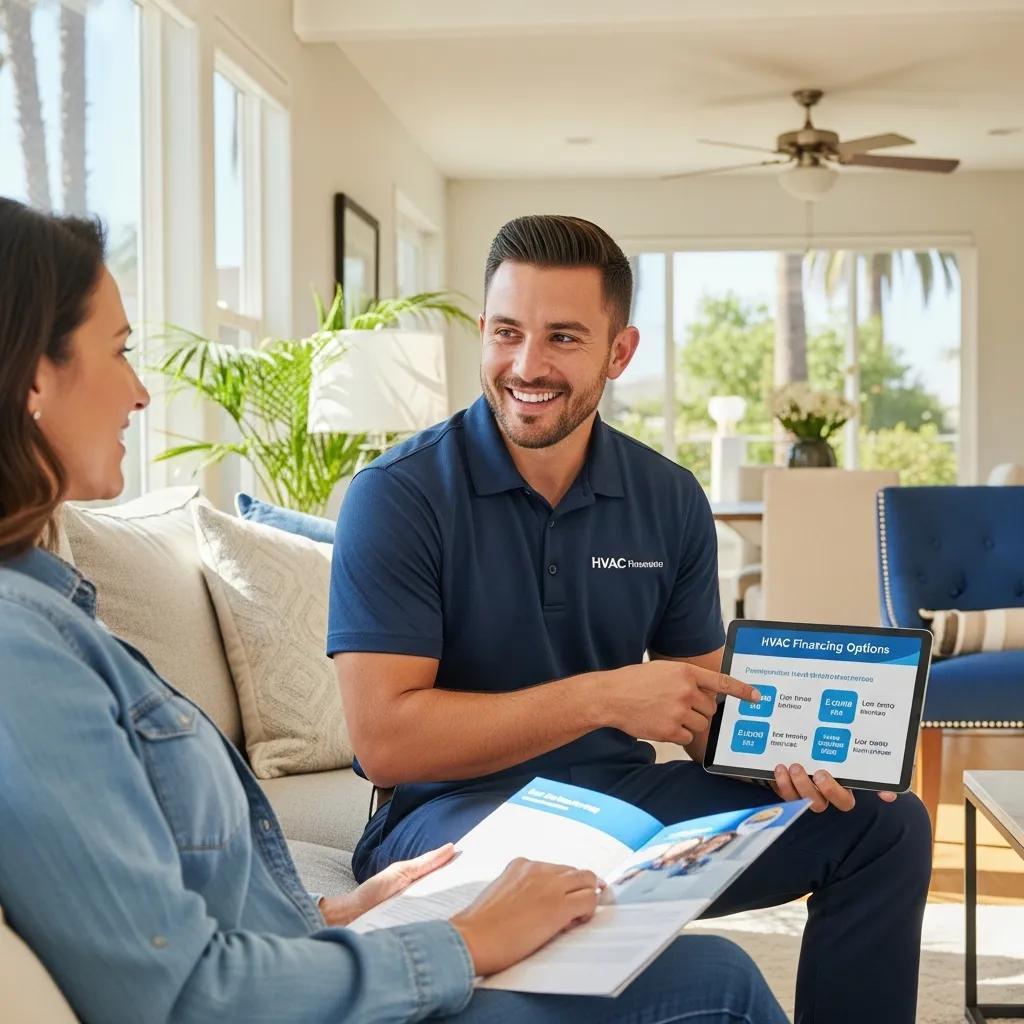
Baker Home Energy works with financing partners to offer the common options homeowners expect: installment loans, promotional deferred-interest programs, and monthly payment plans that cover both equipment and professional installation. Each option changes the term length, down payment requirement, and repayment schedule so you can match payments to your monthly budget — shorter terms typically mean less interest paid overall, while longer terms lower monthly payments. The biggest benefit for homeowners is getting efficient equipment installed now with predictable monthly costs, improving comfort and reducing utility bills without draining savings. Below are the typical plan types you’ll encounter when shopping HVAC financing in Southern California.
- Installment loans — fixed monthly payments over a set term so you fully own the system when the loan ends.
- Promotional financing — lower or deferred interest for an introductory period to reduce near-term costs.
- Monthly payment plans — divide the total price into scheduled payments while keeping installation on the usual timeline.
These plan types suit different credit profiles and budgets; knowing which matches your goals makes comparing offers or requesting a quote much easier. Next, we outline how these plans usually work and how Baker Home Energy presents terms in practice.
Overview of Baker Home Energy’s Financing Plans and Payment Terms
Baker Home Energy partners with lenders to make energy-efficient HVAC systems more affordable by combining competitive financing with local know-how. Most homeowners will see installment financing that covers equipment and installation with fixed monthly payments, plus short-term promotional options to reduce initial out-of-pocket cost. Payments are typically monthly. Rather than one-size-fits-all products, Baker Home Energy provides representative term ranges and works from a tailored quote — exact rates and terms depend on system size and credit profile. If you want concrete numbers, request a quote and we’ll show estimates that include local rebates and the right system size for your home.
We focus on helping you save energy, improve comfort, and maximize incentives — and we encourage homeowners to request a personalized quote so financing and rebate opportunities are clear. Understanding these basic mechanics leads into the practical eligibility checklist and application steps you’ll want to prepare before applying.
Eligibility Criteria and Application Process for Baker Home Energy Financing
Qualification for HVAC financing usually depends on credit history, proof of income, and homeownership or residency verification, plus the loan amount relative to your financial profile. Lenders often run a soft pull for prequalification and a hard inquiry for final approval, and they commonly ask for documents like recent pay stubs, a driver’s license, and proof of address. Turnaround can be quick — same-day prequalification — or take several business days for full approval depending on document speed and underwriting. Having clear scans or photos of required documents before you start will speed approvals and cut down on back-and-forth.
- Gather proof of income, photo ID, and proof of property or residency.
- Request a quote and soft-prequalify to see estimated terms without affecting your credit score.
- Submit the full application and any requested verifications to reach final approval.
Being prepared shortens the process and lets you accept an offer quickly once it fits your timeline.
How Do Baker Home Energy’s Financing Plans Compare to Competitors in Southern California?
Financing programs differ by interest-rate structure, typical term lengths, payment flexibility, fees, and how well they integrate utility rebates and local incentives. Those differences affect monthly payment size, total financing cost, and how fast an upgrade pays back through energy savings. Comparing providers with consistent examples and clear attributes helps you weigh trade-offs and pick what matters most — lower monthly payments, lower lifetime cost, or faster ownership.
In general, plans balance monthly payment size against total cost and approval flexibility.
Use this as a comparison framework, but request personalized figures based on your system cost and local incentives before deciding. The next section explains how term length and rate structure translate into monthly payments and total financing cost.
Comparing Interest Rates, Terms, and Payment Plans Among Top Providers
Interest rates and term length are the main levers that determine monthly payments and total cost: longer terms lower monthly bills but increase total interest, while shorter terms reduce interest but raise monthly payments. Watch out for promotional APRs that can reset to standard rates if conditions aren’t met. To compare offers accurately, use the same loan amount across different rate/term scenarios so you can see the real monthly impact. Label any example clearly as “illustrative” and get lender-confirmed APRs and fees before signing.
- Compare identical principal amounts across terms to see monthly trade-offs.
- Confirm whether a promotion converts to a standard APR after the introductory period.
- Ask providers for total-payment summaries (including fees) so comparisons are apples-to-apples.
That clarity explains why some homeowners choose slightly higher rates with shorter terms to lower lifetime cost, while others prefer lower monthly payments to manage household cash flow. It also sets up non-price advantages that often favor a local provider.
Unique Benefits and Local Expertise of Baker Home Energy Versus National Competitors
Local companies bring regional knowledge: proper system sizing for Southern California’s climate, experience with state and utility rebate programs, and faster on-the-ground response. Baker Home Energy pairs energy-efficient equipment choices with hands-on incentive navigation and payment options that reflect seasonal usage patterns in our area. This local approach can reduce approval friction and speed installation compared with national programs that use standardized packages and remote underwriting.
We prioritize long-term savings, reliable comfort, and clear incentive capture — and we encourage homeowners to request a quote. If you value quick local service, precise rebate help, and payment flexibility tailored to Southern California, a local provider like Baker Home Energy can deliver stronger net value than some distant alternatives. Next we’ll outline the financing product types so you can match local benefits to the right financing mechanism.
What Types of HVAC Financing Plans Are Available to Southern California Homeowners?
Most HVAC financing falls into a few straightforward categories: loans, leases, and structured payment plans. Understanding the components — interest rate, loan term, monthly payment, and down payment — helps you compare trade-offs. Below we define each option, list pros and cons, and suggest which homeowner profiles tend to fit each type.
- Installment loans: You own the system when the loan ends; best for homeowners wanting ownership and the resale advantages that come with it.
- Leases or equipment-as-a-service: Pay a monthly fee to use the equipment; may include maintenance, and ownership may not transfer — good for those who want low upfront cost.
- Payment plans and promotional offers: Short-term or deferred-interest deals that lower near-term costs; useful for homeowners expecting rebates or near-term cash to pay off promos.
These clear definitions lead into a comparison table that summarizes typical credit expectations and practical pros and cons.
Use this table to weigh requirements and likely outcomes, and always verify current program details and credit criteria with the lender before committing. Next we explain how rebates and incentives work with each financing type.
Loans, Leases, and Payment Plan Options Explained
Loans convert the purchase into repayable debt with fixed payments and typically require a credit check; a down payment may be requested. Leases or subscription models let you use equipment for a monthly fee and sometimes include service, but you may not own the unit. Payment plans and promotional offers provide short-term relief through deferred interest or low introductory rates and are handy when you can combine them with rebates to lower the net cost. Each option is shaped by the same components — interest rate, loan term, and monthly payment — which determine total cost and cash-flow impact.
- Loans are best for homeowners who want ownership and potential resale or tax benefits.
- Leases suit people wanting low upfront cost and maintenance bundled in.
- Promotional plans work when you’re confident you can meet the promo terms or will use rebates to pay down principal.
Your choice depends on credit, long-term plans for the property, and how much incentives will reduce what you need to finance. Knowing how these pieces interact is key to a smart financing decision.
Energy Efficiency Incentives and Rebates Linked to Financing Plans

Rebates and incentives lower the net installed cost of HVAC upgrades, which reduces the amount you need to finance and the monthly payment. Common incentives include utility rebates, state programs, and tax credits for qualifying high-efficiency equipment. Often a rebate can be applied at signing to reduce the financed principal, directly lowering monthly payments and total interest. Always confirm current eligibility with your utility or the program administrator.
- Verify rebate availability and eligibility before finalizing financing.
- Ask whether the installer or lender will apply rebates at contract signing to reduce the financed amount.
- Use conservative rebate estimates when modeling affordability so you don’t overstate savings.
Pairing rebates with the right financing shortens payback and improves lifecycle savings — which is why working with a provider who understands incentive navigation matters.
What Are the Benefits of Choosing Baker Home Energy’s HVAC Financing?
Financing helps you replace an old, inefficient system sooner so you start saving on energy bills and enjoy better home comfort without waiting to save the full purchase price. By spreading the cost into monthly payments and installing more efficient equipment (higher SEER or a heat pump), utility bills usually go down and help offset the financing payment. Other benefits include improved temperature consistency, better humidity control, and fewer surprise repair bills from aging equipment. The table below ties benefits to how they work and gives an estimated-savings lens so you can plan.
When financing is paired with the right equipment choice and rebate capture, many homeowners see net improvements in monthly housing costs and comfort. The following subsection shows real-world outcomes and invites you to evaluate options for your home.
Cost Savings, Home Comfort, and Energy Efficiency Advantages
Upgrading to modern equipment generally improves SEER or overall efficiency — that’s the main way energy use drops. Financing removes the upfront barrier so you can capture those savings sooner. In many cases, combining a financing plan with incentives produces a net-neutral or even positive monthly cash-flow outcome when projected utility savings are included. The usual pattern ties the upgrade, rebate, and financing term together to estimate when net savings begin; actual numbers depend on your home, usage, and rates, so run scenarios with local inputs for accuracy.
- Financing accelerates the timeline for capturing energy-efficiency returns.
- Correct system sizing and professional installation maximize comfort and savings.
- Combining rebates with financing reduces the financed amount and shortens payback.
These factors show why a provider that handles incentives and designs systems for the local climate delivers better results. The next subsection summarizes real customer outcomes and invites you to get a personalized quote.
Customer Testimonials and Case Studies Highlighting Financing Success
Short case summaries often show the same pattern: a homeowner with rising repair costs or poor comfort chooses a financed replacement with high-efficiency equipment, captures available rebates, and then sees more predictable payments and improved comfort. While each result varies, the consistent sequence is: assessment → financed upgrade → rebate capture → better comfort and a clearer payback timeline. If these stories sound like your situation, request a tailored estimate to see potential savings for your home.
We prioritize meaningful savings, reliable comfort, and clear incentive capture — and we invite homeowners ready to explore options to request a personalized quote that includes rebate estimates and payment scenarios tailored to their address and system needs.
How Can Homeowners Apply for HVAC Financing with Baker Home Energy?
Applying starts with knowing what documents you’ll need, getting an accurate project quote, and choosing a financing product that fits your cash-flow and ownership goals. The usual flow is: site assessment and quote, prequalification, submitting supporting documents for underwriting, and final approval — installation scheduling follows finance approval and contract signing. Knowing the timeline and required documents ahead of time makes the process predictable and reduces delays. The steps below outline a common flow and typical timeframes so you can plan around seasonal demand.
- Request a system assessment and itemized quote that lists equipment, installation, and projected incentives.
- Prequalify with a soft credit check to see likely terms without affecting your score.
- Submit the full financing application with ID, proof of income, and proof of residency, complete any verifications, and receive final approval.
- Sign contracts, apply rebates at closing when possible, and schedule installation based on availability.
This clear sequence sets expectations for both homeowner and provider and reduces approval friction. Next, we list tools and resources to support your decision.
Step-by-Step Guide to the Application and Approval Process
Start by gathering a photo ID, recent pay stubs, and proof of residency so underwriting goes smoothly. Ask for a detailed quote that separates equipment cost, installation labor, and applied incentives. Prequalification normally uses a soft credit pull for indicative rates, and final approval may involve a hard inquiry. After approval, confirm whether rebates will be deducted from the financed principal at signing so monthly payments reflect the net financed amount. Finally, schedule installation promptly after approval to lock in equipment lead times and seasonal availability.
We recommend requesting a personalized quote so financing, incentives, and system sizing are calculated for your specific address and needs.
Online Tools and Resources to Facilitate Financing Decisions
Online calculators, rebate lookups, and financing FAQs help you estimate monthly payments, compare term scenarios, and check incentive eligibility before you apply. When using calculators, enter the estimated installed cost, expected rebate amounts, and several term/rate combinations to see how monthly payments and total interest change. For rebates, consult your local utility or state program to confirm eligibility and required documentation; treat rebate numbers as provisional until the program administrator confirms them. Keep a digital folder with required documents ready to speed underwriting and avoid delays.
- Use a payment calculator with principal, term, and APR fields to model scenarios.
- Verify rebate programs directly with local utilities or state portals.
- Prepare a digital folder with ID, income proof, and residency documentation for quick uploads.
These steps and tools make financing decisions clearer and reduce surprises during approval and installation scheduling.
Frequently Asked Questions
1. What factors should I consider when choosing an HVAC financing plan?
Look at your credit score, the system’s total cost, interest rates, and repayment length. Decide whether lower monthly payments or a shorter loan that saves on total interest is more important for you. Also factor in rebates or incentives that can lower the financed amount. Align your choice with your monthly budget and long-term goals.
2. Are there any hidden fees associated with HVAC financing?
Some options may include fees like application or origination charges, and some lenders have prepayment penalties or late fees. Read the contract carefully and ask lenders about all potential costs so you don’t get surprised later.
3. How can I improve my chances of getting approved for HVAC financing?
Pay down debts and make on-time payments to improve your credit score. Gather proof of income and residency ahead of time and consider prequalifying to see likely terms without a hard credit pull. A stable income and reasonable debt-to-income ratio also help approval odds.
4. What should I do if I am denied HVAC financing?
Ask the lender why you were denied so you know which issues to address (low credit score, insufficient income, etc.). Fix any credit-report errors, reduce outstanding debt, or consider applying with a co-signer. You can also explore alternative options like personal loans or using a credit card if those fit your needs.
5. How do energy efficiency incentives affect my financing options?
Incentives can lower the total cost you need to finance. Many lenders let you apply rebates at closing to reduce the financed principal, which lowers monthly payments. Confirm eligibility and the application process for incentives before finalizing financing.
6. Can I refinance my HVAC financing plan later?
Often you can refinance if rates drop or your credit improves. Refinancing may secure a lower rate, reduce payments, or change the term to better match your finances. Check for any refinancing fees and confirm that the savings outweigh those costs.
7. What are the benefits of working with a local HVAC financing provider like Baker Home Energy?
Working with a local provider gives you personalized service and expertise in regional incentives. We understand Southern California climate, rebate programs, and local installation timelines. That local knowledge helps us capture incentives and get systems sized and installed correctly, often faster and with clearer communication than a remote national program.