
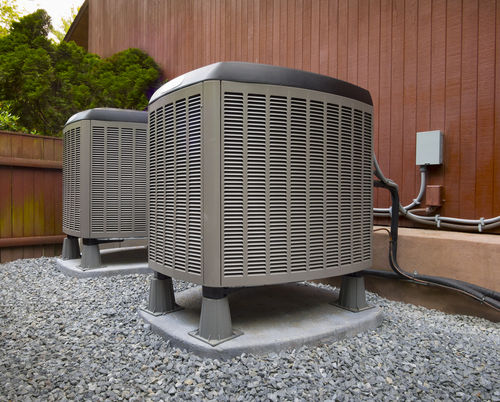
Though no one can confirm Mark Twain actually said, “The coldest winter I ever spent was a summer I spent in San Francisco,” many Californians can relate to the sentiment. Unfortunately, confusion around California weather is not limited to the upper parts of the state.
Many who have never visited the Golden State assume Southern California days are filled with endless sunshine beaming from cloudless skies. Sometimes, yes. But residents of North County know that being comfortable here requires a good heating and cooling system, or you will discover the challenges of spring temperatures firsthand.
North County Spring Heating and Cooling Challenges
Another misconception about California is that people living near the beach or other waterways don’t need air conditioning because the ocean breezes keep them cool.
However, as far back as 2006, over 80 percent of people living in the Sunbelt region, which includes SoCal, considered air conditioning a necessity. In the spring, average temperatures typically hover around a comfortable 65°F. However, daytime highs can reach into the 80s, and then plummet to the low 50s or upper 40s at night.
Comfort is the number one consideration for heating and cooling in the spring, and all other seasons, for that matter. Many factors can contribute to feeling uncomfortable in your own home, including the following:
Causes for Spring Heating and Cooling Concerns
- Allergies
If you or a member of your household suffers from allergies, spring weather can be infuriating. Although you can’t control the outdoors, keeping your internal humidity low and dust-free can help avoid some uncomfortable allergy symptoms.
- Mold
Mold thrives in high humidity environments, which is typically due to a lack of consistent air flow or air conditioning. Excessive exposure to mold can lead to wheezing, difficulty breathing, fatigue, headaches, and other health issues.
- Age
As we age, our bodies become more sensitive to our climatic surroundings, and the discomfort of being too cold or too hot is more keenly felt. Subtle effects, such as altitude changes or lack of sleep, can affect energy level, quality of work, and other health aspects.
A lack of climate control in your home can lead to serious issues that don’t respond to thermostat settings. That makes finding a solution to meet your heating and cooling needs a major consideration.
How to Mitigate North County’s Spring Weather Challenges
Ensuring the best climate control for your home is through investing in a good HVAC system. Residential AC units usually provide BTU outputs ranging from 18,000 to 60,000. Finding the right-sized cooling unit with optimal BTU output is tricky and critical as the efficiency of an HVAC system reflects in your utility bills. Some of the key factors that determine how much HVAC BTU output your home needs for cooling include —
- Height of the ceiling
- The number of doors and windows
- Type of flooring (carpet/ wood)
- The level of insulation
- The floor area
You also need to determine the type of heating system best suited for your home. Whether it is a heat pump unit, gas furnace, dual fuel system, or a ductless heating system, it should be energy-efficient with minimal maintenance required. Considering these points, you have two options to upgrade your existing HVAC system — either through repair or replacement.
Heating and Air Conditioning Repair Option:
In most cases–but not all–repairing your HVAC system is less expensive than replacing it. This is especially true if your current system or systems were installed recently and are functioning well. In this case, make sure to schedule service for your system(s) once a year by an experienced, certified professional.
Outside of an annual checkup, your HVAC system(s) may require immediate repair. Some reasons include:
For AC systems
- Increased electricity bills
- Unusual or loud noises
- Irregular starting and stopping
- Reduced airflow
- Unusual odors
- High humidity
For Heating systems
- Increased electricity bills
- Unusual noises
- Cold spots in your home
- A burning odor that doesn’t go away
Heating and Air Conditioning Replacement Option:
If your HVAC system is over ten years old, it may be time to consider a replacement instead of a repair. Initial costs will likely be more than a repair, but the long-term benefits will more than make up for this in lower electricity bills, better service, and quieter operation. Additionally, installing a new system(s) adds value to your home.
There are many options for a new installation. For example, your cooling system can be a split system air conditioner, which has a number of advantages compared to both central and window units. Choosing a new heating and cooling solution is a major decision. Seek the advice of an experienced HVAC provider with a track record of satisfied customers in the North County area.
Baker Home Energyhas served the Southern California area for nearly two decades, providing residents with the best solution for their heating and cooling needs. Our HVAC services range from tuneups and safety inspections to complete overhauls; including the most advanced and energy-efficient equipment available in the industry. With us, you gain an expert partner committed to delivering extraordinary service, which is exemplified by our being awarded the Torch Award for 2021. For more information on spring heating and cooling solutions, contact us.
Clay roofs are especially popular in Southern California, as is leveraging the abundance of sunshine for solar energy. Many homeowners are making the switch to solar by installing solar panels on their homes. However, there are challenges to overcome when installing solar panels on clay tile roofs, specifically. If, like many homeowners in Southern California, you have a clay tile roof, it’s best that you consult with a company that has the experience and expertise required to carefully perform these solar installations.
The Challenges of Installing Solar Panels on Clay Tile Roofs
Clay roofs add a unique elegance to a house, which also increases market value. Additionally, these roofs are heavier than other common types, like asphalt, which makes them exceptionally resilient to inclement weather. They also are prized in Southern California for temperature control, which means you can keep your home relatively cool regardless of the heat outside.
The prevalence of this roof type presents challenges that installers must contend with for solar panel systems.
Clay Tile Roof Characteristics and Challenges
- Fragility
Clay tile roofs are tough enough to stand up to adverse weather, yet they are fragile and can easily break if walked upon, or some other pressure is exerted on them
- Risk of leakage
These roofs can remain virtually leak-proof for decades. But if they are broken, removed, or not interconnected properly, the risk of water leakage is high.
- Expensive
Clay tile roofs are expensive, and broken shingles can be costly to replace.
These characteristics pose a challenge when installing solar panels on clay tile roofs, yet industry professionals have devised methods to complete these installations successfully.
How Solar Panels Are Installed on Clay Tile Roofs
It may not be a surprise that skill beyond what is typically required for other roof types is necessary for clay tile roof installations. Some common installation techniques are listed below.
Techniques for Installing Solar Panels on Clay Tile Roofs
- Solar Racks
This method removes parts of the clay tile roof where mounts are needed under the solar panel to install racks to which the panels are mounted. This is similar to interlocked solar panel installation in that the panel effectively replaces the roof for the section it covers. However, the inherent variations in the shape of clay roofs make it difficult to achieve precise alignment.
- Comp-outs
This technique is a more extensive version of using solar racks, where the entire area underneath the panel is removed and is replaced with composite shingles. Then traditional mounting hardware is used.
- Tile Replacement Mounts
With this method, only selected clay tiles are removed and replaced with mounts to attach the panel. These are meant to fit exactly as the original clay tiles to preserve the integrity of the roof.
- Flashing
Flashing also requires the removal of selected clay tiles to gain access to the wood
frame. Hooks are installed, then attached to the frame that will attach to the panel. When the roof is reconstructed, any holes or areas where water may seep through are sealed with tar.
All of the above methods for installing solar panels on clay tile roofs are possible, but only by experienced professionals. Prior to moving forward with installation, you should consult an industry expert to ensure your house meets the criteria as a good candidate for a solar installation.
Baker Home Energyhas served the Southern California area for over 15 years and provided clean energy solutions to more than 17,000 of your neighbors. Our way of doing business, The Baker Way®, which includes delivering extraordinary service and building customer confidence, is exemplified by being awarded the Torch Award for 2021. For more information on installing solar panels on clay tile roofs, contact us.
For most people, a home represents the investment of a lifetime. Not only is it a site for many enduring memories, but it also serves as a refuge from some of life’s uncontrollable events. For example, your home can offer you security during yearly power outages, as well as extreme fluctuations in energy prices based largely on speculation.
Fortunately, you can avoid these contingencies by using an alternative energy source. Over the past five years, the cost of solar energy has decreased by 11%, while the solar energy market has seen an average annual growth of approximately 42% in the last decade. These favorable trends, which are predicted to continue for the foreseeable future, are causing many homeowners to ask, “Will solar panels work on my house?”
Misconceptions About Solar Power Generation
Prior to exploring whether your house is ready for a solar installation, it may be helpful to bust a few common myths that prevent homeowners from learning more about installing a solar power system. Common myths about solar energy include:
| ❌ | Only rich people can afford solar panels False. While this once might have held a grain of truth, with the credits and solar options available today, most homeowners can install solar with no upfront costs and as little as $89/month. Learn more about solar financing |
| ❌ | Solar systems will damage your roof False.Reputable solar installation companies use high-quality, warranted panels, inverters, batteries and monitoring equipment. Most solar installation warranties are for at least 20 years.Learn more about solar products. |
| ❌ | Myth: Using solar energy means you have to go “off the grid” False. Almost all solar energy systems installed in urban areas–like most houses in Southern California–are grid-tied. This allows you to optimize with solar during the day and run off the grid at night. Including battery storage provides additional security in case of power outages. Learn more about your utility’s role. |
Now that some of the myths about solar energy have been exposed, let’s take a serious look at whether your house is suitable for a solar installation.
Why Will Solar Panels Work on My House?
Before you decide whether a solar installation is a viable option for your house, you should know a few things first about how solar works. The photovoltaic (PV) effect–the phenomenon of converting sunlight into electric energy–makes solar energy generation possible, similar to the way plants convert sunlight into energy using photosynthesis. Prior to researching panel installations for your house, there are five basic things you should know.
5 Things to Know About Solar Panel Installation
1. Solar panels can be installed on different roofing materials
Although shingles (asphalt or composite), concrete, and steel beams are considered the best materials on which to install solar panels, clay, stone and other composites can be used as well. To ensure solar panel safety and security, find an experienced installation company with a good reputation for installations on your roof type.
2. Solar panels can be installed facing in multiple directions
For the best results, solar panels should be installed facing south. However, as long as your roof has a pitch (how much the roof slants upwards) between 18% and 43%, you will get solar insolation (the amount of radiant energy emitted by the sun) in Southern California for east- and west-facing panels. Due to the lower energy generation, installing panels that face north is not recommended.
3. Solar insolation occurs on cold and cloudy days
Obviously, clear sunny days are best for maximizing the cost benefits of solar generation, but they are not a requirement. Energy can be generated from direct and indirect sunlight, which means your system still saves you money on cloudy days, when it rains, and if it’s cold.
4. Trees and nearby buildings can prevent you from generating solar power
Shade from trees, buildings, and other obstructions prevent sunlight from reaching your panels, and therefore significantly reduce or prevent them from generating solar power.
5. Roof replacement may be necessary, prior to solar installation
If your roof needs repair or replacement, it should be done prior to having solar panels installed. For nearly half of all solar installations, roof replacement is advisable to avoid the unnecessary expense of removing the solar panels prematurely to repair the roof within the warranty period for the installation.
As the list above shows, solar installations are possible for most houses, provided the roof is in good condition and there are no obstructions that can’t be removed. The question of how much you can benefit financially from a solar installation depends on additional factors, such as how much energy you currently consume, what you pay for energy, your roof’s surface area, and other specifications. You should consult with a reputable solar installation company with a track record of excellent service in your area to help you answer these questions accurately,.
Baker Home Energyhas served the Southern California area for over 15 years and provided clean energy solutions to more than 17,000 of your neighbors. Our way of doing business, The Baker Way®, which includes delivering extraordinary service and building customer confidence, is exemplified by receiving the Torch Award for 2021. If you are interested in learning about potential solar savings, a free consultation, or more information to help you decide if solar panels will work on your house, contact us.