
This winter, two major climate forces—La Niña and atmospheric rivers—are shaping weather patterns across the West. While these terms sound scientific, they have real implications for homeowners. From roof integrity to solar performance, understanding these trends can help you prepare and protect your investment.
What is La Niña?
La Niña is part of the El Niño–Southern Oscillation cycle, marked by cooler Pacific Ocean waters that shift the jet stream. For Southern California, this often means drier conditions overall, but don’t be fooled—La Niña winters can still deliver short, intense rain events that stress older roofs.
Atmospheric Rivers Explained
Atmospheric rivers are narrow bands of concentrated moisture that can unleash days of heavy rain when they make landfall. Even during a La Niña year, these systems can override dry trends, bringing sudden storms and flood risks. One strong atmospheric river can cause significant roof damage if your home isn’t prepared.
Why It Matters for Your Roof
Preparing your home before winter storms isn’t just about peace of mind—it’s about protecting your biggest investments. A roof weakened by age or past weather can fail under sudden downpours, leading to costly water damage and mold. For solar-powered homes, roof integrity is critical because leaks can compromise mounting hardware and wiring, putting your energy system at risk. Clearing gutters and debris helps prevent pooling water that can seep into vulnerable areas, while planning ahead ensures your home stays secure during high winds and heavy rain. Taking these steps now means avoiding emergency repairs later and keeping your roof and solar system performing at their best all season long.
Baker Tip: Schedule a roof inspection before the next storm to prevent costly leaks.
What This Means for Solar-Powered Homes
- Weather Risks: Heavy rain and wind can reduce solar output and stress mounting hardware if your roof isn’t secure.
- Efficiency Boost: Cooler temperatures improve panel performance, but shorter daylight hours and stormy periods reduce overall production.
- Roof Integrity: A watertight roof is essential for solar longevity. Baker Home Energy offers integrated roofing and solar services, so you don’t need multiple contractors.
- Immediate Effect During Rain
- Reduced Output: Solar panels rely on sunlight, so heavy clouds and rain reduce light intensity. During rainy conditions, panels typically produce 10–20% of their normal capacity, depending on cloud density and rain intensity.
- Diffused Light: Even when skies are overcast, panels still generate electricity from scattered light, though at lower efficiency.
Don’t wait for the next storm—protect your home now:
Schedule a Roof Inspection to identify weak spots before heavy rain hits. Combining Roofing & Solar Maintenance ensures both systems are secure and efficient. Ask about underlayment and waterproofing options for long-term protection.
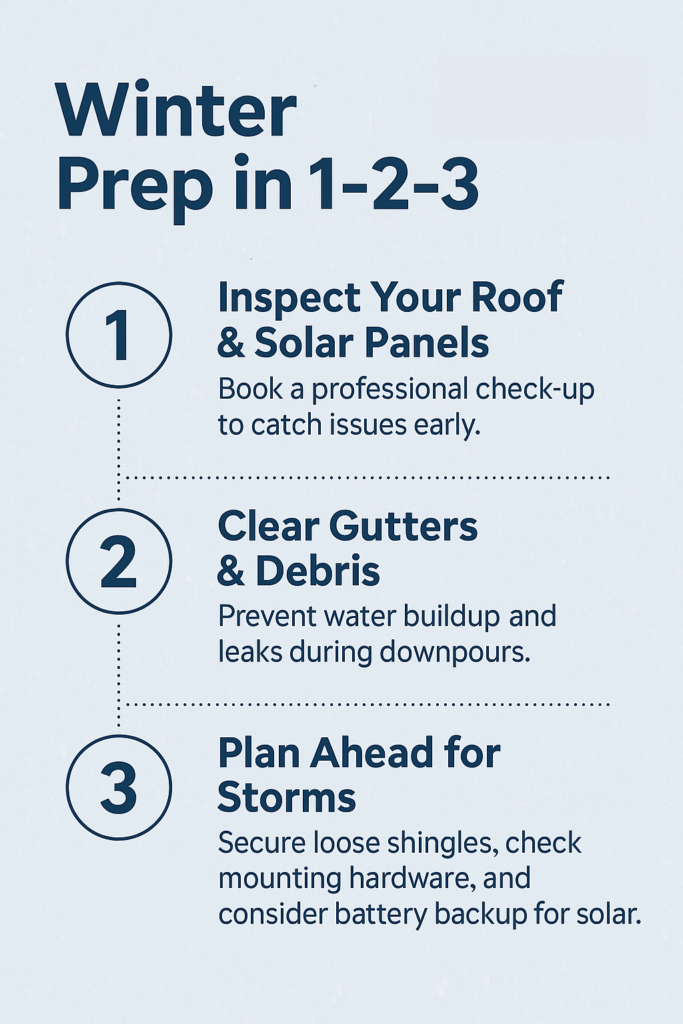
Here is your winter prep in 1-2-3:
- Inspect Your Roof & Solar Panels: Book a professional check-up to catch issues early.
- Clear Gutters & Debris: Prevent water buildup and leaks during downpours.
- Plan Ahead for Storms: Secure loose shingles, check mounting hardware, and consider battery backup for solar.