What is Net Energy Metering?
Net energy metering (NEM) is a billing system that credits a solar customer’s electric bill for surplus energy they send back to the grid. Just like the “net pay” amount on a pay stub shows how much you get paid after taxes are deducted, “net metering” was once a simple mathematical formula to reconcile how much residential solar customers still owed the utility company after selling back their extra energy.
How It Works
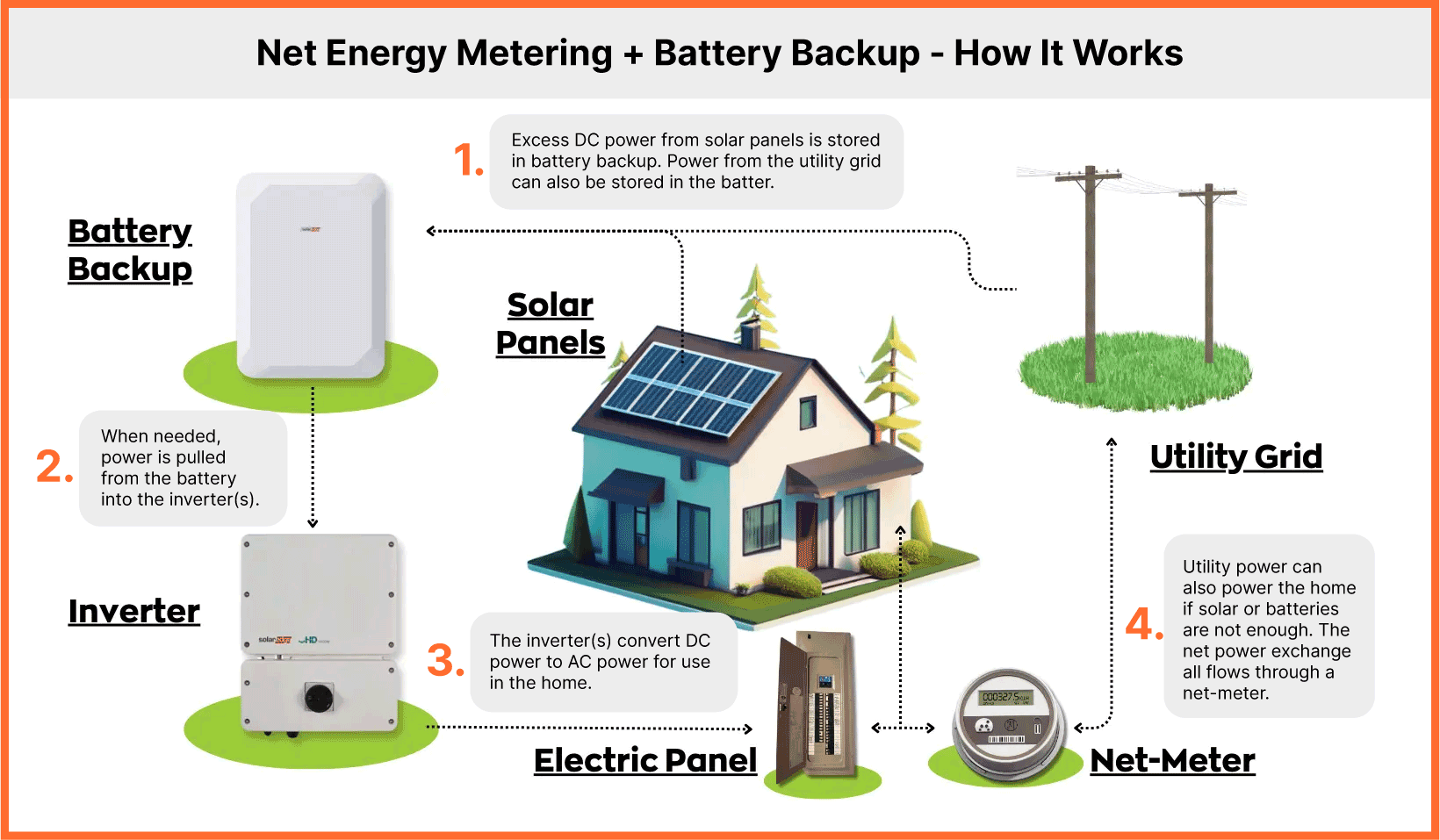
You send surplus energy to the grid. The utility company sells it to other customers and credits your bill for the amount you sent. You pay only the ‘net’ amount after applying for your credit.
NEM Timeline
NEM 1.0 Terms (Ended June 29, 2016)
NEM 2.0 Terms (Ended April 14, 2023)
NEM 3.0 / NBT Terms1 (Current)
How It Started
It was first introduced as legislation in California in 1995 as Senate Bill 656, and has been available for all solar customers of three major utilities—Pacific Gas and Electric Co. (PG&E), San Diego Gas & Electric Co. (SDG&E), and Southern California Edison (SCE). The most significant result of NEM has been an accelerated transition to solar by California homeowners.
What is net energy metering?
NEM 1.0 customers could sell their excess solar energy back to the grid, but the utility companies—in agreement with the California Public Utilities Commission (CPUC)—limited the number of California homes that could go solar. Under NEM 1.0 policy, only 5% or more of the utility’s grid could run on solar. NEM 2.0 removed this cap, allowing all homes in California the opportunity to go solar.
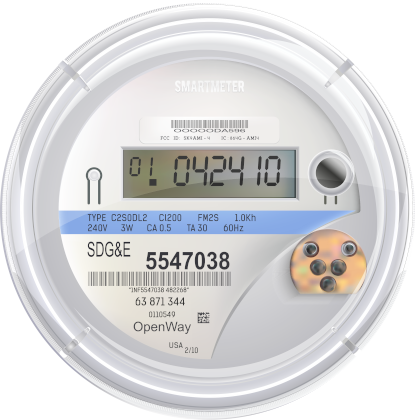
NEM 2.0 essentially allowed the state’s investor-owned utilities to add on various “service fees,” like interconnection charges, and tariffs per every kWh to fund state programs for low-income households and energy efficiency initiatives.
NEM 3.0 is the latest Net Energy Metering plan, it’s also known as the Net Billing Tariff (NBT). NEM 3.0 took effect on April 15, 2023. NEM 3.0 implemented reduced export credits, meaning that solar customers will now receive even less for the energy they send back to the grid.
It’s important to note that NEM 3.0 still offers significant benefits, especially with advances in solar technology and home energy storage options such as home batteries.

*NOTE: As of August 16, 2022, The Inflation Reduction Act of 2022, restores the Federal Investment Tax Credit from 26% to 30% for home solar installations, home batteries, and other hybrid renewable systems and extends the credit until 2032. The new federal legislation may affect NEM 3.0 in CA, but the details remain unresolved.
So what does that mean? Start now. Our professionals can help you schedule your complete installation before the end of the year.
How long does it take to install a solar energy system?
As a general rule, we recommend planning for at least 16 weeks from start to finish.
Sixteen weeks? Yes. The process involves everyone from your HOA, city permitting inspectors, to your utility, and more. It could take even longer for someone who’s not an expert, so working with a trusted provider with established relationships is vital.
Want to learn more about going solar? We’ve got everything you need to know here.
How much will I save monthly on my electric bill under NEM 3.0?
Average-sized solar system (around 7-kW) installed under NEM 3.0
The same system installed under NEM 3.0
- May save around $60-150/Mo.
Average-sized solar system installed under NEM 2.0
- May save around $200/Mo.
How can Baker Home Energy help me?
We are committed to saving you from high energy costs—especially before they get even higher. Call us today and our qualified specialists will help you:
*All NEM 3.0 information is based on proposals published to date. Monthly fee calculations are based on an average SDGE customer with a 7-kW system. Fees are expected to start at $56/month and increase based on system size.
1 Solar Rights Alliance: Fact Sheet
2 Save California Solar: Consumer Info